
Lawn
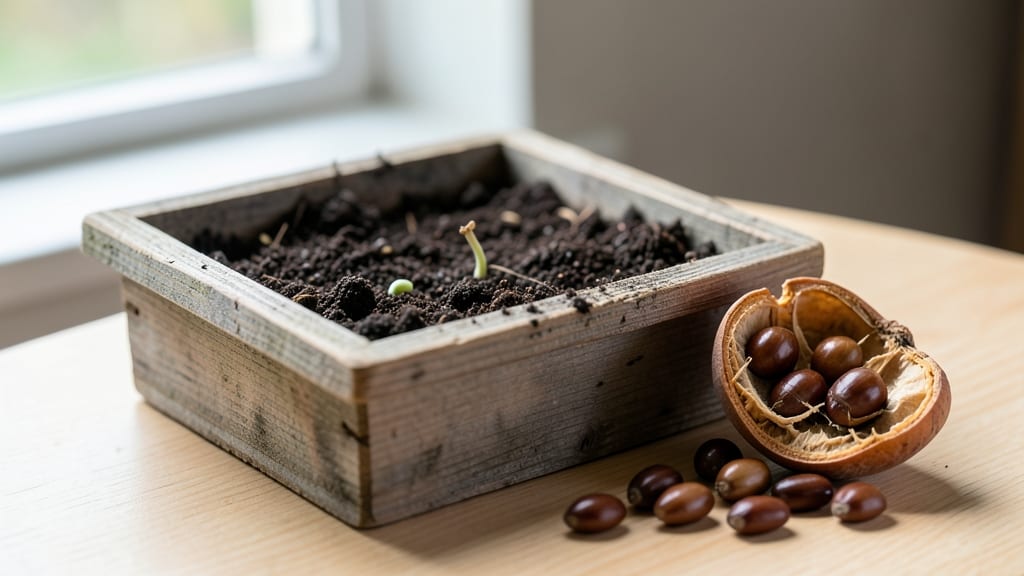
Cold-stratified persimmon seed in winter sprouts in 6 weeks—no greenhouse needed. 🌱 I’ve turned my freezer into a seed-starting shortcut, and the results are worth the effort: sturdy seedlings that thrive when planted in spring.
The trick is mimicking winter’s natural chill period, which breaks the seeds’ dormancy and jumpstarts growth.
You’ll need moist paper towels, a sealed bag, and a little patience. Place the seeds between damp towels, seal them in a bag, then refrigerate for 4-8 weeks. Check weekly for sprouts—when you see tiny roots, it’s time to plant.
This method works for American persimmons (Diospyros virginiana) and Asian varieties alike, though timing varies slightly by species.
By spring, you’ll have vigorous young trees ready for transplanting. The seedlings establish faster than store-bought nursery stock, and the fruit trees mature sooner. Plus, there’s something deeply satisfying about watching a seed you cold-stratified grow into a tree that could bear fruit in just a few years.
Works in any climate with a refrigerator, but gardeners in Zone 5-7 will love this method most. Skip the guesswork—just follow the steps, and you’ll have persimmons in your future orchard.
📚 In This Guide
- What you need
- Instructions
- Tips and common mistakes
- Wrapping up and next steps
What you need
- ● Persimmon seeds: 10–20 fresh, plump seeds (harvested from ripe, fully colored fruit—avoid mushy or shriveled ones!)
- ● Cold-stratification medium: Option 1: Damp paper towels or coffee filters (2–3 per seed)
- ● Option 2: Moistened peat moss or coconut coir (enough to fill a small container)
- ● Sealable container: A small plastic bag (ziplock or reclosable) or a shallow tray with a lid (e.g., a seed-starting tray or Tupperware)
- ● Refrigerator: A standard fridge set to 35–40°F (2–4°C) (the cold-stratification zone!)
- ● Spray bottle: For lightly misting the medium (avoid soaking)
- ● Permanent marker: To label your container (e.g., "Persimmon Seeds – Plant after 6 weeks")
- ● Growing medium: Potting mix or vermiculite (for transplanting after stratification)
- ● Small pots or egg cartons: 2–3 inch pots for individual seedling care
- ● Heating mat: (Post-stratification) To speed up germination if your home is chilly
- ● Humidity dome: Clear plastic wrap or a mini greenhouse to retain moisture
- ● Garden journal: To track stratification progress and germination dates
How to cold-stratify persimmon seeds for winter sprouting
Here's the foolproof method I've used to break persimmon seed dormancy—no guesswork, just reliable germination in six weeks.
🌱 Step 1: Extract and Clean the Seeds
Persimmon seeds need careful handling to avoid damage. Cut open a ripe, fully colored fruit (not the bland, green ones) and scoop out the jelly-like pulp with the seeds intact. Rinse them under cool water to remove all residue, then spread them on a paper towel to dry completely for 24 hours. This prevents rot during stratification.
Once dry, inspect each seed for cracks or soft spots—discard any damaged ones. Healthy seeds will feel firm and plump, with smooth, unbroken surfaces. Store them in a labeled paper envelope until stratification, keeping them in a cool, dry place until ready to begin the cold process.
💧 Step 2: Moisten and Stratify in a Controlled Environment
Fill a quart-sized resealable plastic bag with 2 inches of dampened sphagnum moss (not peat moss—it compacts too much). The moss should feel like a wrung-out sponge: moist but not dripping. Place the persimmon seeds 1 inch deep in the moss, spacing them 1 inch apart to prevent crowding.
Seal the bag and place it in a refrigerator (not freezer) where temperatures stay between 35-45°F. This mimics winter's natural cold period that breaks dormancy. Check weekly—if the moss dries out, mist it lightly with water. You'll see nothing dramatic yet, but the seeds are slowly waking up after 4-6 weeks of this treatment.
⏰ Step 3: Transition to Warmth for Germination
After 6 weeks of cold stratification, remove the bag from the fridge and place it in a warm spot (around 70°F). You'll notice tiny white roots emerging within 7-10 days—this is your cue that germination is underway. Transfer the bag to a seedling tray filled with sterile potting mix, planting seeds ½ inch deep and covering lightly.
Keep the soil consistently moist but not soggy. Persimmon seedlings are sensitive to overwatering, so wait until the top inch feels dry before watering again. Place the tray in bright, indirect light (no direct sun yet) and watch for the first true leaves to appear in 2-3 weeks.
☀️ Step 4: Harden Off and Transplant Young Seedlings
Once seedlings have 3-4 sets of true leaves (not the initial seed leaves), they're ready for hardening. Move them outdoors to a shaded, sheltered spot for 2 hours daily, gradually increasing exposure over 10 days. This prepares them for full sun and cooler temperatures.
Transplant into the garden after the last frost date, spacing seedlings 10-12 feet apart for mature trees. Persimmons need space to grow strong roots and develop fruit. Mulch around the base with 2 inches of organic mulch to retain moisture and regulate soil temperature. With patience, you'll have a thriving tree in just a few years!
Tips & tricks for perfect persimmon seed stratification
Between us, persimmon seeds can be stubborn—here's what nobody tells you about making this process foolproof.
Seed Selection Matters: The ripest, fully colored persimmons yield the most viable seeds. Look for fruits that are soft when gently squeezed but not mushy—this indicates peak ripeness. I've found that seeds from heirloom varieties like 'Fuyu' or 'Hachiya' often germinate more reliably than store-bought hybrids. The 24-hour drying period is critical for preventing rot, so don't rush this step even if seeds look dry sooner.
Moss Moisture Management: The sphagnum moss should feel like a wrung-out sponge—too dry and seeds won't activate, too wet and you risk mold. I use a spray bottle to mist the bag weekly rather than soaking it, which helps maintain that perfect balance. The 4-6 week cold period might seem long, but this mimics nature's winter dormancy cycle that actually triggers germination. If your fridge fluctuates, consider adding a temperature monitor to ensure it stays between 35-45°F consistently.
Visual Germination Cues: When transitioning to warmth after 6 weeks, watch for those tiny white roots within 7-10 days as your first success signal. I've learned to check daily at this stage—sometimes roots appear earlier than expected. The sterile potting mix is non-negotiable here; regular garden soil contains pathogens that can kill delicate seedlings. At the 2-3 week mark when true leaves appear, you'll know you've successfully broken dormancy.
Pro Tips for Persimmon Seed Winter
- Between us, persimmon seeds can be stubborn—here's what nobody tells you about making this process foolproof.
- Seed Selection Matters: The ripest, fully colored persimmons yield the most viable seeds. Look for fruits that are so...
- Moss Moisture Management: The sphagnum moss should feel like a wrung-out sponge—too dry and seeds won't activate, too...
Frequently asked questions
Got questions about cold-stratifying persimmon seeds this winter?
You’re not alone! Here are the most common queries—plus clear, actionable answers to help you grow those sweet, orange treats from seed.
Can I cold-stratify persimmon seeds in any container?
Yes, but choose wisely! Use a perforated container (like a plastic bag with drainage holes or a seed-starting tray) to prevent rot. Avoid airtight containers—moisture buildup can suffocate seeds. A ziplock bag with damp paper towels works too, but check weekly for mold. Pro tip: Label your container with the seed type (e.g., "Fuyu" or "Hachiya") to track varieties!
How do I know if my seeds are properly stratified?
Look for 3 key signs:
- Moisture: The paper towel or growing medium should feel damp like a wrung-out sponge—not soggy.
- Temperature: Keep them in a fridge set to 35–45°F (2–7°C). A seedling heat mat won’t work here!
- Time: After 6 weeks, remove them and plant in soil. If they’ve sprouted tiny roots, you’re golden!
Troubleshooting: If seeds smell funky or grow mold, restart with fresh seeds and adjust moisture.
What if my fridge isn’t cold enough for stratification?
No fridge? No problem! Try these alternatives:
- Outdoor method: Bury seeds in a moist, insulated container (like a Styrofoam cooler) in a shady, frozen spot (e.g., under a deck). Cover with mulch for insulation.
- DIY "seed fridge": Fill a cooler with ice and water, then nestle your seed container inside. Check weekly to refresh ice.
- Garage/shed: If temps stay 40°F (4°C) or below, it’ll work—just avoid direct sunlight or freezing temps.
Warning: Avoid basements or garages with heating vents—they can throw off stratification!
Why aren’t my persimmon seeds sprouting after 6 weeks?
Don’t panic! Try these fixes:
- Check viability: Squeeze a seed—if it’s soft and mushy, it’s likely dead. Test a few with a paper towel germination test (place seeds between damp towels in a bag for 1 week).
- Adjust warmth: After stratification, plant seeds in 60–70°F (15–21°C) soil. Use a heat mat if your home is chilly.
- Patience: Some persimmon seeds take 8–12 weeks to sprout. Keep soil moist and wait!
Pro tip: If seeds sprout but wilt, they may need more humidity. Cover the tray with plastic wrap (remove once leaves appear).
Can I eat the sprouts if they grow before planting?
Short answer: No! Persimmon seeds (and sprouts) contain tannins and mild toxins until fully grown into fruit. Wait until the tree produces fruit (years away!) before harvesting. However, you can compost failed sprouts or use them as natural mulch for your garden.
Wrapping up and next steps
Cold-stratifying persimmon seeds over winter isn’t just a gardening hack—it’s a rewarding way to unlock nature’s potential in just six weeks! By mimicking winter’s chill, you’ll give those tiny seeds the perfect head start, ensuring stronger, healthier sprouts ready for spring.
Whether you’re a seasoned gardener or a curious beginner, this method is your ticket to growing your own persimmon tree with confidence.
Ready to take the next step? Grab your seeds, gather your supplies, and start cold-stratifying today—your future persimmon tree will thank you! 🌱✨