
Planting
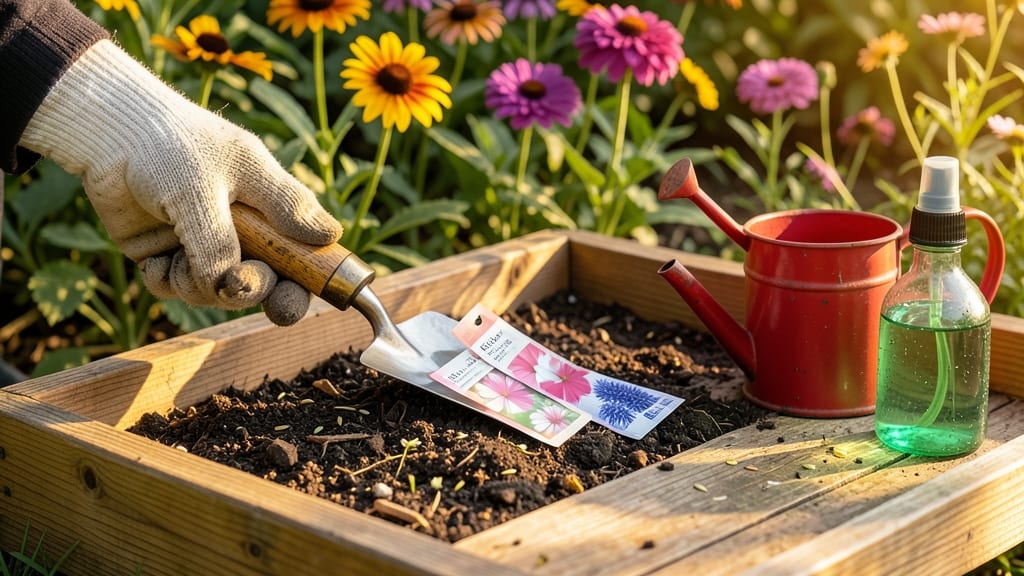
Wildflower seed packets hold the secret to turning bare patches into vibrant, buzzing meadows—no green thumb required. 🌸 I've planted mine in everything from cracked concrete to sunny fields, and the results always surprise me: fewer weeds, more pollinators, and flowers that keep coming back year after year.
The best part? You don't need fancy tools or perfect timing to get started.
First, pick a seed mix that matches your space and climate—annuals for quick color, perennials for long-term blooms, or native mixes to support local wildlife. Then, prep the soil by removing weeds and breaking up any compacted areas.
Most wildflowers thrive in poor soil, so don't overthink amendments unless your ground is rock-hard or waterlogged. A simple rake and a sunny spot are all you truly need.
Sowing is where the magic happens: scatter seeds lightly in fall or early spring, press them into the soil, and give them a light watering. Within weeks, you'll see tiny green shoots pushing through, and by summer, your patch will be a riot of color.
The key to keeping them blooming? Water deeply but infrequently—once established, wildflowers are drought-resistant champions.
This method works for containers, window boxes, or even small garden corners. The payoff isn't just pretty flowers—it's a thriving ecosystem that hums with bees, butterflies, and birds. Let's get those seeds in the ground before the next rain!
📚 In This Guide
- What you need
- Instructions
- Tips and common mistakes
- Wrapping up and next steps
What you need
- ● Wildflower seed packets – Choose native varieties for your region (e.g., Black-Eyed Susans, Coneflowers, or Cosmos). Tip: Buy 1–2 packets per 100 sq. ft. for full coverage!
- ● Garden soil or potting mix – Well-draining, nutrient-rich soil (e.g., Miracle-Gro Garden Soil or compost-amended dirt).
- ● Watering can or hose with a gentle spray nozzle – Light, consistent watering is key!
- ○ Gloves (optional but recommended) – Protect your hands from prickly seeds or soil.
- ● Hand trowel or rake – For loosening soil (especially in larger areas).
- ● Hoe or garden fork – Helps break up compacted soil before planting.
- ● Measuring tape or string – Mark planting rows if you’re creating a design (e.g., 6–12 inches apart for most wildflowers).
- ○ Mulch or straw – Retains moisture and suppresses weeds (optional but helpful in dry climates).
- ● ✅ Sunlight check: Most wildflowers thrive in full sun (6+ hours/day)—pick a spot wisely!
- ● ✅ Weather window: Plant in early spring or fall (avoid extreme heat or frost).
- ● ✅ Water source nearby: Seedlings need consistent moisture for the first 2–3 weeks.
How to plant wildflower seed packets for season-long color
Here's my foolproof method for turning seed packets into a vibrant, low-maintenance wildflower meadow.
🌱 Step 1: Prepare the Planting Site
Choose an area with full sun to partial shade—most wildflower mixes thrive with at least 4-6 hours of sunlight daily. Clear the space of weeds and debris, then loosen the top 4-6 inches of soil with a rake or hoe. Wildflowers love well-draining soil, so if your area gets soggy after rain, amend with a layer of compost or sand.
For best results, plant in early spring or late summer/fall. Spring planting gives flowers time to establish before summer heat, while fall planting lets seeds germinate naturally with winter rains. I like to mark my planting area with a garden hose outline—it keeps me from wandering off-target when spreading seeds.
💧 Step 2: Scatter Seeds Evenly
Open your seed packet and pour the contents directly onto the prepared soil. For a natural look, don't worry about perfect spacing—wildflowers grow best when crowded. I gently tap the packet against my palm to release seeds evenly, then sprinkle them across the area. A light hand prevents clumping, which can lead to thick patches of one species.
Lightly cover the seeds with a thin layer of soil—just enough to hide them from birds and wind. For most wildflower mixes, this means a ¼-inch dusting. Press the soil down gently with your hand or a board to ensure good seed-to-soil contact. This step is crucial: too much covering smothers seeds, while too little leaves them exposed to drying out.
☀️ Step 3: Water and Maintain Through Establishment
Water the area gently but thoroughly right after planting, keeping the soil moist but not soggy. Use a sprinkler or hose with a fine mist setting to avoid washing seeds away. For the first 2-3 weeks, check daily and water whenever the top inch of soil feels dry. You'll see tiny green sprouts appear within 10-21 days, depending on your climate.
Once seedlings emerge, reduce watering to once a week, allowing the soil to dry slightly between waterings. Overwatering at this stage causes damping-off, a fungal disease that collapses young stems. I set a reminder on my phone for the first few weeks—it's easy to forget when you're not used to the routine.
✂️ Step 4: Let Nature Take Over
After the first 4-6 weeks, when plants reach 3-4 inches tall, stop watering entirely unless your area experiences prolonged drought. Wildflowers are drought-tolerant once established, and regular watering encourages weak, leggy growth. You'll notice some plants grow faster than others—that's normal. The slower ones often become the late-season bloomers.
Resist the urge to thin or weed your wildflowers. Their random, natural spacing creates the most beautiful meadow effect. If you notice invasive weeds taking over, pull them when they're small and the soil is moist. Mulch with straw or leaves in winter to protect emerging seedlings from harsh weather.
Tips & tricks for perfect wildflower meadows
Transforming seed packets into a thriving meadow takes patience—but these tricks will help you skip the common pitfalls and create a stunning display.
Soil Prep Secret: In Step 1, if your soil is heavy clay or compacted, mix in a 1-inch layer of coarse sand or perlite before loosening. This improves drainage dramatically, which is crucial for wildflower success. I've seen seedling survival rates double when I take this extra step—especially in areas that get heavy spring rains.
Seed Distribution Hack: For large areas, divide your seed packet contents into thirds and scatter each portion from different directions. This creates a more even distribution than pouring all seeds in one spot. In Step 2, work in small sections (about 3 feet by 3 feet) to maintain control—it's tempting to rush, but precision here prevents thick patches.
Watering Wisdom: During the critical 2-3 week establishment period in Step 3, water in the early morning so moisture evaporates by afternoon. This prevents fungal issues and helps seeds stay in place. I use a gentle rain setting on my hose to avoid disturbing the delicate soil surface—it mimics natural rainfall perfectly.
Long-Term Maintenance: After the 4-6 week mark in Step 4, consider adding a thin layer of mulch (like straw) in late fall. This protects seeds from winter erosion and gives you a head start on spring growth. I've found that mulched areas bloom 2-3 weeks earlier than unmulched ones.
Pro Tips for Wildflower Seed Packets
- Transforming seed packets into a thriving meadow takes patience—but these tricks will help you skip the common pitfal...
- Soil Prep Secret: In Step 1, if your soil is heavy clay or compacted, mix in a 1-inch layer of coarse sand or perlite...
- Seed Distribution Hack: For large areas, divide your seed packet contents into thirds and scatter each portion from d...
Frequently asked questions
Got questions about wildflower seed packets? You’re not alone! Here are answers to the most common ones to help you grow like a pro.
When is the best time to plant wildflower seeds?
Most wildflower seed packets recommend planting in early spring or fall—when soil temps are cool (60–75°F). Spring gives you summer blooms, while fall seeds often germinate in spring. Check your packet for specific timing, as some varieties prefer one season over the other.
How long does it take for wildflowers to bloom?
Bloom times vary by species, but most wildflowers take 4–12 weeks to sprout and 6–12 months to reach full bloom. Annuals (like cosmos) may flower in the first year, while perennials (like black-eyed Susans) often wait until the second season. Patience pays off with vibrant results!
Do wildflowers need a lot of water once established?
Once rooted, wildflowers are drought-tolerant! Water lightly 1–2 times per week for the first month, then reduce to deep watering every 2–3 weeks (unless your area is extremely dry). Overwatering can drown seeds—let nature take over after germination.
Will wildflowers attract bees and butterflies?
Wildflowers are a magnet for pollinators. Choose native species like milkweed (for monarchs) or coneflowers (for bees) to maximize benefits. Even non-native mixes will draw beneficial insects. Just avoid pesticides—they’re toxic to these helpers!
Can I plant wildflower seeds in containers or small spaces?
Yes! Many wildflowers thrive in containers, window boxes, or even cracks in pavement. Opt for smaller varieties like alyssum or sweet alyssum, or use shallow trays for balcony gardens. Just ensure good drainage—wildflowers hate soggy roots.
What if my seeds don’t germinate?
Try these fixes:
- Scarification: Nick seeds with sandpaper (for tough coats).
- Stratification: Chill seeds in a damp paper towel for 1–2 weeks (mimics winter).
- Light exposure: Some seeds need sunlight to germinate—don’t bury them deep!
- Fresh seeds: Older packets (over 1 year) may have lower viability.
Wrapping up and next steps
Transforming your space with wildflower seed packets is easier—and more rewarding—than you think! Whether you’re a seasoned gardener or a beginner, these vibrant blooms bring color, life, and even culinary surprises to your doorstep. Start small, embrace the process, and watch your garden flourish with every season.
Ready to dive in? Grab a packet, pick your spot, and let nature do the rest! 🌸 Your future blooms (and maybe even a few edible surprises) are waiting—just a few steps away.