
Lawn
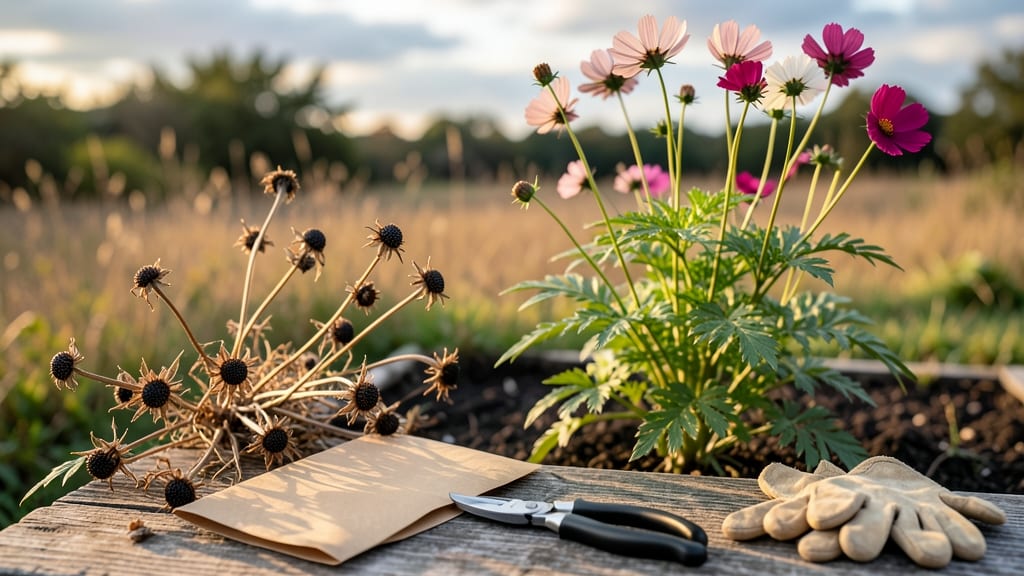
Cosmos seed collection is like saving tiny packets of next summer’s blooms—except you don’t have to buy them. 🌻 The key to success starts with knowing when those fluffy seed heads are ready, how to harvest them without losing viability, and the simple drying techniques that preserve them for years. I’ve saved seeds from my cosmos plants for three seasons now, and the trick isn’t complicated—it’s just about timing and patience.
First, wait until the seed heads turn completely brown and papery, which usually happens in late summer or early fall after the blooms have faded.
Snap off the dried seed clusters by hand (no tools needed), then gently rub them between your fingers to release the seeds—what’s left behind is the fluffy, feathery material that helps them disperse in nature.
The goal is to collect the tiny, dark seeds inside, which should feel dry and crisp to the touch.
Spread the seeds in a single layer on a clean, dry surface—like a piece of paper or a mesh screen—and let them dry for another week in a warm, dry place.
This extra drying step is crucial: it prevents mold and extends their shelf life to 3-5 years if stored properly. Once fully dry, store them in a sealed envelope or jar in a cool, dark spot, and you’ll have fresh cosmos to plant whenever you want.
This method works for both gardeners who want to replant their favorite varieties and those who love sharing seeds with friends. The best part? You’ll never have to buy cosmos seeds again—and your garden will keep growing more vibrant every year without the cost. Ready to start saving your own?
📚 In This Guide
- What you need
- Instructions
- Tips and common mistakes
- Wrapping up and next steps
What you need
- ● Mature cosmos flowers – Choose fully bloomed, dried flowers with seed pods (usually brown and papery). Aim for at least 10-20 flowers for a good yield.
- ● Scissors or pruning shears – Sharp tools to harvest seed heads cleanly.
- ● Brown paper bags or breathable fabric sacks – 2-3 medium-sized bags (12x15 inches) to collect seeds and allow airflow.
- ● Small bowls or trays – For sorting seeds (1-2 shallow containers).
- ○ Fine mesh sieve or sifter – Helps separate seeds from chaff (optional but helpful).
- ● Paper towels or parchment paper – For drying seeds (enough to line a tray).
- ● Small envelopes or airtight containers – For long-term storage (2-4 containers, labeled!).
- ○ Gloves (optional) – Protects hands from prickly seed pods.
- ○ Magnifying glass (optional) – Helps inspect seeds for quality.
- ● Humidity-controlled space – A dry, well-ventilated area (e.g., garage or indoor shelf) with 30-50% humidity for drying.
- ● Patience! – Seeds take 2-4 weeks to dry properly.
Step-by-step instructions for harvesting and drying cosmos seeds
Here's how I collect and dry cosmos seeds to keep them viable for years—no fancy tools needed.
🌱 Step 1: Identify and Harvest Mature Seed Pods
Wait until the cosmos blooms fade and turn into paper-thin, dry seed pods that look like tiny brown lanterns. These pods form naturally after the flowers bloom and wilt. Gently pinch them off the stem when they're completely dry and crisp to the touch—this usually happens in late summer or early fall, depending on your climate.
I like to harvest on a dry morning after the dew has evaporated. This prevents moisture from sticking to the pods and speeds up the drying process. Place the harvested pods in a paper bag (not plastic—it traps moisture) and store them in a cool, dry spot indoors until you're ready to process them.
🌿 Step 2: Dry the Seed Pods Thoroughly
Spread the pods out on a clean, dry surface like a baking sheet or cardboard. Keep them in a warm, dry, and well-ventilated area away from direct sunlight. You want the pods to dry completely—this can take 1-2 weeks, depending on humidity levels. When fully dry, the pods should feel lightweight and brittle and make a papery sound when rubbed between your fingers.
I check daily by gently squeezing a pod. If it crumbles easily and the seeds inside rattle, they're ready. If not, leave them a few more days. Avoid using a hairdryer or oven—heat can damage the seeds' viability. Natural airflow is your best friend here.
✂️ Step 3: Extract the Seeds from the Pods
Once the pods are completely dry, place them in a clean paper bag and gently crumple the bag to break open the pods. Shake the bag vigorously for 30-60 seconds to release the seeds. The seeds will fall to the bottom, while the empty pod husks will stay in the bag. Empty the husks into the trash and set the seeds aside.
I like to do this step outdoors on a windy day—just pour the seeds from the bag onto a clean sheet of paper and let the breeze carry away any remaining chaff. This makes it easy to see the seeds clearly and ensures you don't accidentally toss any viable ones.
🪴 Step 4: Store Seeds for Long-Term Viability
Transfer the clean seeds into a small, airtight container like a glass jar or envelope. Label the container with the date and the type of cosmos. Store the container in a cool, dark place like a pantry or refrigerator. Cosmos seeds can stay viable for 2-3 years when stored properly in these conditions.
I add a small packet of silica gel to my seed jars to absorb any residual moisture. This extra step helps extend the seeds' shelf life even further. Check the seeds every few months to make sure they're still dry and free from mold or pests.
⏰ Step 5: Test Seed Viability Before Planting
Before planting your stored seeds, do a quick viability test. Place 10 seeds between two damp paper towels in a sealed plastic bag. Keep them in a warm spot for 5-7 days. If at least half the seeds sprout, they're ready to plant. If fewer than half sprout, the seeds may have lost viability and it's time to collect a fresh batch.
This test gives you peace of mind and helps you avoid wasting time planting seeds that won't grow. I always do this test in early spring, right before my planting season starts. It's a small effort that saves a lot of frustration later on.
Tips & tricks for perfect cosmos seed collection
Here's what nobody tells you about harvesting cosmos seeds that actually stay viable.
Timing is Everything: Harvest those seed pods in the morning when they're completely dry—this is when they're at their crispest. I've learned the hard way that harvesting damp pods leads to moldy seeds. Aim for late summer or early fall when the pods naturally dry out. If you're in a humid climate, you might need to wait a few extra days for them to fully crisp up before harvesting.
Drying Strategy: The 1-2 week drying period in Step 2 is crucial—don't rush it! I've seen people try to speed this up with heat, but that kills viability. Instead, place your pods on a baking sheet in a warm, dry spot with good airflow. A sunny windowsill works great (just avoid direct sunlight which can overheat them). Check daily by squeezing a pod—it should crumble easily when fully dry.
Seed Extraction Hack: For Step 3, I've found that doing this outdoors on a windy day makes seed separation so much easier. Just pour the seeds onto a clean sheet of paper and let the breeze carry away the chaff. This way, you can clearly see all the seeds and avoid accidentally tossing any viable ones. If you don't have wind, gently blow on them or use a soft brush to remove debris.
Storage Wisdom: When storing your seeds in Step 4, I recommend using small glass jars with tight-sealing lids. The silica gel packet is a game-changer—it absorbs any moisture that might sneak in. I also label each jar with the date and cosmos variety. This helps me track how long they've been stored and which ones to plant first. Check your seeds every few months to make sure they're still dry and free from any signs of mold.
Pro Tips for Cosmos Seed Collection
- Here's what nobody tells you about harvesting cosmos seeds that actually stay viable.
- Timing is Everything: Harvest those seed pods in the morning when they're completely dry—this is when they're at thei...
- Drying Strategy: The 1-2 week drying period in Step 2 is crucial—don't rush it! I've seen people try to speed this up...
Frequently asked questions
Got questions about collecting and preserving cosmos seeds? You’re not alone! Here are some of the most common queries—and their answers—to help you master the process like a pro.
What’s the best time to collect cosmos seeds for drying?
Harvest seeds when the cosmos flower heads turn brown and papery (usually late summer to early fall). Wait until the seed pods split open naturally—this ensures maximum viability. Avoid collecting too early, as seeds may not be fully mature, or too late, when they risk scattering on their own.
How long should I dry cosmos seeds before storing them?
Spread seeds in a single layer on a tray or mesh screen in a cool, dry, and well-ventilated spot for 1–2 weeks. Stir them occasionally to prevent mold. Once completely dry (they’ll feel brittle and light), they’re ready for storage. Patience here pays off for long-term seed life!
What’s the best way to store dried cosmos seeds long-term?
Use airtight containers like glass jars or resealable bags with silica gel packets to absorb moisture. Store seeds in a dark, cool place (like a fridge or freezer) to maintain viability for up to 3 years. Label containers with the collection date for easy tracking!
Can I still use cosmos seeds if they don’t dry completely?
Yes, but with caution! Partially dried seeds may sprout slower or mold if stored improperly. If you must use them, plant them immediately in well-draining soil and keep the area moist until germination. For best results, though, always aim for fully dried seeds.
Are there alternatives to drying cosmos seeds outdoors?
If humidity is high, try drying seeds in a dehydrator at 95°F (35°C) for 2–4 hours or use a fan in a dry room to speed up the process. Just avoid heat sources like ovens, which can damage the seeds. Quick and efficient!
Wrapping up and next steps
Collecting and properly drying cosmos seeds is your ticket to a vibrant, long-lasting garden—no green thumb required! Whether you’re saving seeds for sustainability or simply extending their shelf life, mastering these techniques ensures you’ll always have fresh blooms ready to grow. 🌱
Now that you’re equipped with the know-how, take the next step: experiment with different drying methods to see what works best for your climate. Share your success (or funny mishaps!) with fellow gardeners—every seed saved is a story worth telling. Happy harvesting! 🌟