
Lawn
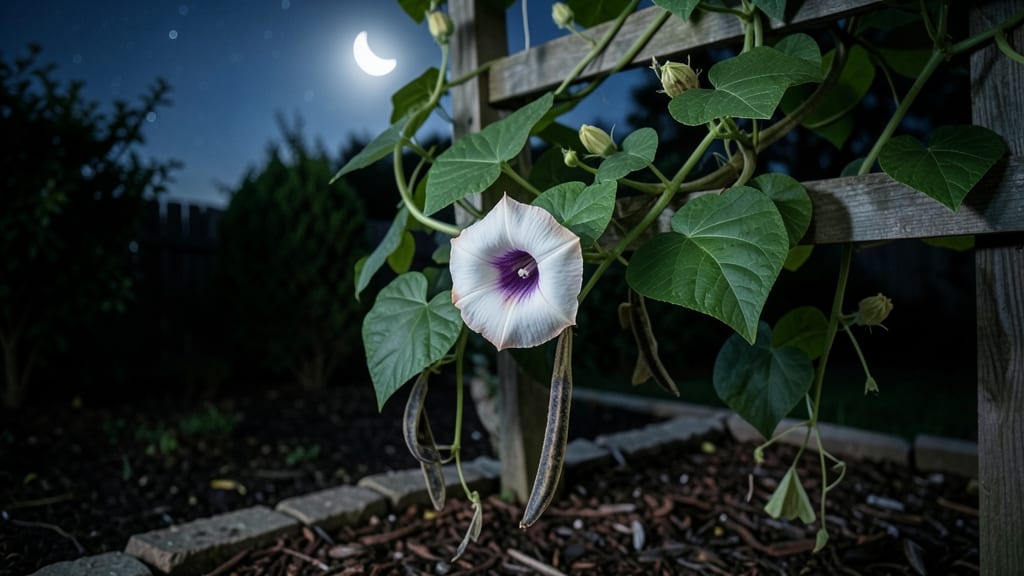
Saving moonflower vine seed pods ensures next year’s garden bursts with those ethereal white blooms that open only under moonlight. 🌙 The dry-and-save method is simpler than you’d think—no fancy equipment, just patience and a few key steps to preserve seeds until spring planting.
Start by harvesting mature pods when they turn brown and papery, usually late summer or early fall. Split them open to reveal flat, dark seeds, then let them dry completely in a paper bag for 1-2 weeks. Proper drying prevents mold and ensures strong germination rates.
Once dry, store seeds in an airtight container with silica gel or a moisture absorber. Keep them in a cool, dark place until spring—moonflower seeds can stay viable for 2-3 years if stored correctly. This method guarantees you’ll have fresh vines ready to climb trellises by summer.
The real payoff? Vigorous seedlings that thrive in well-draining soil and partial shade, producing those signature night-blooming flowers. Just avoid overwatering young plants—they’re surprisingly resilient once established.
📚 In This Guide
- What you need
- Instructions
- Tips and common mistakes
- Wrapping up and next steps
What you need
- ● Mature moonflower vine seed pods (harvested when fully dry and brown, ~3–4 inches long)
- ● Pruning shears or sharp scissors (for clean pod removal)
- ● Paper bags or breathable mesh sacks (1–2 per harvest, 10x12 inches or larger)
- ● Labeling tags & permanent marker (to note variety/year)
- ● Drying tray or flat surface (preferably elevated for airflow, like a wire rack)
- ○ Small paper towels or silica gel packs (optional but helpful for speed-drying)
- ● Seed envelope or glass jar (for long-term storage, airtight with a desiccant)
- ● Digital scale (to monitor pod weight loss during drying)
- ● Humidity monitor (ideal drying range: 30–50% humidity)
- ● Gloves (if pods irritate your skin)
- ● Notebook (to track drying conditions and germination notes)
Step-by-Step guide to harvesting and saving moonflower vine seed pods
Preserving moonflower seeds requires precision timing and careful handling to ensure viability.
🌱 Step 1: Identify and Select Mature Seed Pods
Moonflower pods mature when they turn brown and begin splitting open naturally along their seams. Wait until at least 70% of the pods on a vine show these signs—harvesting too early results in immature, non-viable seeds. I like to check daily during late summer when pods start drying. Look for pods that feel papery and light rather than plump and green.
Gently twist each pod at its base to remove it without damaging the vine. Place them in a single layer on a paper towel-lined tray to prevent moisture buildup. Avoid using plastic containers, which trap humidity and encourage mold growth. Work in the shade to prevent premature seed release from heat exposure.
🌿 Step 2: Complete the Drying Process Indoors
Spread the pods in a well-ventilated area with indirect sunlight and temperatures between 65-75°F. A screened porch or open windowsill works well, but avoid direct sunlight which can overheat the seeds. I place a small fan nearby to maintain gentle airflow—this prevents fungal growth while ensuring even drying.
Drying takes 2-3 weeks depending on humidity levels. Test readiness by attempting to gently crush a pod between your fingers—it should crumble easily, releasing seeds that look dry and dark brown. If pods still feel moist or seeds stick together, continue drying for another week. Never rush this process; impatient drying leads to poor germination rates.
✂️ Step 3: Extract and Clean the Seeds
Once fully dry, place pods in a clean paper bag and shake vigorously to release seeds. I like to do this over a sheet of white paper to catch any seeds that might stick to the bag. Remove any remaining seed fragments by hand—only keep seeds that are uniformly brown and free of debris. Discard any seeds with visible mold or insect damage immediately.
For extra cleanliness, spread seeds on a clean paper towel and leave them uncovered for 24 hours to air out any residual moisture. Store only the clean, dry seeds in an airtight container. This final step prevents condensation buildup during long-term storage, which would otherwise create an ideal environment for mold.
🪴 Step 4: Store Seeds for Optimal Viability
Place the clean, dry seeds in a small glass jar or airtight container with a moisture-absorbing packet (like those used for electronics). I label each container with the variety and harvest date—moonflower seeds remain viable for 2-3 years when stored properly. Keep containers in a cool, dark place like a pantry or refrigerator shelf.
Check stored seeds annually by testing germination on a small batch. Place 5-10 seeds between damp paper towels in a sealed plastic bag and store in a warm spot. If 80% or more sprout within 7-14 days, your stored seeds are still viable. If germination drops below 50%, consider collecting fresh seeds for better results.
Tips & tricks for perfect moonflower vine seed pod preservation
Mastering the art of seed preservation ensures you'll have next year's moonflower blooms without the wait. These precise techniques make all the difference in viability and quality.
Pod Selection Precision: In Step 1, when checking for mature pods, focus on the seam lines—look for pods where the seams have begun to split naturally. Immature pods will feel firm and green, while mature ones will be dry, brown, and papery. I've learned the hard way that harvesting too early means seeds won't germinate. The 70% maturity rule is non-negotiable for consistent results.
Drying Environment Control: The 65-75°F temperature range in Step 2 isn't just a suggestion—it's critical. Use a thermometer to monitor your drying space, especially if you're using a porch or windowsill. I've seen humidity variations cause pods to either mold or dry too slowly. A small fan creates gentle airflow without disturbing the pods, and indirect sunlight prevents overheating while still allowing drying.
Seed Viability Testing: Before storing your seeds, conduct the crush test mentioned in Step 2—this is your quality control. Fully dried pods should crumble easily between your fingers, releasing seeds that look dry and dark brown. If seeds stick together or pods feel moist, extend drying by another week. I've had batches where impatient drying led to germination rates below 30%, so never rush this step.
Storage Container Strategy: For Step 4, glass jars with moisture-absorbing packets are ideal, but you can also use small metal tins or vacuum-sealed bags. The key is complete airtightness—even tiny gaps allow moisture to seep in. Label each container with the harvest date, as seeds lose viability over time. I store mine in the refrigerator's crisper drawer where temperatures stay consistently cool and dark.
Pro Tips for Moonflower Vine Seed Pods
- Mastering the art of seed preservation ensures you'll have next year's moonflower blooms without the wait. These prec...
- Pod Selection Precision: In Step 1, when checking for mature pods, focus on the seam lines—look for pods where the se...
- Drying Environment Control: The 65-75°F temperature range in Step 2 isn't just a suggestion—it's critical. Use a ther...
Frequently asked questions
about moonflower vine seed pods—your go-to guide for saving and growing these enchanting blooms!When is the best time to harvest moonflower seed pods?
Harvest moonflower seed pods when they turn brown and papery (usually late summer to early fall). Wait until they’re fully dry but still intact to avoid losing seeds. If pods split open too soon, scoop out seeds before they scatter—just don’t harvest them when they’re still green or wet!
How do I store moonflower seeds for planting next year?
Store seeds in a cool, dry place (like a paper envelope or airtight container) in a dark closet or fridge. Label them with the harvest date! Seeds stay viable for 2–3 years, but germination rates drop over time. For best results, plant them as soon as possible after drying.
What if my seed pods won’t open naturally?
If pods stay closed, try these tricks:
- Place them in a paper bag and store them for a few weeks—the movement mimics natural drying.
- Gently squeeze the pod to release seeds (wear gloves—some may be sticky!).
- Check for pests (like weevils) and discard damaged pods.
Can I grow moonflower vines from store-bought seeds?
Yes! Store-bought moonflower seeds (Ipomoea alba) work, but freshly harvested seeds often germinate faster. Soak seeds in warm water for 12 hours before planting to speed up sprouting. These vines thrive in warm climates (zones 9–11) but can be grown as annuals elsewhere.
Why aren’t my saved seeds germinating?
Common issues include:
- Old seeds (plant within 2 years for best results).
- Seeds needing light to germinate—sow them shallowly (¼ inch deep).
- Temperature too cold (70–85°F is ideal). Try a heat mat for stubborn seeds.
- Seeds forgetting to dry—moisture kills them! Store them in a dry environment.
Wrapping up and next steps
Harvesting and drying moonflower vine seed pods is a simple yet rewarding way to ensure next year’s vibrant blooms—no green thumb required!
With just a few tools and a patient approach, you can preserve these delicate seeds effortlessly. Now that you’re equipped with the know-how, why not turn this into a fun gardening project?
🌱 Next steps:
- Mark your calendar for late fall or early winter to collect pods.
- Share your dried seeds with fellow plant lovers—or start a small seed swap!