
Lawn
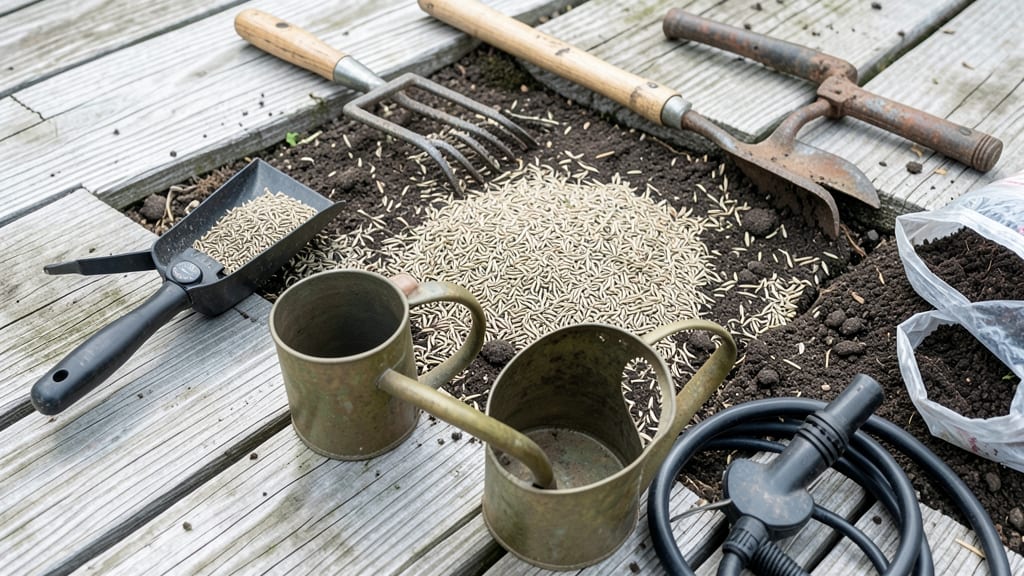
September is the perfect month to plant grass seed when you want a lush lawn before winter sets in. 🌱 The cool weather helps seeds germinate without the stress of summer heat or the rush of spring—giving you a head start on spring's best-looking lawns.
This is especially true in USDA Zones 3-7, where fall planting is ideal, but even warm climates can benefit with the right timing and care.
You’ll need a few simple supplies: a rake, grass seed suited for your climate (cool-season types like Kentucky bluegrass or tall fescue work best), a light layer of compost, and patience.
The key is preparing the soil—remove debris, loosen the top 2-3 inches, and level it out so seeds make contact with moist earth. Watering is critical too; keep the soil consistently damp (not soggy) until germination, which usually takes 7-21 days depending on the variety.
Once those first green shoots appear, you’ll see why September planting pays off—a thick, frost-resistant lawn by winter that outcompetes weeds in spring. Just be mindful of early frosts: if temperatures dip below 40°F, hold off until soil warms slightly in the morning.
The payoff? A lawn that greens up faster and stays vibrant longer than spring plantings.
This method works for both beginners and seasoned gardeners—just adjust seed types for your zone and watch your lawn transform. Whether you’re fixing bare patches or starting fresh, September’s cooler temps make it the smartest time to plant. Let’s get those seeds in the ground!
📚 In This Guide
- What you need
- Instructions
- Tips and common mistakes
- Wrapping up and next steps
What you need
- ● Grass seed: Choose a cool-season variety (e.g., Kentucky Bluegrass, Tall Fescue, or Perennial Ryegrass). Quantity depends on your lawn size—typically 4-8 lbs per 1,000 sq ft for new lawns or 2-4 lbs per 1,000 sq ft for overseeding.
- ● Lawn fertilizer: A starter fertilizer with a high phosphorus content (e.g., 5-10-10 ratio) to encourage root growth. Use 1-1.5 lbs of nitrogen per 1,000 sq ft.
- ● Topsoil or compost: ¼ to ½ inch layer to improve seed-to-soil contact and moisture retention.
- ● Lawn rake: A bow rake (for leveling) or a stiff-bristle garden rake (for removing debris).
- ○ Broadcast spreader: For even seed distribution. Optional but highly recommended for large areas.
- ● Garden hose with a sprinkler: A fine mist nozzle for gentle, frequent watering.
- ○ Soil test kit (optional but helpful): To check pH and nutrient levels. Ideal pH for cool-season grass: 6.0-7.0.
- ● Lawn roller: Lightweight (50-100 lbs) to press seed into soil gently.
- ● Pre-emergent herbicide: Apply 4-6 weeks before seeding to prevent weeds (check label for safe timing).
- ● Straw or erosion control blanket: To protect seeds from birds and wind until germination.
- ● Knee pads or gloves: For comfort during prep work.
- ● String trimmer or edger: To tidy up edges after planting.
Step-by-step instructions for planting grass seed in September
September’s mild weather and regular rainfall make it the perfect time to grow lush, resilient grass—here’s how to do it right.
🌱 Step 1: Prepare the Soil for Optimal Seed Contact
Start by mowing your existing lawn as short as possible—this helps new seed reach the soil directly. If you’re seeding a bare area, remove all debris, rocks, and weeds. Use a rake to create a rough, textured surface; you want the soil to feel like fine sandpaper when you run your hand over it. This ensures seeds make solid contact with the earth.
For compacted soil, aerate with a core aerator to create small holes about 3-4 inches deep. This lets roots penetrate easily and prevents water from pooling. After aerating, spread a thin layer of compost or starter fertilizer (if using) over the entire area. Work it into the top ½ inch of soil with a rake—this gives seedlings a nutrient boost right from the start.
💧 Step 2: Spread Seed Evenly for Uniform Growth
Divide your seed into two equal portions. Walk in one direction, spreading the first half evenly across the area. Use a broadcast spreader for large lawns or hand-scatter for small patches—just don’t dump it all in one spot. Then, walk perpendicular to your first pass and spread the second half. This crosshatching method prevents thin or thick patches.
Lightly rake the seed into the soil with a stiff-bristled rake, pressing it down just enough to cover it with ¼ inch of soil or compost. If you bury it deeper, it’ll take longer to germinate and may not sprout at all. For slopes, spread seed uphill to prevent runoff during watering.
☀️ Step 3: Water Gently and Consistently for Germination
Keep the soil moist but never soggy during germination—this usually takes 7-21 days, depending on the grass type. Water lightly two to three times daily, enough to dampen the top ½ inch of soil. You’ll know you’ve got it right when the surface looks dark but not glistening. Avoid overhead sprinklers, which can wash away seed.
Once seedlings reach 2-3 inches tall, switch to deeper watering—about 1 inch per week, including rainfall. Let the top ½ inch of soil dry slightly between waterings to encourage deep root growth. Too much moisture now leads to fungal diseases like brown patch, which can ruin your new lawn overnight.
✂️ Step 4: Maintain and Protect New Growth
Wait until your new grass reaches 3-4 inches tall before mowing—this usually takes 6-8 weeks. Set your mower blade to 3 inches high and never remove more than ⅓ of the blade height at a time. This keeps roots strong and prevents scalping, which stresses young plants.
Keep foot traffic to a minimum for the first 4-6 weeks. If pets or children play on the area, redirect them to a different spot. Also, avoid fertilizing until the grass has been mowed 3-4 times—this ensures the roots are established enough to handle extra nutrients.
🌿 Step 5: Monitor and Adjust for Seasonal Changes
As temperatures drop toward 50°F, reduce watering slightly but keep the soil from drying out completely. In early fall, apply a light layer of mulch or straw to protect seeds from late frosts. If your area gets heavy rain, check for puddles—poor drainage can suffocate roots.
By late fall, your new grass should be thick enough to handle winter. If you notice bare spots or slow growth, overseed lightly in early spring. With September’s ideal conditions, you’ll have a head start on a lawn that’s the envy of the neighborhood by next summer.
Tips & tricks for perfect September grass planting
September’s window for seeding is short—here’s how to make every step count for a lawn that thrives all season.
Soil Prep Secret: After mowing, run your hand over the soil—it should feel rough like fine sandpaper. If it’s smooth, go over it with a stiff rake again. This texture is what lets seeds cling properly. For compacted areas, aerate first, then top with ½ inch of compost or starter fertilizer. This isn’t just decoration—it’s the difference between seeds that sprout and seeds that wash away.
Seed Distribution Hack: The crosshatching method in Step 2 works wonders, but here’s the pro move: walk diagonally first, then horizontally. This creates an even grid pattern that eliminates the "zigzag stripes" look. For slopes, spread seed uphill and use a lightweight rake to press it down gently—just enough to cover with ¼ inch of soil, no more.
Watering Wisdom: Those 7-21 days of germination are critical. Set a timer for watering twice daily—morning and late afternoon—to keep the top ½ inch consistently damp. Use a spray nozzle on your hose for gentle coverage; overhead sprinklers will blast seeds away. Once seedlings hit 2-3 inches, switch to deep watering—think 1 inch per week—letting the top layer dry slightly between sessions. This prevents fungal issues that can kill young grass overnight.
First Mow Matters: Wait until your new grass reaches 3-4 inches before mowing—this usually takes 6-8 weeks. Set your mower blade to 3 inches high and never cut more than ⅓ of the blade height at once. This keeps roots strong and prevents scalping. I’ve seen beginners mow too soon and end up with patchy, stressed grass that takes months to recover.
Pro Tips for Planting Grass Seed In September
- September’s window for seeding is short—here’s how to make every step count for a lawn that thrives all season.
- Soil Prep Secret: After mowing, run your hand over the soil—it should feel rough like fine sandpaper. If it’s smooth,...
- Seed Distribution Hack: The crosshatching method in Step 2 works wonders, but here’s the pro move: walk diagonally fi...
Frequently asked questions
Got questions about planting grass seed in September?
You’re not alone! Here are answers to the most common concerns—so you can tackle your lawn project with confidence.
Is September really the best time to plant grass seed?
September is ideal for cool-season grasses (like Kentucky bluegrass, fescue, and ryegrass) because soil temps are warm, but air temps are cooling—perfect for germination. Avoid summer heat or winter dormancy for best results. Pro tip: Aim for 2-4 weeks before your first frost for a head start!
What if I miss September? Can I plant later?
You can plant into early October, but success drops after frost. If you miss the window, wait until spring (March–April). For a quick fix, overseed with ryegrass in fall—it germinates fast and holds soil until spring. Just know: late planting may mean thinner grass until next year.
How do I keep weeds from overtaking my new grass?
Pre-emergent herbicides (applied before seeding) block weed seeds. After planting, hand-pull weeds or use a spot-treatment herbicide like vinegar (for organic yards). Mulch lightly with straw to smother weeds while protecting soil moisture. Warning: Avoid post-emergent herbicides—they’ll kill your grass too!
Do I need to fertilize right after planting?
Not immediately! Wait 4–6 weeks after germination to fertilize (use a starter blend with phosphorus). Over-fertilizing can burn tender seedlings. Instead, focus on watering deeply (1–1.5 inches weekly) and keeping soil moist. Bonus: A light top-dressing of compost adds nutrients naturally.
What if my grass doesn’t grow evenly?
Uneven growth often means inconsistent soil contact or moisture. Rake seeds lightly into soil (¼ inch deep) and water gently to settle them. If patches are bare, spot-seed and water daily until sprouts appear. Check for: compacted soil (aerate), shade issues (consider shade-tolerant grass), or poor seed quality.
Can I plant grass seed in September if I have pets or kids?
Yes! Use pet-safe seed blends (like annual ryegrass) and avoid pesticides. Wait until seeds germinate (2–3 weeks) before letting pets back on the lawn. For kids, create a fun "lawn science" project—measure growth weekly or track rainfall!
Wrapping up and next steps
September is your golden opportunity to grow a lush, healthy lawn—cool-season grasses thrive when planted early in the season! By following the right steps—preparing the soil, choosing quality seed, and keeping it moist—you’ll set your lawn up for success before winter.
Don’t wait; take action now while temperatures are ideal, and enjoy a vibrant yard come spring.
🌱 Next step: Grab your supplies, mark your calendar, and start planting this weekend! Your future lawn will thank you. 😊