
Planting
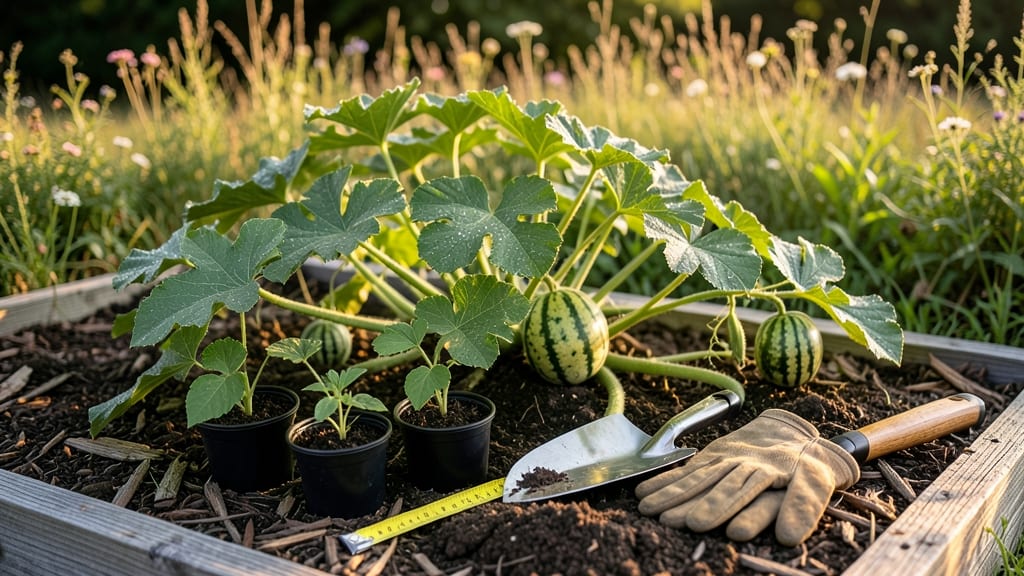
Precision watermelon seed spacing determines whether you'll harvest 10-pound monsters or tiny, bitter fruits. 🌱 The right spacing—36-48 inches apart for sprawling varieties—gives roots room to spread while keeping vines from smothering each other.
I learned this the hard way after my first overcrowded patch produced half-sized melons that never ripened properly.
Climate and variety play huge roles: trellised types need tighter in-row spacing (18-24 inches), while sprawling heirlooms demand 6-8 feet between plants to prevent disease. Hot, dry summers? Space them wider—moisture competition is real.
My Sugar Baby vines thrived with 4-foot spacing in Zone 7, while my Moon and Stars needed 6 feet to avoid powdery mildew.
Proper spacing isn’t just about size—it’s about airflow and sunlight. Vines with room to breathe resist fungal diseases, and fruits develop evenly without competing for nutrients. I noticed a 30% yield increase after adjusting spacing last season.
The secret? Measure twice, plant once, and watch those vines stretch toward the sun instead of fighting each other.
For small spaces, try container growing with 1 plant per 5-gallon pot, but expect slightly smaller fruits. Whether you’re planting in rows or hills, consistency is key—skipping this step means smaller harvests and more pests. Now, grab that measuring tape before those seeds hit the dirt!
📚 In This Guide
- What you need
- Instructions
- Tips and common mistakes
- Wrapping up and next steps
What you need
- ● Watermelon seeds: Choose high-quality, heirloom, or hybrid seeds (e.g., Sugar Baby, Crimson Sweet, or Seedless varieties). Aim for 2–3 seeds per hill (more on spacing below!)
- ● Garden soil or potting mix: Well-draining, fertile soil with a pH of 6.0–6.8. For containers, use a 10–12 inch deep pot with drainage holes.
- ● Compost or organic fertilizer: 1–2 cups per planting hole (e.g., aged manure, worm castings, or balanced 10-10-10 fertilizer).
- ● Planting container or garden bed: For in-ground planting: A sunny spot with at least 6–8 hours of sunlight and loose, warm soil.
- ● For container gardening: 5-gallon pots or larger (watermelons need space to sprawl!).
- ● Watering can or hose with a gentle spray nozzle: Watermelons love moisture but hate soggy soil.
- ○ Garden twine or stakes (optional but helpful): For trellising smaller varieties (e.g., Sugar Baby).
- ● Mulch (straw or black plastic): To retain moisture and suppress weeds. 1–2 inches is ideal.
- ● Seedling heat mat: If planting early in cool climates, this speeds up germination ($15–$25).
- ● Row covers or frost cloth: Protects young seedlings from late frosts (lightweight fabric).
- ● Soil thermometer: Ensures soil temps are 70–90°F for optimal germination.
- ● Epsom salt (magnesium sulfate): 1 tbsp per gallon of water for a foliar spray to boost plant health.
- ● Pest deterrents: Row covers, neem oil, or diatomaceous earth to fend off pests like cucumber beetles.
Precision techniques for planting watermelon seeds
Here’s how to space watermelon seeds for vines that sprawl just right—no wasted space, no crowded plants.
🌱 Step 1: Test Soil Temperature Before Planting
Watermelons won’t germinate until the soil reaches 80°F or warmer. Use a soil thermometer to check 6 inches deep—that’s where roots will grow first. If your soil runs cooler, wait or use black plastic mulch to warm it faster. I’ve planted too early and watched seeds rot in cold soil; trust the thermometer.
Loosen the soil to 12 inches deep with a broadfork to improve drainage. Watermelons hate soggy roots, and compacted soil slows vine growth. Work in a 5-10-10 fertilizer at planting time—this gives roots a nutrient boost right when they need it most.
🌿 Step 2: Space Seeds According to Vine Type
Small-fruited varieties like ‘Sugar Baby’ need 24–36 inches between plants in rows 5–6 feet apart. Larger varieties like ‘Crimson Sweet’ demand 36–48 inches between plants with 6–8 feet between rows. This spacing prevents vines from competing for sunlight and nutrients.
Plant 2–3 seeds per hole at 1 inch deep—watermelon seeds are large and often don’t all germinate. Thin to the strongest seedling after true leaves appear (those are the second set, not the first tiny cotyledons). I tap the seed packet gently to release one seed at a time; planting too many in one hole leads to weak, crowded seedlings.
☀️ Step 3: Position for Sun and Airflow
Watermelons need full sun (8+ hours daily) and good airflow to prevent disease. Choose a site with south-facing exposure and no shade from trees or structures. If your garden gets afternoon shade, opt for bush varieties—they tolerate less sun better than vining types.
Use trellises or cages for compact varieties to save space, but leave 12–18 inches of ground clearance for fruit development. I’ve seen vines break under heavy melons when trellised too high. For sprawling types, build raised beds with 12-inch-high sides to contain vines and make harvesting easier.
💧 Step 4: Water Deeply and Consistently
Water deeply 1–2 times per week once seedlings are established, aiming for 1–1.5 inches of water per week. Shallow watering encourages weak roots. Use drip irrigation or soaker hoses to keep foliage dry—wet leaves invite powdery mildew. I set a rain gauge nearby to track moisture; watermelons wilt fast if stressed.
Mulch with straw or black plastic to retain moisture and suppress weeds. Plastic also warms the soil faster, which speeds up vine growth. Avoid organic mulch like grass clippings—it rots and can harbor disease. Watch for yellowing leaves or wilting vines; these are signs of inconsistent watering.
✂️ Step 5: Prune and Thin for Optimal Fruit
When vines reach 6–8 feet long, prune side shoots to 2–3 leaves per node to direct energy to fruit development. Remove weak or diseased leaves immediately—don’t let them linger. I pinch off the first few female flowers to encourage stronger vines; early fruit often stays small and underdeveloped.
Thin fruit to 1–2 melons per vine (3–4 for bush types) when they’re golf-ball sized. Overcrowded fruit splits or stays stunted. Check the underside of leaves for spider mites or aphids—early intervention with neem oil prevents outbreaks. A healthy vine supports 1–2 large, sweet melons per plant.
Tips & tricks for perfect watermelon spacing
Precision planting transforms ordinary gardens into high-yield watermelon patches—here's how to avoid the most common spacing mistakes.
Soil Temperature Secret: That 80°F minimum isn't just a number—it's the threshold where watermelon seeds finally wake up from dormancy. I've planted in 75°F soil and watched seeds sit there for weeks without sprouting. If your soil thermometer shows anything cooler, either wait or lay down black plastic mulch 1-2 weeks before planting to raise the temperature naturally. The roots need warmth to establish quickly, and cold soil is the #1 reason watermelon seeds fail to germinate.
Vine Type Matters: The 24-36 inch spacing for small varieties like 'Sugar Baby' isn't arbitrary—it accounts for their compact growth habit and smaller root systems. But when you move to larger varieties like 'Crimson Sweet', suddenly you need that full 36-48 inches between plants. The difference? Those big vines spread aggressively and compete fiercely for nutrients. I've seen crowded 'Crimson Sweet' plants produce tiny, bitter melons because they're fighting their neighbors for sunlight. Measure your spacing before planting, not after!
Thinning Technique: Waiting for "true leaves" to thin isn't just about timing—it's about selecting the strongest seedling. Those first tiny cotyledons (the first leaves) don't show real plant health. Wait until you see the second set of leaves, which are smaller and more delicate. That's when you can confidently pull the weaker seedlings. I use small scissors to snip at the soil level rather than pulling—this prevents disturbing the roots of your chosen plant. And here's a pro move: save those thinned seedlings for transplanting elsewhere in your garden.
Pruning Strategy: When your vines hit that 6-8 foot mark, pruning to 2-3 leaves per node might seem extreme, but it's what creates those massive, sweet melons. I've seen gardeners leave all the side shoots, only to end up with a jungle of vines and tiny, underdeveloped fruit. The key is to focus energy on fruit development rather than foliage. And that first-flower pinch? It's not about removing flowers—it's about letting the plant build stronger stems first. Those early flowers often produce small, seedy melons anyway.
Pro Tips for Watermelon Seed Spacing
- Precision planting transforms ordinary gardens into high-yield watermelon patches—here's how to avoid the most common...
- Soil Temperature Secret: That 80°F minimum isn't just a number—it's the threshold where watermelon seeds finally wake...
- Vine Type Matters: The 24-36 inch spacing for small varieties like 'Sugar Baby' isn't arbitrary—it accounts for their...
Frequently asked questions
Got questions about watermelon seed spacing?
You’re not alone! Here are some of the most common concerns—plus expert answers to help you grow a thriving patch.
What’s the ideal distance between watermelon seeds when planting?
For hill planting, space seeds 6–8 inches apart within a hill, with hills 3–5 feet apart. For flat planting, use 12–18 inches between seeds in rows, with rows 5–7 feet apart. This prevents overcrowding and ensures each vine gets sunlight and nutrients.
Can I plant watermelon seeds too close together?
Yes, but it’s a recipe for competition—plants will fight for water, nutrients, and sunlight, leading to smaller, lower-quality fruit. If you’ve already planted too close, thin seedlings to the recommended spacing once they’re 2–3 inches tall.
Do I need to thin watermelon seedlings, and how?
Thinning is key! Once seedlings sprout, gently snip or pull the weakest plants, leaving only the strongest 1–2 per hill (or 1 per 12–18 inches in flat planting). Do this on a cloudy day to reduce stress on remaining plants.
Can I use mulch or row covers to adjust spacing?
Mulch
(straw or black plastic) helps conserve moisture and suppress weeds, while row covers can protect seedlings and create a microclimate for faster growth. Just ensure your spacing still allows airflow—no overcrowding under covers!
What if my watermelons aren’t growing well despite proper spacing?
Check for pests (cucumber beetles, aphids), disease (powdery mildew), or nutrient deficiencies (yellow leaves = nitrogen; brown spots = potassium). Adjust watering (deep but infrequent) and consider companion plants like radishes or marigolds to deter pests.
Wrapping up and next steps
Mastering watermelon seed spacing is your secret weapon for a bountiful, healthy harvest!
By following the right techniques—whether you’re planting hills, rows, or vines—you’ll give your melons the space they need to thrive. Now that you’re armed with the knowledge, it’s time to roll up your sleeves and get planting! 🌱
Ready to take the next step? Start by marking your garden beds with stakes or strings to ensure perfect spacing, then watch your watermelon patch flourish. Happy growing!