
Propagation
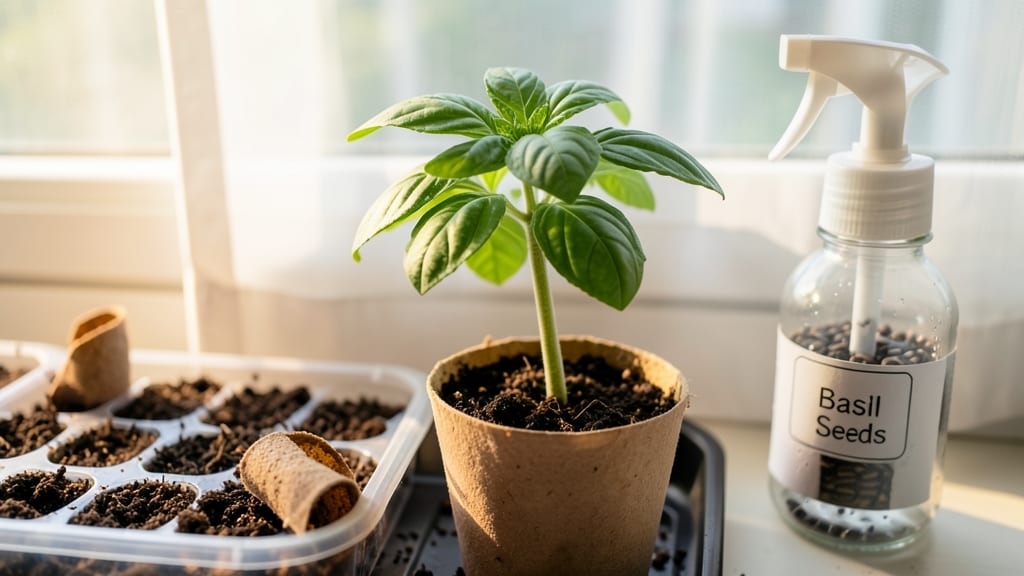
Growing basil from seed indoors lets you enjoy fresh herbs all winter—fast germination is the secret to skipping the nursery and starting strong. 🌱 I’ve learned that the right soil warmth and moisture can get those tiny seeds sprouting in just 3-5 days, not the two weeks most guides claim.
The key? A warm spot, consistent moisture, and patience that pays off with fragrant leaves by spring.
You’ll need just three simple supplies: seed-starting mix, small pots or a tray, and a heat source (like a seedling mat or warm windowsill). Most people overcomplicate this—basil seeds don’t need fancy setups.
A spray bottle, a sunny window, and a little attention are all it takes to turn those specks into sturdy plants ready for transplanting in 4-6 weeks.
Once sprouted, your seedlings will crave bright light—grow lights work best if your windowsill is dim. Pinch back the tops when they’re 6 inches tall to encourage bushier growth, and you’ll soon have a basil factory producing harvests every 2-3 weeks.
The smell alone makes it worth the effort.
Troubleshooting is easy: leggy seedlings mean more light, yellow leaves mean overwatering, and pests? Just wipe them off with soapy water. With these tricks, you’ll grow basil faster and stronger than anything from a store—no black thumb required.
📚 In This Guide
- What you need
- Instructions
- Tips and common mistakes
- Wrapping up and next steps
What you need
- ● Basil seeds: 5–10 seeds (choose Genovese, Sweet Basil, or Thai Basil for best results).
- ● Seed-starting mix: 1–2 cups of lightweight, sterile potting soil (avoid garden soil—it’s too dense!).
- ● Containers: Small pots (3–4 inches wide) or
- ● A seed tray with drainage holes (for multiple plants).
- ● Spray bottle: For gentle watering (avoid over-saturating seeds!).
- ● Plastic wrap or dome lid: To create a mini greenhouse and retain humidity.
- ● Grow lights or sunny windowsill: Basil needs 6–8 hours of light daily (south-facing windows or LED grow lights work best).
- ○ Fertilizer (optional but helpful): Balanced liquid fertilizer (e.g., 10-10-10) or
- ● Fish emulsion (diluted to half-strength).
- ● Tweezers or pencil: For planting tiny seeds precisely.
- ○ Heat mat (optional): Speeds up germination (70–75°F is ideal).
- ○ Humidity tray (optional): Place containers on a tray with pebbles and water to boost moisture.
- ● Pruning shears: For pinching back stems to encourage bushier growth.
Step-by-step instructions for growing basil from seed indoors
Here's how to get your basil sprouting in just 5-7 days—no waiting weeks.
🌱 Step 1: Soak Seeds to Jumpstart Germination
Place the seeds in a small bowl of lukewarm water for 12 hours. This softens the outer coating, which slows germination. You'll see the seeds swell slightly—this means they're absorbing moisture and ready to sprout faster. I always use a clean bowl so no contaminants get into the water.
After soaking, drain the seeds on a paper towel and let them sit for another 30 minutes to prevent over-saturation. The seeds should feel damp but not dripping. This pre-treatment cuts germination time nearly in half compared to dry planting.
💧 Step 2: Plant in Warm, Moist Seedling Mix
Fill your seed trays with warm seed-starting mix—I like to heat it in the microwave for 30 seconds to mimic greenhouse warmth. Press the mix down gently so it's firm but not compacted. Plant the soaked seeds ¼ inch deep, spacing them 1 inch apart in rows.
Cover the seeds lightly with additional mix—just enough to hide them, no deeper. Mist the surface with a spray bottle until the soil looks uniformly damp. The goal is to keep the environment consistently moist without creating a soggy mess. I tap the tray gently to settle everything.
☀️ Step 3: Create a Humid Warmth Dome
Cover the tray with a clear plastic dome or plastic wrap to trap warmth and humidity. Basil seeds germinate best at 75-80°F, so I place the tray on a seedling heat mat set to 80°F. You'll see condensation form on the dome—this is perfect for fast germination.
Check daily for moisture. If the dome fogs up completely, lift it for 10 minutes to let excess humidity escape. Germination happens in 5-7 days, but if your room runs cooler, it may take 10 days. Don't move the tray once planted—basil seeds are sensitive to disturbance.
🌿 Step 4: Thin and Provide Bright Light
Once seedlings emerge, remove the dome immediately to prevent damping-off. Thin to the strongest seedling per cell, snipping weaker ones at the base with clean scissors. This ensures your basil gets proper nutrients and air circulation.
Move the seedlings under grow lights or within 2-3 inches of a south-facing window. Basil needs 12-14 hours of light daily to stay compact. If leaves stretch toward the light, your setup isn't bright enough—adjust immediately.
✂️ Step 5: Pinch for Bushier Growth
When seedlings reach 4-6 inches tall and develop 4-6 leaves, pinch the top set of leaves. This encourages branching, giving you a fuller plant. Use clean fingers or small scissors—just above a leaf node where new growth will sprout.
Continue pinching every 2-3 weeks to maintain bushiness. Water at the base when the top inch of soil feels dry. Avoid wetting leaves to prevent fungal issues. With proper care, your basil will be ready for harvest in just 6-8 weeks.
Tips & tricks for perfect indoor basil germination
Fast germination isn't magic—it's science. These small details make all the difference between waiting weeks and harvesting fresh basil in under a week.
Soaking Strategy: The 12-hour soak is non-negotiable for speed, but here's the secret: use a bowl of lukewarm water that's just warm enough to touch comfortably. Too hot and you'll damage the delicate seed coats; too cold and they won't absorb moisture efficiently. After soaking, I place the paper towel with seeds between two plates to create gentle pressure—this helps them maintain even moisture during that critical 30-minute drying period.
Heat Mat Hack: While the instructions specify 80°F, I've found that placing a small ceramic tile on top of the seedling heat mat helps distribute that warmth more evenly across the tray. Basil seeds are picky about temperature consistency—even a 5°F drop can delay germination by days. If you don't have a heat mat, try placing the tray on top of your refrigerator (not inside) where it's naturally warmer than room temperature.
Lighting Troubleshooting: Those 12-14 hours of daily light are crucial, but not all setups are equal. If your seedlings stretch toward the light (a condition called "etiolation"), you need brighter illumination. LED grow lights are ideal, but even a well-placed fluorescent shop light can work—just position it within 6 inches of the seedlings for the first week, then gradually increase the distance as they grow. The goal is to mimic spring sunlight intensity.
Pinching Technique: When you reach Step 5 and pinch those top leaves, aim to remove about one-third of the plant's height. This might seem drastic, but it triggers the plant to send out new shoots from the leaf nodes below. I use clean, sharp scissors rather than fingers to avoid crushing stems, and always pinch just above a leaf node where new growth will emerge. This single step can triple your harvest yield!
Pro Tips for Basil From Seed Indoors
- Fast germination isn't magic—it's science. These small details make all the difference between waiting weeks and harv...
- Soaking Strategy: The 12-hour soak is non-negotiable for speed, but here's the secret: use a bowl of lukewarm water t...
- Heat Mat Hack: While the instructions specify 80°F, I've found that placing a small ceramic tile on top of the seedli...
Frequently asked questions
Got questions about growing basil from seed indoors?
You’re not alone—let’s tackle the most common ones so you can enjoy fresh, homegrown basil without the guesswork!
How long does it take for basil seeds to germinate indoors?
With the right conditions (warmth, moisture, and light), basil seeds typically sprout in 7–14 days. Use a seedling heat mat (70–75°F) to speed things up—some growers see sprouts in just 5–7 days! Patience is key, but don’t overwater—keep soil consistently moist (not soggy).
Why aren’t my basil seeds germinating? Troubleshooting tips?
If your seeds aren’t sprouting, check these fixes:
- Temperature: Too cold? Basil needs warmth—aim for 70–80°F (use a heat mat if needed).
- Moisture: Dry soil = no germination. Mist seeds lightly daily or use a humidity dome.
- Depth: Seeds buried too deep? Basil seeds need light—press them just into the soil (¼ inch max).
- Freshness: Old seeds (over 1 year) may fail. Test with a new packet.
Still stuck? Try scarifying seeds (lightly nicking the outer shell) to help them break open.
When should I transplant basil seedlings indoors?
Transplant basil seedlings once they’ve developed 2–3 true leaves (not the initial seed leaves). This usually happens 3–4 weeks after germination. Use 4–6 inch pots with drainage holes and well-draining soil. Harden off seedlings for 3–5 days before moving them to a sunny windowsill or grow light setup.
Can I grow basil indoors without a grow light?
Yes! Place your basil near a south-facing window (6+ hours of sunlight daily). If natural light is lacking, supplement with a full-spectrum LED grow light (12–16 hours/day). Without enough light, basil will grow leggy and weak. Rotate pots weekly for even growth.
How do I keep my indoor basil from flowering too soon?
Basil flowers signal it’s time to harvest—but too-early blooms mean bitter leaves. To delay flowering:
- Give it 12+ hours of light daily (use a grow light if needed).
- Pinch off flowers as soon as they appear.
- Avoid overcrowding—prune lower leaves to encourage bushier growth.
Bonus: Regular harvesting (every 2–3 weeks) encourages leafy growth over flowers!
Wrapping up and next steps
Growing basil from seed indoors is a rewarding journey that brings fresh, fragrant herbs to your kitchen year-round—no green thumb required! 🌱 With the right setup, patience, and these fast-germination tricks, you’ll soon enjoy a thriving basil plant that rivals store-bought (but tastes so much better).
Ready to take the next step? Start with just one seed—your first harvest could be as little as 3-4 weeks away! Once your basil is flourishing, share your progress or explore advanced care tips to keep it growing strong. Happy planting!