
Planting
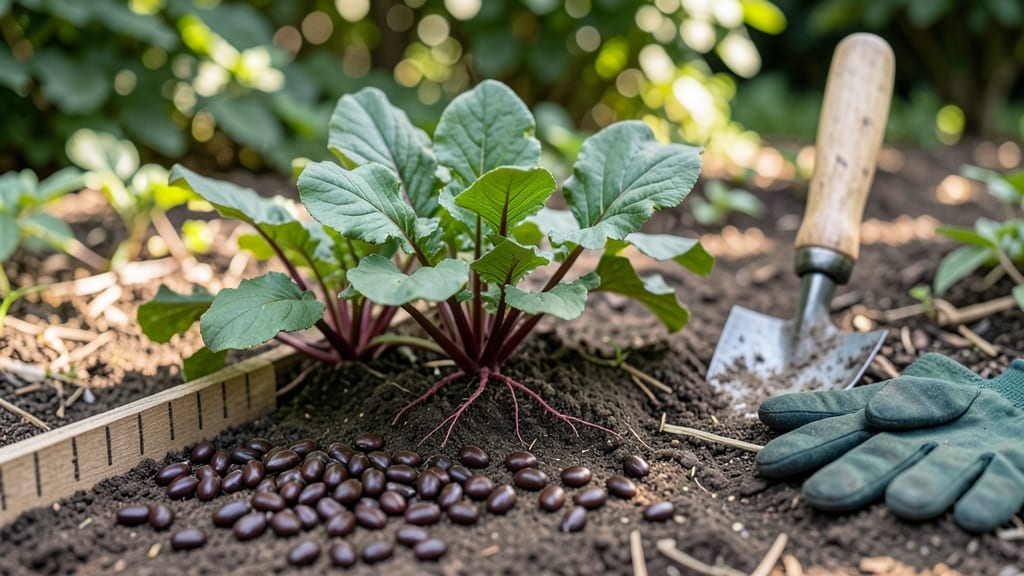
Perfect beet seed spacing means the difference between scraggly, spindly roots and bushy harvests that make your garden the envy of the neighborhood. 🌱 I learned this the hard way—crowded beets fight for space, leaving you with small, misshapen roots and bitter greens instead of the tender, sweet harvests we all crave.
The secret lies in spacing seeds just right from day one, so they develop strong, plump roots without competing for sunlight or nutrients.
Start with rows spaced 12-18 inches apart—this gives your beets room to spread and makes thinning easier later. Plant seeds ½ inch deep and 1 inch apart within the row, then thin to 3-4 inches between plants once they sprout.
The key is patience: beets grow slowly at first, but proper spacing now means fewer headaches later. I’ve found that using a seed spacing tool or even a toothpick helps mark where to plant, so you don’t accidentally crowd them.
What you’ll end up with is a neat, productive bed where every beet has space to grow into its full, round potential. The greens stay tender, the roots stay sweet, and you avoid the frustration of tangled, underdeveloped harvests.
Plus, proper spacing makes weeding and harvesting a breeze—no more wrestling with crowded plants or digging through a jungle of leaves to find your prize roots.
This method works for both detroit-style beets (with their flat tops) and classic globe varieties, whether you’re growing in a traditional garden bed or raised containers.
The only real mistake is rushing the thinning process—give those seedlings time to grow a few true leaves before pulling the weakest ones, and you’ll set yourself up for success all season long.
📚 In This Guide
- What you need
- Instructions
- Tips and common mistakes
- Wrapping up and next steps
What you need
- ● Beet seeds: Certified organic or non-GMO seeds (e.g., Detroit Dark Red, Chioggia, or Golden varieties). Aim for 1–2 oz per 100 sq ft.
- ● Garden soil: Well-draining, loose soil with a pH of 6.0–7.0. Amend with compost (2–3 inches mixed in) if your soil is heavy or clay-like.
- ● Garden bed or containers: In-ground rows: 12–18 inches wide (for easy access).
- ● Raised beds: At least 6 inches deep.
- ● Containers: Minimum 6-inch depth with drainage holes.
- ● Planting tools: Hand trowel or transplanting knife (for precision spacing).
- ● Garden rake (to smooth soil before planting).
- ● Measuring tape or ruler (for marking rows and spacing).
- ● Watering can or hose: With a gentle spray nozzle to avoid disturbing seeds.
- ○ Mulch (optional but recommended): Straw or shredded leaves to retain moisture and suppress weeds.
- ● Seedling trays: For starting seeds indoors 4–6 weeks before the last frost (if your climate demands it).
- ● Plant markers: Small stakes or labels to track varieties and spacing.
- ● Soil thermometer: Beets germinate best in soil temps of 50–60°F (10–15°C).
- ● Row cover or cloches: To protect seedlings from pests or cold snaps.
- ● Organic fertilizer: Low-nitrogen, high-phosphorus blend (e.g., 5-10-10) to boost root growth.
Precision techniques for perfect beet seed spacing
Here's how to space beet seeds for thick, even growth—no more scattered, stunted harvests.
🌱 Step 1: Prepare the Soil for Optimal Germination
Work the soil to a depth of 6 inches and remove any rocks or debris that could impede root growth. Beets thrive in loose, well-draining soil with a pH between 6.0 and 7.0. I like to mix in a handful of compost per 4 square feet to provide nutrients without compacting the earth. The goal is soil that crumbles easily when squeezed—it should feel like damp sand, not clay.
Level the planting area with a rake, creating a smooth surface. Uneven soil leads to uneven seed depth, which causes inconsistent germination. Press down firmly but gently to eliminate air pockets. This ensures steady moisture and even contact between seeds and soil.
🌱 Step 2: Plant Seeds in Rows with Exact Spacing
Use a 1/2-inch-deep drill or your finger to create rows 12 inches apart. Beets need this space to develop their full, rounded shapes without competition. I plant seeds in thin rows—about 1 inch apart—because beet seeds are tiny and often contain multiple germination points. Sowing them too far apart wastes space, but packing them too close leads to weak, tangled roots.
Drop 3-4 seeds per planting spot since not all will germinate. Cover lightly with soil, patting gently to secure seeds without burying them too deep. The rule of thumb is no deeper than 1/2 inch—any deeper delays germination. Water immediately with a fine mist to settle the soil and activate the seeds.
🌿 Step 3: Thin Seedlings for Maximum Yield
When seedlings reach 2 inches tall (about 3-4 weeks after planting), it’s time to thin. Use scissors to snip unwanted sprouts at soil level—pulling risks disturbing roots of neighboring plants. Leave the strongest seedling in each 4-inch spacing. This might seem wasteful, but crowded beets produce small, misshapen roots and are more prone to disease.
Thinning also improves air circulation, reducing the risk of fungal issues. Watch for first true leaves (the second set after the initial cotyledons) to appear—this is your cue that roots are establishing. After thinning, water deeply to help remaining plants recover from stress.
☀️ Step 4: Monitor Growth and Adjust Spacing if Needed
Beets grown for baby roots (harvested at 2-3 inches) can stay closer together, but mature beets need 3-4 inches between plants for full development. If you notice leaves touching or stems leaning toward each other, it’s time to hill soil around the base of plants to create more space underground. This encourages roots to grow outward rather than compete.
Mulch with 1-2 inches of straw or shredded leaves to retain moisture and suppress weeds. Keep the mulch 2 inches away from stems to prevent rot. Beets are drought-tolerant once established, but consistent moisture (about 1 inch per week) ensures sweet, tender roots. Adjust spacing if you’re growing long varieties—they may need 6 inches apart to avoid crowding.
✂️ Step 5: Harvest at Peak Maturity for Best Flavor
Baby beets are ready in 4-6 weeks when roots reach 1-2 inches in diameter. For full-size beets, wait until 50-60 days when roots are 2-3 inches wide. Pull gently but firmly—twisting can damage the root shape. Harvest on a dry day to reduce soil clinging to roots, which can cause rot during storage.
Leave a 2-inch stem attached to prevent bleeding (which makes beets bitter). Store in a plastic bag in the fridge for up to 2 weeks. If you’re saving seeds, allow some beets to mature fully—70-80 days—and watch for flower stalks to form. The spacing you established earlier ensures these mature plants have room to thrive without overcrowding.
Tips & tricks for perfect beet seed spacing
These precision planting tricks will help you grow beets that are plump, uniform, and free from competition.
Soil Preparation Secret: Before planting, mix in a thin layer of coarse sand if your soil feels dense or clay-like. This improves drainage without altering the soil's nutrient balance. The goal is soil that holds moisture but doesn't become waterlogged—beets hate soggy roots. I test by squeezing a handful: if it forms a tight ball, add more sand. This step is especially important in Step 1 where we prepare the soil.
Seed Depth Technique: The 1/2-inch depth mentioned in Step 2 is critical, but here's the trick: use a ruler or your knuckle as a guide. Plant seeds at the depth of your first knuckle when your finger is curled. This ensures consistent depth across your entire planting area. Too deep and seeds won't germinate; too shallow and they'll dry out. A fine mist spray bottle helps settle seeds without disturbing their placement.
Thinning Timing: When thinning in Step 3, wait until seedlings reach exactly 2 inches tall—no earlier. This gives roots enough time to establish while still being small enough to handle gently. I use clean kitchen scissors (sterilized with rubbing alcohol) to snip at soil level rather than pulling, which prevents disturbing neighboring plants. The resulting 4-inch spacing gives mature beets plenty of room to develop their full potential.
Mulching Strategy: In Step 4, apply mulch after the soil has had 2-3 days to warm up in the sun. This prevents temperature fluctuations that can stress young plants. Keep the mulch 2 inches away from stems to prevent rot while still suppressing weeds. For extra protection against bolting (premature flowering), add a light shade cloth during hot afternoons—especially important in regions with sudden temperature swings.
Pro Tips for Beet Seed Spacing
- These precision planting tricks will help you grow beets that are plump, uniform, and free from competition.
- Soil Preparation Secret: Before planting, mix in a thin layer of coarse sand if your soil feels dense or clay-like. T...
- Seed Depth Technique: The 1/2-inch depth mentioned in Step 2 is critical, but here's the trick: use a ruler or your k...
Frequently asked questions
Got questions about beet seed spacing?
You’re not alone—proper spacing can make or break your harvest! Here are answers to the most common queries to help you grow like a pro.
What’s the ideal distance between beet seeds?
For bush beets, space seeds 1–2 inches apart in rows 12–18 inches apart. For long, cylindrical beets, thin to 3–4 inches apart once seedlings sprout. Overcrowding leads to small, misshapen beets—so give them room to shine!
When should I thin beet seedlings?
Thin seedlings 2–3 weeks after germination, when they’re 2–3 inches tall and have 2–3 true leaves. Use scissors to snip at soil level (not pull) to avoid disturbing roots. Aim for your target spacing—patience pays off with plump, uniform beets!
Can I plant beet seeds too close together?
Yes—but it’s a recipe for disaster! Overcrowded beets compete for nutrients, water, and sunlight, resulting in small, tough roots and higher disease risk. If you’ve already planted too close, thin aggressively or harvest early (they’ll be tiny but edible). Prevention is key!
What if I don’t have enough space? Are there alternatives?
No space? No problem! Try container gardening—plant 1–2 seeds per 6-inch pot or use succession planting in small plots. For vertical gardening, grow leafy beet greens (like Swiss chard) alongside beets to maximize space. Get creative!
Why are my beets growing uneven sizes?
Uneven beets often mean inconsistent spacing or thinning. Check for:
- Seedlings left too close together
- Poor soil fertility (add compost!)
- Uneven watering (keep soil moist)
Wrapping up and next steps
Mastering beet seed spacing is your secret weapon for a thriving garden! 🌱 With the right techniques—like thinning seedlings and maintaining proper row distances—you’ll enjoy a bountiful harvest of tender, flavorful beets. Don’t let small details hold you back; precision planting pays off in delicious rewards!
Ready to take the next step? Grab your gloves, mark those rows, and get planting! Your future salads (and bragging rights) will thank you. 🎉