
Lawn
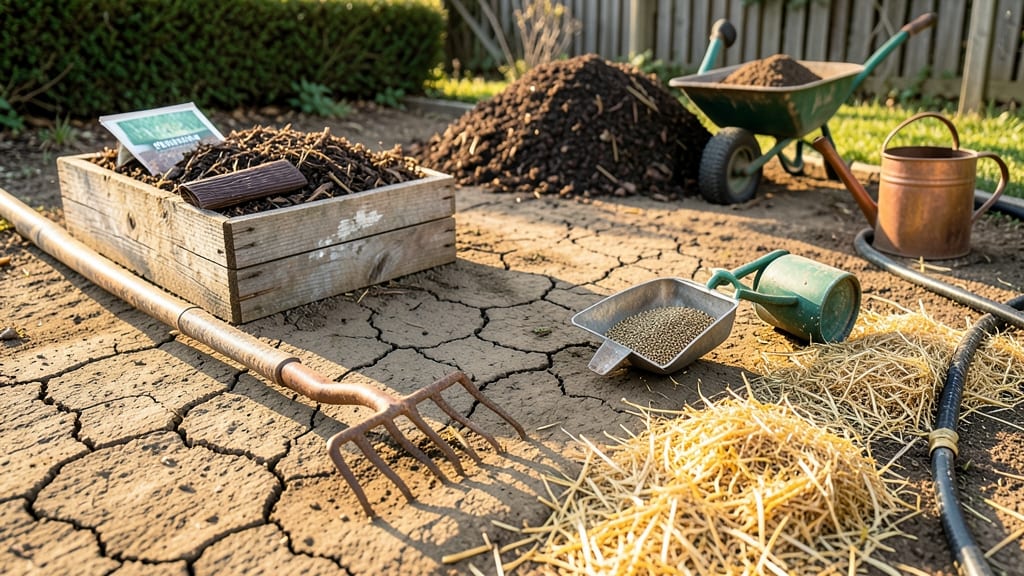
Planting grass seed on hard dirt feels impossible until you know the right prep tricks. 🌱 I’ve turned my own compacted backyard into a lush lawn by focusing on soil prep first—skipping this step means wasted seed and frustration.
The key is breaking that hardpan so roots can establish properly, and I’ll show you exactly how to do it without renting heavy equipment.
You’ll need a few simple tools: a stiff-bristle rake, a garden fork or aerator, and some compost or topsoil to blend in. Start by loosening the top 2–3 inches of soil—this isn’t about digging a garden, just breaking up the crust so seeds can make contact.
If your dirt is truly rock-hard, rent a core aerator for 10 minutes of work that saves hours of backbreaking labor later.
Once the soil is ready, choose a seed blend suited to your climate and foot traffic needs. Spread it evenly by hand or with a broadcast spreader, then lightly rake again to press seeds into the loosened soil.
Within 7–14 days, you’ll see the first green shoots—proof that proper prep turns hard dirt into fertile ground. The hardest part is waiting, but trust the process.
Aftercare is where most people trip up: water deeply twice daily for the first week, then taper off to encourage deep root growth. Avoid walking on new grass until it’s 3–4 inches tall, and you’ll have a lawn that outlasts summer heat and kids’ soccer games.
This method works for any yard size, from small patches to full backyards.
📚 In This Guide
- What you need
- Instructions
- Tips and common mistakes
- Wrapping up and next steps
What you need
- ● Grass seed: Choose a type suited to your climate (e.g., Kentucky Bluegrass, Fescue, or Bermuda). Aim for 10–15 lbs per 1,000 sq ft for full coverage.
- ● Heavy-duty rake: A bow rake (for leveling) or a garden cultivator (for breaking up soil). Look for tines 6–8 inches long for deep penetration.
- ● Shovel or mattock: A flat-head shovel (for digging) or a mattock (for stubborn hardpan). Opt for stainless steel blades for durability.
- ● Soil amendment: Compost (2–3 inches) or topsoil (4–6 inches) to improve texture. Avoid clay-heavy mixes.
- ● Garden hose or sprinkler: A soaker hose or mist nozzle for gentle, even watering (critical for germination!).
- ○ Lawn roller (optional but helpful): A 100–150 lb roller to firm seed into soil after planting.
- ● Sunlight access: Confirm your area gets 6+ hours of direct sun daily—most grass types thrive here.
- ○ pH test kit (optional): Ideal grass seed pH is 6.0–7.5. Adjust with lime (to raise pH) or sulfur (to lower) if needed.
- ● Weather check: Plant when temps are consistent between 60–75°F (spring/fall is best!). Avoid extreme heat or frost.
Step-by-Step instructions for planting grass seed on compacted soil
Here’s how to break through tough dirt and give grass seed the perfect start—no tilling required.
🪴 Step 1: Loosen the Soil Without Tilling
Rent a manual aerator or use a garden fork to poke holes 4-6 inches deep across the entire area. Work in a grid pattern, spacing holes 6 inches apart. This lets roots penetrate without disturbing the entire soil layer—critical for hardpan.
If the dirt feels rock-hard, mix in 2-3 inches of compost into the top layer. This improves drainage and nutrient flow. Water lightly after loosening to settle the soil and remove dust. You’ll see the difference immediately—soil that used to repel water will now hold moisture.
💧 Step 2: Level and Prepare the Surface
Drag a rake across the area to smooth out any remaining clumps or low spots. Fill depressions with fresh topsoil or sand if needed. The goal is a flat, even surface—grass seed needs consistent contact with soil to germinate properly.
For extra stubborn areas, sprinkle starter fertilizer lightly over the loosened soil. This jumpstarts root growth before seeding. Avoid heavy-handed application; you’re prepping, not fertilizing yet. A light dusting is all you need.
🌱 Step 3: Spread Seed Evenly with Precision
Use a broadcast spreader set to the recommended rate for your grass type (check the seed bag). Walk in a crisscross pattern to avoid thick patches. For small areas, hand-spread seed by scattering small handfuls and gently raking to distribute.
Don’t worry about perfect coverage—grass seed is tiny and spreads quickly. Lightly rake again to press seeds into the soil, ensuring firm contact without burying them. You’ll see seeds nestled just below the surface, ready to sprout.
☀️ Step 4: Protect and Water for Germination
Cover the seeded area with a thin layer of straw mulch (about ¼ inch thick). This shields seeds from drying winds and keeps moisture trapped. Water lightly but frequently—keep the top 1-2 inches of soil consistently damp until germination (usually 7-14 days depending on grass type).
Use a gentle misting to avoid dislodging seeds. You’ll know you’re doing it right when the mulch stays damp but not soggy. Avoid heavy watering; it washes away seeds and creates crusting. Patience here pays off—steady moisture is the key to even germination.
⏰ Step 5: Maintain Until Establishment
Once grass reaches 2-3 inches tall, reduce watering to 1 inch per week. This encourages deep root growth. Avoid walking on new grass for at least 4-6 weeks—it’s fragile at first. You’ll notice blades firming up and turning a deeper green as roots take hold.
If weeds appear, pull them by hand immediately. Chemical weed killers can harm young grass. Within 6-8 weeks, your lawn will be thick enough to handle light foot traffic. The hardest part is behind you—now it’s just about keeping it lush.
Tips & tricks for planting grass seed on hard dirt
Between us, these little tricks saved us from countless failed grass seed attempts—especially on tough, compacted soil.
Soil Prep Secret: When using a garden fork in Step 1, work the holes slightly deeper (up to 6 inches) in areas where you see hardpan. Press down firmly after inserting the fork to create mini "root tunnels." This mimics natural root penetration patterns and gives seeds a fighting chance in stubborn soil. The key is consistency—don't skip the grid pattern, even if it feels tedious.
Compost Placement: In Step 1, focus the 2-3 inches of compost only in the loosened holes rather than spreading it everywhere. This targeted approach prevents compost from washing away during watering while maximizing root contact. Think of it like creating little nutrient-rich pockets where seeds can anchor. You'll notice new shoots emerging from these pockets first—it's like watching seeds get a VIP treatment.
Watering Technique: For Step 4's gentle misting, use a spray nozzle with a fine mist setting and hold it 6-8 inches above the mulch. This creates the perfect microclimate—keeping the straw mulch damp without creating a soggy mat. The goal is to mimic morning dew rather than a downpour. We learned this after watching our first batch of seeds drown in their own waterlogged beds.
Weed Prevention: In Step 5, when weeds appear, pull them immediately but focus on the roots—especially dandelions and clover. These weeds have deep taproots that compete aggressively with young grass. I've seen grass give up entirely when these weeds take over, so don't wait until they're noticeable. A quick 10-minute weed patrol every 3 days makes all the difference during the first 6 weeks.
Pro Tips for Plant Grass Seed On Hard Dirt
- Between us, these little tricks saved us from countless failed grass seed attempts—especially on tough, compacted soil.
- Soil Prep Secret: When using a garden fork in Step 1, work the holes slightly deeper (up to 6 inches) in areas where you see hardpan.
- Compost Placement: In Step 1, focus the 2-3 inches of compost only in the loosened holes rather than spreading it everywhere.
Frequently asked questions
Got questions about tackling hard dirt and getting your grass seed to take root? You’re not alone! Here are some of the most common concerns—and straightforward answers—to help you crush your lawn project like a pro.
Can I plant grass seed directly on hard, compacted dirt?
While it’s possible, it’s not ideal. Hard dirt blocks water, air, and root penetration, making germination tough. Always loosen the soil first—even a shallow scratch with a rake or aerator helps. Skipping prep can lead to patchy, weak grass. Pro tip: If the soil is rock-hard, consider renting a core aerator for deeper relief!
How long does it take for grass seed to grow on hard-packed soil?
Germination time varies by seed type (cool-season vs. warm-season), but expect 7–21 days for sprouts to appear. Hard dirt slows this down—soil prep is half the battle. Once sprouted, roots take 4–6 weeks to establish. Patience is key! Water lightly daily (no puddles!) to keep soil moist but not soggy.
What’s the best way to water grass seed on compacted ground?
Use a gentle, frequent approach: Light watering (about ¼ inch) 2x daily (morning/evening) keeps seeds hydrated without washing them away. Avoid overhead sprinklers—use a soaker hose or misting nozzle instead. Hard dirt drains poorly, so monitor for runoff. Stop watering once grass reaches 3–4 inches tall to toughen it up.
What’s a faster alternative to breaking up hard dirt for seeding?
If tilling or aerating feels like overkill, try these shortcuts:
- Gypsum or lime: Amend soil with these to improve structure over time.
- Compost top-dressing: Spread ¼-inch compost, then seed—it’ll help loosen dirt naturally.
- Sod slices: Cut sod into strips, lay them over hard spots, and tuck seed underneath for instant coverage.
Why isn’t my grass seed germinating on hard ground?
Common culprits:
- Poor soil contact: Seeds need to touch moist soil—rake again if they’re sitting on top.
- Dry or crusty surface: Hard dirt can form a barrier. Scratch the top layer lightly with a hand rake.
- Temperature/light issues: Seeds need warmth (60–75°F) and sunlight. Shade cloth helps if your area gets too hot.
- Weeds or thatch: Pull weeds and dethatch to reduce competition.
Wrapping up and next steps
Transforming hard dirt into a lush, green lawn is totally within your reach—you’ve got this! 🌱 By breaking up compacted soil, amending it with organic matter, and following the right planting techniques, you’ll set your grass seed up for germination success.
Start small if needed, but don’t let the initial effort discourage you—consistent care will pay off in a beautiful, resilient yard.
Ready to see those first green shoots? Water regularly, protect your new lawn from foot traffic, and soon you’ll be enjoying the pride of a thriving grass patch! 🌟