Lawn
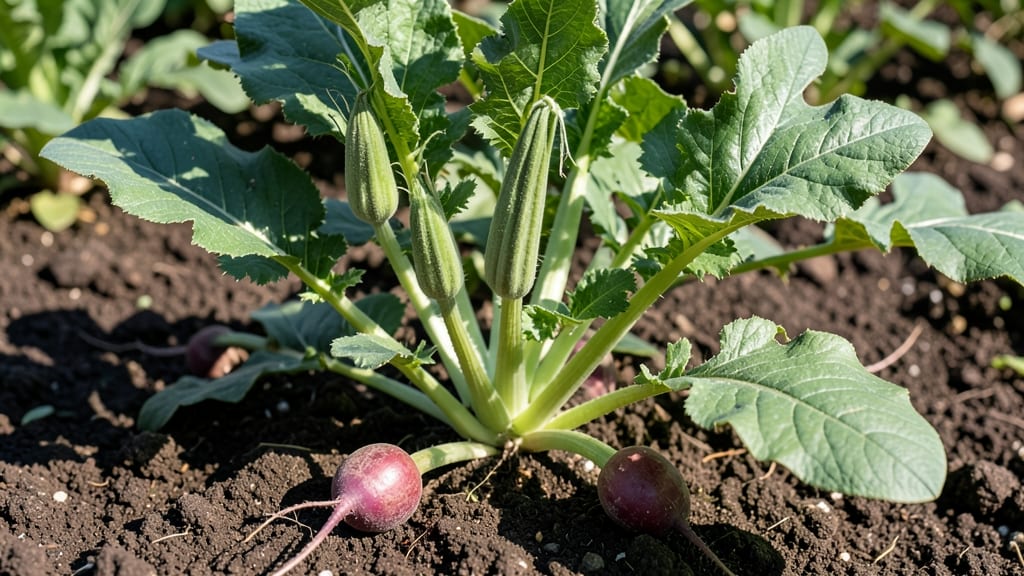
Twisting off the edible radish seed pods without ruining them is the secret to saving seeds that grow true. 🌱 I’ve spent years perfecting this technique after my first batch of brittle pods crumbled into useless fragments—now I reliably save seeds from varieties like ‘Cherry Belle’ and ‘French Breakfast’ that store well and sprout strong.
The key starts with the right soil: loose, well-drained, and rich in compost. Plant your radishes in early spring or late summer, spacing seeds 1 inch apart with rows 12 inches apart.
Keep the soil consistently moist but never soggy—wilting pods mean poor seed viability. When pods form but before they split open, they’re ready for harvest.
Harvest pods when they turn from green to tan, usually 60-70 days after planting. Twist gently at the base—if the pod resists, it’s ready. Store dried pods in paper envelopes in a cool, dark place.
These seeds keep their vigor for up to three years, ready to grow next season’s crisp radishes.
Bonus: save a few pods to dry for culinary uses too. Roasted radish seeds make a peppery snack, and their unique flavor adds depth to salads or spice blends. Just don’t overharvest—leave enough pods on the plant to ensure a good seed crop.
📚 In This Guide
- What you need
- Instructions
- Tips and common mistakes
- Wrapping up and next steps
What you need
- ● Gearing up to harvest edible radish seed pods? Here’s everything you’ll need to ensure a smooth, twist-resistant collection and viable seeds for future planting! 🌱✨
- ● Pro tip: 💡 Harvest pods on a dry, sunny day—this minimizes humidity and speeds up drying!
How to harvest edible radish seed pods without breaking them
Here's the gentle method I use to collect viable seeds from radish plants—no twisting, no snapping, just clean pods ready for saving.
🌱 Step 1: Wait for Pods to Mature Fully
Harvest pods only when they've turned from green to a deep brown or tan color and feel dry to the touch. If you pick them too soon, seeds won't be fully developed. I check pods daily after flowers fade—wait until they rattle slightly when shaken, which means seeds are mature inside.
Don't let pods stay on the plant past maturity, or they'll crack open naturally and scatter seeds everywhere. The best time to harvest is on a dry morning after dew has evaporated. This prevents moisture from weakening the pods during handling.
✂️ Step 2: Cut Pods Cleanly at the Stem
Use clean, sharp scissors or pruners to snip pods at the base where they meet the stem. Cutting too close to the pod risks crushing it, while leaving too much stem makes storage messy. I like to leave about ¼ inch of stem attached—just enough to hold the pod securely.
Work gently to avoid crushing pods. If you're harvesting multiple pods, lay them on a clean towel to prevent bruising. Never twist pods off—they'll snap and ruin your seed harvest. This is where most people mess up, so take your time.
🪴 Step 3: Dry Pods Thoroughly Before Seed Extraction
Spread pods in a single layer on a mesh screen or paper towel in a warm, dry place with good airflow. I use a seed tray under a fan to speed up drying without heat damage. Pods are ready when they're completely dry and brittle—about 1-2 weeks depending on humidity.
Check daily for mold or soft spots, which mean moisture is still trapped inside. If pods feel damp at all, give them more drying time. Once fully dry, seeds will rattle loudly when shaken—this is your signal they're ready for storage.
💧 Step 4: Extract Seeds Gently
Place dry pods in a clean paper bag and crush them lightly between your fingers or a rolling pin. Don't pulverize—just enough to break open the pods and release seeds. I like to do this outside or over a tray to catch any stray seeds that might escape.
Seeds will separate from pod debris easily once fully dry. Sift the mixture through a fine mesh strainer to remove chaff. Store seeds in a cool, dark place in a labeled envelope—radish seeds stay viable for 3-4 years when kept dry.
Tips & tricks for perfect edible radish seed pod harvesting
Real talk: Harvesting radish seed pods without breaking them takes patience—but these tricks make all the difference between a handful of seeds and a ruined harvest.
Mature Pod Inspection: Here's what nobody tells you—those pods need to be bone dry before harvesting. I test maturity by giving them a gentle shake: if seeds rattle like maracas, they're ready. If they're still green or damp, wait another day. The worst mistake? Harvesting when pods feel even slightly moist—they'll crack when you handle them later.
Cutting Technique: That ¼-inch stem you leave attached isn't just for looks—it's your grip. I use kitchen shears (not scissors) because they cut cleaner and give me better control. If you're harvesting a big batch, lay pods on a clean kitchen towel immediately after cutting. The contrast helps you spot any bruised pods right away, so you can set them aside for drying separately.
Drying Strategy: The 1-2 week drying time can feel endless, but humidity is your enemy here. I've learned the hard way that even a slightly damp pod will mold if left in a closed container. Spread pods on a mesh screen under a fan—this creates airflow without heat damage. Check daily by pressing a pod between your fingers: if it feels completely dry and brittle, it's ready. If it's still slightly pliable, give it another day.
Seed Extraction: When crushing pods, think "gentle persuasion," not "brutal force." I use a rolling pin wrapped in a clean towel to protect the seeds from being pulverized. After crushing, I sift through a fine mesh strainer—this catches any tiny seeds that might fall through during the initial crush. Store seeds in labeled envelopes with the harvest date; older seeds germinate less reliably, so keeping track matters.
Pro Tips for Edible Radish Seed Pods
- Real talk: Harvesting radish seed pods without breaking them takes patience—but these tricks make all the difference between a handful of seeds and a ruined harvest.
- Mature Pod Inspection: Here's what nobody tells you—those pods need to be bone dry before harvesting.
- Cutting Technique: That ¼-inch stem you leave attached isn't just for looks—it's your grip.
Frequently asked questions
Got questions about harvesting and enjoying edible radish seed pods? You’re not alone! Here are some of the most common queries—plus straightforward answers to keep your harvest thriving.
Can I eat radish seed pods raw, or do they need cooking?
Radish seed pods are best lightly cooked—think stir-fries, pickles, or sautéed dishes—to soften their texture and reduce bitterness. Raw pods can be tough and peppery, but young, tender pods (like those from Daikon varieties) work well in salads when sliced thin. Always remove the tough outer shell before eating!
How long do radish seed pods take to mature for seed harvesting?
Most radish varieties produce seed pods 60–90 days after planting, but timing varies by type. For example, Cherry Belle matures faster (around 50 days), while Black Spanish may take closer to 80 days. Watch for pods to turn brown, dry, and split open—this signals seed readiness. Harvest on a dry day to avoid mold.
What should I do if my radish seed pods twist or crack before maturing?
Twisting or cracking is common due to uneven moisture, overcrowding, or wind. To prevent it:
- Thin plants to 2–3 inches apart for better airflow.
- Water consistently at the base (avoid wetting leaves).
- Use cage supports (like tomato cages) for tall varieties.
Are there radish varieties better for seed pods than others?
Yes! Some varieties are dual-purpose, prized for both edible pods and seeds:
- Daikon (long, mild pods—great raw or cooked).
- Chinese Rose (sweet, crisp pods; seeds are edible too!).
- Horned Melon (exotic, spiky pods with edible seeds and rind).
How do I store harvested radish seed pods for later use?
Store pods in a cool, dry place (like a pantry) for short-term use (up to 2 weeks). For long-term storage:
- Remove seeds from pods and let them dry completely (1–2 weeks).
- Store seeds in airtight containers or paper envelopes in the fridge (lasts 6–12 months).
- Freeze cooked pods in ice cube trays for quick meals later!
Wrapping up and next steps
Harvesting edible radish seed pods with care ensures a bountiful, twist-resistant yield—and the joy of saving seeds for future gardens! 🌱 Whether you're a seasoned gardener or just starting, mastering this technique unlocks sustainable, homegrown flavors while reducing waste.
Ready to take the next step? Start small: try growing a few radish plants this season, experiment with seed-saving methods, and share your success with fellow green thumbs! The garden of your dreams begins with a single twist-resistant pod.