
Propagation
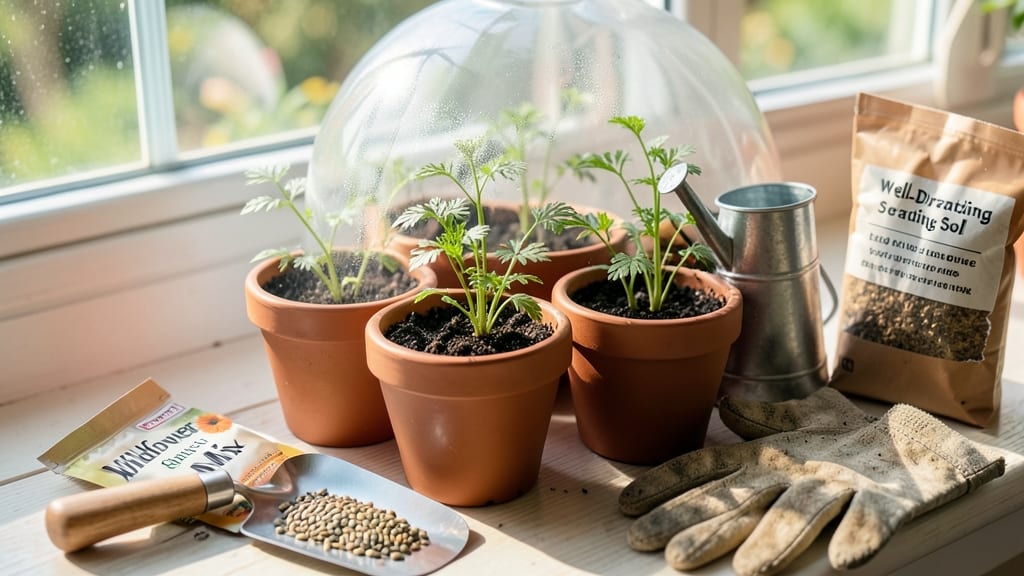
Growing wildflowers from seed in pots turns your balcony into a riot of color without the weeds or maintenance of a full garden bed. 🌸 The secret? Matching the right seeds to your pot size and sunlight, then letting nature handle the rest—no fancy tools or green thumbs required.
You’ll need 5-7 gallon containers for most wildflowers, well-draining soil, and a sunny spot (at least 6 hours of light daily). Cosmos, nasturtiums, and annual poppies thrive in pots, blooming faster than you’d expect—some varieties even flower in just 6-8 weeks from seed.
By summer, you’ll have a fragrant, pollinator-friendly display that moves with you. Cut back spent blooms to encourage more flowers, and watch bees and butterflies flock to your little ecosystem. Perfect for renters, small spaces, or anyone who wants instant curb appeal. Here’s how to get started without overcomplicating it!
📚 In This Guide
- What you need
- Instructions
- Tips and common mistakes
- Wrapping up and next steps
What you need
- ● Wildflower seeds: Choose a mix of native or heirloom varieties (e.g., cosmos, zinnias, or black-eyed Susans). Aim for 1-2 teaspoons per pot (about 5–10 seeds). Opt for organic, untreated seeds for best results.
- ● Pots: Use 4–6 inch diameter containers with drainage holes (terracotta, plastic, or fabric grow bags). For larger displays, stack 2–3 pots together.
- ● Potting soil: A lightweight, well-draining seed-starting mix (avoid garden soil—it’s too dense!). A 10–15 quart bag covers 4–6 pots.
- ● Watering can or spray bottle: A gentle misting nozzle prevents seed displacement. A 1-gallon capacity is ideal.
- ● Grow lights or sunny windowsill: Wildflowers need 6–8 hours of light daily. A 12–15 inch LED grow light works if natural light is limited.
- ● Seedling trays or egg cartons: For pre-sprouting tiny seeds (e.g., poppies). Use biodegradable inserts if transplanting later.
- ● Plant labels: Small stakes or popsicle sticks with waterproof markers to track varieties.
- ● Fertilizer: A balanced liquid fertilizer (5-5-5 or 10-10-10) diluted to half-strength. Apply every 2–3 weeks once sprouts emerge.
- ● Mulch or pebbles: Top soil with ¼ inch of perlite or coarse sand to retain moisture and deter mold.
- ● Humidity dome or plastic wrap: Creates a mini greenhouse for seeds until germination (remove once sprouts appear).
- ● Patience: Germination takes 7–21 days depending on the seed type—some need cold stratification (see package instructions).
- ● Consistency: Keep soil moist but not soggy. Overwatering is the #1 killer of wildflower seeds!
- ● Space planning: Wildflowers grow 1–4 feet tall—place pots where they won’t be crowded by maturity.
Step-by-Step instructions for growing wildflowers from seed in pots
Here’s how to coax vibrant wildflower blooms from tiny seeds—no outdoor space or weeding required.
🌱 Step 1: Choose the Right Containers and Soil Mix
Wildflowers thrive in well-draining soil, so select shallow, wide pots (at least 6 inches deep) with drainage holes. I like terracotta or fabric grow bags—they prevent root-bound stress and let excess moisture evaporate. For 4 pots, use one 10-inch container or four 6-inch pots to match your serving size.
Fill each pot with a lightweight mix of 50% potting soil and 50% perlite or coarse sand. This prevents compaction and mimics the loose, mineral-rich soil wildflowers grow in naturally. Moisten the mix until it’s damp but not soggy—think of a wrung-out sponge. Avoid garden soil; it’s too dense and can harbor fungal spores that choke delicate wildflower seedlings.
🌿 Step 2: Scatter Seeds and Lightly Cover
Wildflower seeds are tiny, so I sprinkle them evenly across the soil surface, aiming for 10-15 seeds per square inch. For 4 pots, you’ll need about ½ teaspoon of mixed wildflower seeds—less is more, as overcrowding leads to weak stems and poor blooms. Gently press the seeds into the soil with your fingers or a small board to ensure good soil contact.
Cover the seeds with a thin layer of fine sand or additional soil mix—no more than ⅛ inch deep. This protects them from drying out while allowing light to penetrate. Label each pot with the seed variety and planting date; wildflowers grow at different rates, and you’ll want to track which types emerge first. Place the pots in a warm, bright spot (around 65-75°F) to encourage germination.
💧 Step 3: Maintain Consistent Moisture Without Overwatering
Wildflower seeds need consistent moisture to germinate, but soggy soil suffocates them. Water gently with a spray bottle or fine-mist setting until the soil is evenly damp to ½ inch deep. After the first watering, check moisture daily—top inch of soil should feel dry to the touch before watering again. Overwatering is the fastest way to lose seedlings to damping-off, a fungal disease that turns stems to mush overnight.
Once seedlings appear (usually in 7-21 days, depending on the variety), reduce watering to every 2-3 days. Let the top inch dry out between waterings to toughen the roots. You’ll notice the first true leaves (not the tiny cotyledons) emerge in 2-3 weeks. At this stage, thin seedlings to 2 inches apart to prevent competition—use small scissors to snip excess plants at soil level rather than pulling, which disturbs roots.
☀️ Step 4: Provide Bright, Indirect Light for Strong Growth
Wildflowers need full sun to bloom, but seedlings can’t handle intense light immediately. Start them in a south-facing window or under a grow light positioned 4-6 inches above the pots. If using natural light, rotate the pots quarter-turn daily so they grow straight, not lopsided. You’ll see leggy growth if the light is too weak—pale stems and leaves spaced far apart are your warning signs.
After 4-6 weeks, when seedlings have 3-4 sets of true leaves, gradually introduce them to direct sunlight by moving them outside for 1-2 hours daily. Harden them off over 7-10 days by increasing outdoor time incrementally. By the time they’re ready for permanent pots or garden beds, they’ll be sturdy and sun-ready, with deep green foliage and no signs of stress.
✂️ Step 5: Deadhead and Encourage Continuous Blooms
Once wildflowers start blooming (usually 8-12 weeks after sowing), remove spent flowers by pinching off the bloom head just above the next set of leaves. This redirects energy to new growth and prolongs the flowering season. I deadhead every 2-3 days during peak bloom to keep my pots looking fresh. Avoid cutting into the stem—just twist or snip the flower head cleanly.
Fertilize lightly once a month with a balanced, water-soluble fertilizer (like 10-10-10) diluted to half strength. Wildflowers are adapted to lean soil, so too much fertilizer produces lush foliage at the expense of blooms. Watch for yellowing leaves or pale stems—these are signs of over-fertilization. Instead, focus on regular deadheading and adequate sunlight to keep your wildflowers blooming until frost.
Tips & tricks for growing wildflowers in containers
A few strategic moves will help you transform those tiny seeds into lush, blooming pots of color—without the guesswork.
Container Selection: The 6-inch depth requirement in Step 1 isn't arbitrary—wildflowers develop shallow root systems. If using fabric grow bags, fold the excess material inward to create a stable base that prevents tipping. For extra stability, place pots on a saucer or tray to catch excess water, which is especially helpful if you're using terracotta that wicks moisture quickly. This prevents root rot while maintaining consistent moisture levels.
Seed Spacing Secret: When aiming for 10-15 seeds per square inch in Step 2, think of it as creating a "seed carpet" rather than individual plants. Use a fine mesh sieve or folded paper to distribute seeds evenly—this prevents clumping and ensures better germination. After pressing seeds into the soil, lightly mist with water to settle them without disturbing their placement. The ⅛-inch coverage is crucial: any deeper and seeds may not receive enough light to germinate.
Light Transition Strategy: The 4-6 inch distance for grow lights in Step 4 is a starting point, but adjust based on your seedlings' response. If leaves appear pale or stems stretch excessively (a condition called etiolation), lower the light by 1 inch every few days until you see compact, dark green growth. For natural light, position pots within 12 inches of a south-facing window—this mimics the bright conditions wildflowers thrive in while protecting delicate seedlings from harsh afternoon sun.
Germination Troubleshooting: If no seedlings appear within the 7-21 day window mentioned in Step 3, check your soil temperature—it should stay consistently between 65-75°F. Place pots on a seedling heat mat (set to 70°F) if your home runs cooler. Another common issue is mold on the soil surface, which indicates overwatering. If you see fuzzy growth, let the soil dry completely for 24 hours before gently removing the mold with a spoon and resuming careful watering.
Pro Tips for Growing Wildflowers From Seed In Pots
- A few strategic moves will help you transform those tiny seeds into lush, blooming pots of color—without the guesswork.
- Container Selection: The 6-inch depth requirement in Step 1 isn't arbitrary—wildflowers develop shallow root systems.
- Seed Spacing Secret: When aiming for 10-15 seeds per square inch in Step 2, think of it as creating a "seed carpet" rather than individual plants.
Frequently asked questions
Got questions about growing wildflowers from seed in pots?
You’re not alone! Here are some of the most common queries—and their answers—to help you bloom like a pro.
What’s the best time of year to start wildflower seeds in pots?
Most wildflowers thrive when sown in early spring (after the last frost) or late summer/fall. Spring sowing gives them time to establish roots before summer heat, while fall planting mimics natural conditions and often yields stronger blooms. Check your seed packet for species-specific timing!
How often should I water my wildflower seeds in pots?
Keep soil consistently moist (not soggy!) until seeds germinate—usually 7–21 days. After sprouting, water lightly but regularly (about 1 inch per week), allowing the top inch of soil to dry between waterings. Pots dry out faster than garden beds, so monitor closely!
Can I reuse pots or soil from last year’s wildflowers?
Reuse pots only if they’re clean—scrub with soapy water to remove old soil and pests. Soil? No! Old soil may harbor diseases or depleted nutrients. Mix fresh potting soil with compost for the best start. Pro tip: Sterilize pots with a 10% bleach solution (rinse well) if you’re extra cautious.
Why aren’t my wildflower seeds germinating?
Common culprits:
- Cold soil—many wildflowers need cool temps (60–70°F) to sprout. Try a seedling heat mat if your space is too warm.
- Too deep—most seeds need light to germinate; press them lightly into soil (¼ inch max).
- Old seeds—wildflower seeds lose viability over time. Store them in a cool, dry place and use within 1–2 years.
How do I prevent wildflowers from getting leggy or flopping in pots?
Leggy stems = not enough light! Place pots in a sunny spot (6+ hours of light daily) and thin seedlings to avoid overcrowding. For compact growth, choose dwarf varieties or mix in low-growing species like alyssum or sweet alyssum. Deadhead spent blooms to encourage bushier growth.
Wrapping up and next steps
Growing wildflowers from seed in pots is a rewarding way to bring vibrant color and life to small spaces—without the chaos of a full garden! 🌸 Whether you’re a beginner or a seasoned gardener, these compact blooms prove that big beauty comes in tiny packages.
Start small, experiment with varieties, and soon you’ll have a thriving mini-meadow on your balcony, patio, or windowsill.
Ready to take the next step? Try planting a mix of wildflower seeds this weekend—your future pollinators (and your neighbors!) will thank you. Browse our seed guides for inspiration and get growing!