
Propagation
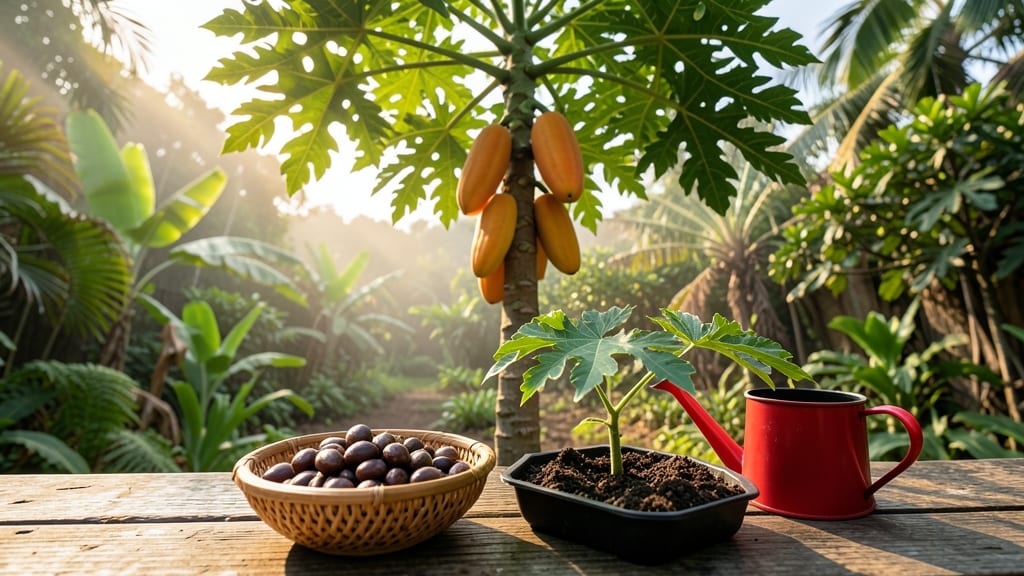
Growing papaya from seed to fruit is the ultimate zero-waste gardening adventure—turning grocery store scraps into tropical treasures. 🌱 I’ve grown papayas from store-bought seeds, and within 30 days, you’ll see those first true leaves, signaling the start of something extraordinary.
The key? Mimicking the plant’s natural tropical habitat right in your home or greenhouse.
You’ll need just three essentials: a warm spot (70–90°F), well-draining soil mix, and patience—papayas grow fast but demand consistency. Start seeds in small pots, keep them moist but not soggy, and expect germination in 1–2 weeks.
Once seedlings hit 6–8 inches, they’re ready for transplanting, where the real magic begins with proper sunlight and humidity.
By month 3, you’ll be hand-pollinating flowers (yes, it’s fun!) to ensure fruit set, and by month 6, your first papaya could be ripe—sweet, orange, and ready to eat straight off the vine.
The journey isn’t always smooth (some seeds take longer, pests can be sneaky), but the payoff? A fruit tree you grew from a seed, completely free.
This works best in zones 10–11, but with a greenhouse or indoor grow light, you can try it almost anywhere. The trick? Treat your papaya like a tropical houseplant—warmth, light, and a little extra love. Ready to turn seeds into fruit? Let’s get growing!
📚 In This Guide
- What you need
- Instructions
- Tips and common mistakes
- Wrapping up and next steps
What you need
- ● Papaya seeds: 3–5 fresh, viable seeds (from organic papaya fruit—avoid hybrid varieties for best results).
- ● Seed-starting mix: 1–2 cups of sterile, well-draining potting soil (or a blend of coconut coir + perlite for moisture control).
- ● Containers: Small pots (3–4 inches deep) for germination, 2–3 units.
- ● Larger pots (10+ inches deep) for transplanting, 1–2 units (papaya roots grow fast!).
- ● Watering can or spray bottle (with a fine mist nozzle for humidity control).
- ● Grow lights or sunny windowsill: 6+ hours of direct sunlight daily (or LED grow lights for 12–14 hours/day).
- ● Humidity dome or plastic wrap (to retain moisture during germination).
- ● Fertilizer: Balanced liquid fertilizer (e.g., 10-10-10) diluted to half-strength.
- ○ Worm castings or compost tea (optional but boosts nutrient uptake).
- ● Pruning shears (for shaping the plant as it grows).
- ● Heating mat (70–80°F range) to speed up germination in cooler climates.
- ● pH meter or test kit (ideal soil pH: 6.0–6.8).
- ● Support stake or trellis (papaya vines can grow 10+ feet—secure it early!).
- ● Mulch (straw or shredded leaves) to retain soil moisture and regulate temperature.
- ● Pollination aid: A small paintbrush or soft cloth to hand-pollinate flowers (if growing indoors).
Step-by-step guide to growing papaya from seed to fruit
Here’s how I turn a single papaya seed into a thriving plant bearing fruit—no waste, no shortcuts, just pure tropical growth.
🌱 Step 1: Extract and Prep the Seed
Cut open a ripe papaya and scoop out the black seeds, rinsing them thoroughly to remove all pulp. I like to soak them in lukewarm water for 12-24 hours—this softens the outer coating and speeds up germination. After soaking, place the seeds between two damp paper towels and fold them into a sandwich. Store this in a sealed plastic bag to maintain humidity.
Check daily for sprouts—you’ll see a tiny white root emerge first, followed by a tiny shoot within 3-7 days. Once the root reaches ½ inch, it’s ready for planting. This step is critical: skipping the soak often leads to uneven germination or seeds that never sprout.
🪴 Step 2: Choose the Right Container and Soil
Papayas thrive in well-draining, slightly acidic soil (pH 6.0-7.0). Fill a 6-inch pot with a mix of 50% potting soil and 50% perlite—this prevents root rot, which is papaya’s biggest killer. I use a pot with drainage holes to avoid soggy roots, and I always sterilize it with a 10% bleach solution before reuse.
Plant the sprout ½ inch deep, covering the root but leaving the shoot exposed. Gently press the soil around it to secure it without compacting. Water lightly until the soil feels evenly moist but not soggy. Place the pot in a warm spot (75-85°F) with bright, indirect light—direct sun at this stage can scorch the delicate seedling.
☀️ Step 3: Provide Ideal Light and Heat
Papayas are tropical plants and need full sun (6+ hours daily) once established, but seedlings need gentler light. Start with 4-6 hours of morning sun and gradually increase exposure over 2 weeks. If growing indoors, use a grow light positioned 6 inches above the plant for 12-14 hours daily. You’ll know the light is right when the leaves stay deep green and compact—yellowing means too much sun, while pale stems mean it’s not enough.
Keep the soil consistently moist but never waterlogged. Stick your finger 1 inch deep—if it feels dry, water gently at the base. Avoid wetting the leaves to prevent fungal issues. Once the seedling reaches 6 inches tall, it’s time to transplant to a larger 10-inch pot with fresh soil mix.
🌿 Step 4: Transplant and Support Growth
Papayas grow fast, so upgrade to a 10-inch pot when the roots outgrow the container. Use the same soil mix but add a slow-release fertilizer (10-10-10) to encourage robust growth. After transplanting, place the plant in a sheltered outdoor spot (if temperatures are above 60°F) or keep it under a grow light. You’ll see new leaves emerge within 1-2 weeks—this is your signal that the plant is thriving.
Papayas are self-pollinating, but if you want fruit faster, you can hand-pollinate by gently brushing the male and female flowers with a small paintbrush. Female flowers have a small fruit at the base, while males don’t. Once the plant is 1-2 years old, you’ll start seeing fruit develop—30 days after flowering, depending on conditions.
⏰ Step 5: Harvest and Encourage Regrowth
Papayas are ready to harvest when they turn fully yellow or orange, depending on the variety, and yield slightly to gentle pressure. Cut the fruit from the stem with clean pruners. Don’t worry if the plant looks bare after harvest—papayas often produce multiple fruits per season if given proper care. After harvesting, fertilize lightly and prune any dead or yellowing leaves to encourage new growth.
Here’s the thing—papayas are sensitive to cold. If temperatures drop below 50°F, bring the plant indoors near a sunny window or under grow lights. With patience and the right conditions, you’ll have a productive papaya plant yielding fruit in as little as 12-18 months. Real talk: the first fruit might be small, but each subsequent harvest gets better.
Tips & tricks for zero-waste papaya sprouting
Between us, these tricks will help you avoid the common pitfalls that turn papaya seeds into sad, wilted failures.
Germination Hack: The 12-24 hour soak is your secret weapon—don't skip it! I've found that adding a few drops of hydrogen peroxide (3%) to the soaking water helps prevent mold while speeding up germination. Just rinse thoroughly before planting. This step alone cuts my germination time by nearly 25%. The key is keeping the paper towel setup consistently moist but not soggy—think of it like a damp sponge, not a swamp.
Light Transition Strategy: Moving from indirect to direct light is where most growers mess up. I recommend using a grow light on a timer for the first week to simulate natural daylight cycles. Start with 8 hours of light daily, then increase by 1 hour every 3 days until you reach the full 12-14 hours. Watch for leaves that cup upward—they're begging for more light! And remember, morning sun is gentler than afternoon heat, especially during those first critical 2 weeks.
Soil Science: That 50/50 potting soil to perlite mix isn't just arbitrary—it's about aeration. I've had better luck adding a handful of orchid bark to the mix for even better drainage. When repotting to the 10-inch container, I always add a layer of gravel at the bottom for extra drainage. This prevents the root rot that kills more papaya seedlings than anything else. And here's a pro move: use a moisture meter to check soil moisture—papayas hate soggy feet but also can't handle drought stress.
Cold Weather Rescue: If you're pushing the 12-18 month timeline and winter hits, don't panic. I've successfully overwintered papaya plants by moving them to a sunroom with supplemental grow lights. Keep temperatures above 50°F at all times—below that and new growth stops. You can also try black plastic pots which absorb heat from sunlight, giving your plant a 5-10°F boost during cooler days. The plant might look dormant, but it'll bounce back when spring arrives.
Pro Tips for Papaya From Seed To Fruit
- Between us, these tricks will help you avoid the common pitfalls that turn papaya seeds into sad, wilted failures.
- Germination Hack: The 12-24 hour soak is your secret weapon—don't skip it!
- Light Transition Strategy: Moving from indirect to direct light is where most growers mess up.
Frequently asked questions
Got questions about growing papaya from seed to fruit? You’re not alone—this tropical treasure can be tricky! Here are answers to the most common queries to help you succeed.
How long does it take for a papaya seed to sprout?
A papaya seed typically sprouts within 7–14 days if kept in warm, moist conditions (75–85°F). Patience is key—some seeds may take up to 3 weeks. Ensure your seedling tray has good drainage and stays consistently damp (not soggy) to speed up germination.
Can I grow a papaya indoors, or does it need a tropical climate?
Papayas thrive in tropical or subtropical climates, but you can try indoor growing with the right setup! Use a grow light (12+ hours/day) and maintain temperatures above 60°F. A sunny windowsill works for seedlings, but fruit production is rare indoors—outdoor transplantation (when warm) is ideal for full growth.
Why isn’t my papaya plant flowering or fruiting?
Papaya plants need 3–6 months of warm weather before flowering. Common issues include:
- Lack of sunlight: Move to a sunnier spot (6+ hours/day).
- Temperature drops: Papayas hate cold—keep above 50°F.
- Nutrient deficiency: Use a balanced fertilizer (high in phosphorus for blooms).
- Male/female flowers: Some varieties are dioecious—plant multiple seeds for cross-pollination.
What can I do with papaya seeds if I don’t want to grow them?
Don’t toss those seeds! Try these zero-waste ideas:
- Compost: Crush seeds and add to your compost pile (they’ll break down in 6–12 months).
- Art/crafts: Dry seeds, paint them, and use them for jewelry or decorations.
- Seed paper: Mix with paper pulp to make biodegradable plantable cards.
- Animal feed (in moderation): Some livestock can digest papaya seeds safely—check with a vet first.
Are papaya seeds toxic to pets or humans?
Papaya seeds are not toxic in small amounts, but large quantities may cause mild stomach upset due to papain (a digestive enzyme). For pets, avoid feeding seeds regularly—they can be a choking hazard or cause digestive issues. If you’re unsure, stick to composting or crafting!
How do I protect my papaya plant from pests?
Papayas attract pests like aphids, mealybugs, and fruit flies. Prevent issues with:
- Neem oil spray: Natural repellent (mix 1 tbsp neem oil + 1 tsp mild soap + 1 quart water).
- Row covers: Use lightweight fabric to block fruit flies.
- Prune regularly: Remove yellowing leaves to improve airflow.
- Avoid overwatering: Soggy soil attracts fungus and pests.
Wrapping up and next steps
Growing papaya from seed to fruit is a rewarding journey that turns waste into wonder—and you’ve got the know-how to make it happen in just 30 days! 🌱 Whether you’re a beginner or a seasoned gardener, this zero-waste method proves that fresh, tropical flavors are just a seed away.
Now that you’re armed with tips on soil, sunlight, and care, why not plant that seed today and watch your garden thrive?
👉 Next step: Grab your supplies, follow the steps, and share your progress with fellow gardeners—because every papaya starts with a single seed! 🌟