
Lawn
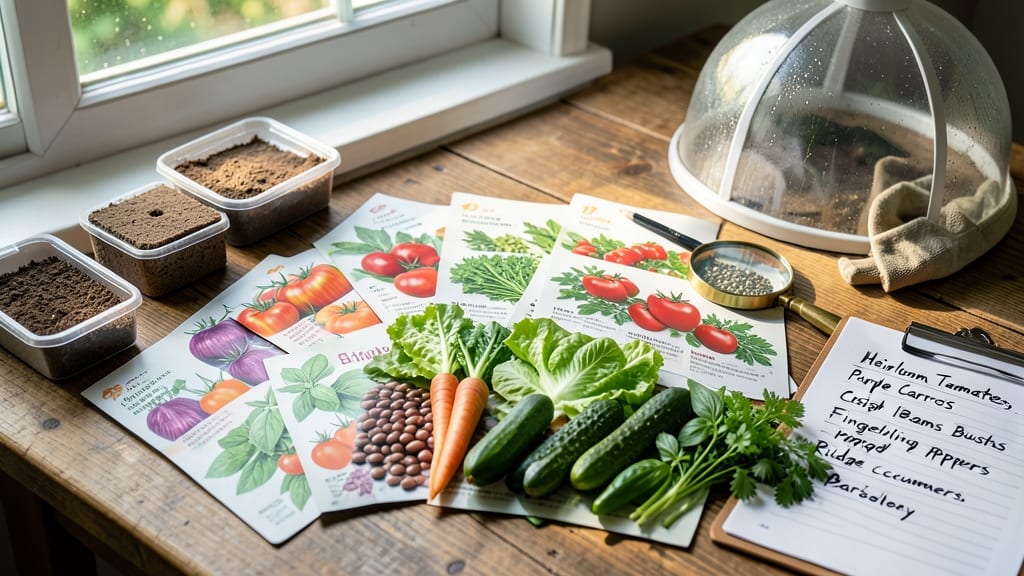
Your vegetable seed catalogs aren't just pages—they're your garden's blueprint for a harvest that lasts from spring to frost. 🌱 I've spent years comparing catalogs, and the right varieties can turn a 4-foot-by-8-foot plot into a year-round feast.
The secret lies in matching seeds to your climate, soil, and what you actually want to eat—not just what looks pretty in the catalog. Start by scanning for days to maturity and hardiness zones—these tell you exactly when to plant and whether the variety will survive your winters.
Heirlooms offer unique flavors but need careful saving, while hybrids deliver consistent yields with less fuss. My go-to catalogs highlight both, with notes on companion planting that boosts growth naturally.
You'll end up with a garden that produces fresh greens in spring, tomatoes in summer, and storage crops like carrots and beets well into winter. The key is layering plantings so something's always ready, and the catalogs make that planning effortless with their clear seasonal guides.
This works for city balconies, suburban backyards, or rural acreages—just adjust quantities. Here's how to turn those catalog pages into a thriving garden.
📚 In This Guide
- What you need
- Instructions
- Tips and common mistakes
- Wrapping up and next steps
What you need
- ● Vegetable Seed Catalogs – At least 3-5 (cover a range of climates and varieties for diversity).
- ● Notebook or Digital Planner – For tracking seed varieties, planting dates, and garden layout.
- ● Ruler or Measuring Tape – To sketch garden beds and spacing requirements.
- ● Highlighters or Sticky Notes – For marking favorite varieties and notes.
- ● Internet or Library Access – For researching climate zones, growing conditions, and seed company reviews.
- ● Garden Journal App – Like Gardenize or GrowVeg for digital planning.
- ● Seed Starting Supplies – Trays, soil, and grow lights (if you plan to start indoors).
- ● Climate Zone Map – To match seeds to your local growing conditions.
- ● Seed Saver’s Exchange Membership – For access to heirloom and rare varieties.
How to choose the best vegetable seed catalogs for your garden
Finding the perfect seed catalog can transform your garden from seasonal to year-round—here’s how to pick the best varieties for your climate and goals.
🌱 Step 1: Identify Your Growing Zone and Seasonal Needs
Start by checking your USDA Plant Hardiness Zone—this determines which seeds will thrive year-round in your area. Catalogs often label varieties as "cool-season" (like lettuce or peas) or "warm-season" (like tomatoes or peppers), so match your selections to your local frost dates. I always cross-reference with my local extension office’s frost calendar to avoid misjudging timing.
If you’re aiming for a year-round harvest, prioritize catalogs that offer succession planting varieties—these are bred to mature quickly so you can stagger plantings. Look for terms like "early maturing," "bush type," or "compact growth" in seed descriptions. These traits help you maximize space and extend harvests beyond one season.
🌿 Step 2: Compare Catalogs for Variety and Specialty Seeds
Not all catalogs are created equal—some specialize in heirloom varieties, while others focus on hybrid seeds optimized for disease resistance. I recommend starting with 2-3 reputable catalogs (like Baker Creek, Seed Savers Exchange, or Johnny’s Selected Seeds) to compare their unique offerings. Pay attention to their "seed saving" policies too—some encourage preserving seeds, while others restrict it.
Look for catalogs that highlight region-specific varieties, as these have been bred to perform best in your climate. For example, a catalog from the Pacific Northwest might feature cold-hardy kale or early spring radishes, while a Southern catalog could emphasize heat-tolerant okra or black-eyed peas. This tailored approach saves you from trial-and-error planting.
☀️ Step 3: Review Planting and Harvest Timelines
Every seed catalog should include a days-to-maturity estimate for each variety. Use this to plan your planting schedule so you can space out harvests. For instance, if you want fresh lettuce every 3 weeks, choose a variety that matures in 30-40 days and plant new seeds every 2 weeks. I always highlight these timelines in my notes to avoid gaps in production.
Check if the catalog provides planting depth, spacing, and sunlight requirements—this ensures you’ll replicate ideal growing conditions. Some catalogs even include soil temperature preferences, which is critical for cool-season crops like broccoli or peas. Skipping this step can lead to weak seedlings or poor yields, so treat it as non-negotiable.
✂️ Step 4: Assess Customer Reviews and Trial Reports
Before ordering, scan the catalog’s website or gardening forums for real-world feedback on specific varieties. I’ve learned the hard way that a seed labeled "disease-resistant" might not hold up in my humid climate. Look for reviews mentioning yield, flavor, and adaptability—these details aren’t always in the catalog’s marketing copy.
Some catalogs include trial reports from independent gardeners, which can reveal hidden gems or disappointments. For example, a tomato variety might get rave reviews for flavor but flop in your short growing season. Use these insights to narrow your choices to 3-4 varieties per crop, giving you backup options if one fails.
📜 Step 5: Order Strategically for Seasonal Planting
Place your order early—popular varieties sell out fast, especially heirlooms or organic seeds. I always order 6-8 weeks before my first frost date to ensure I have everything I need for spring planting. Catalogs often include a planting calendar or suggest ordering by season, so follow their guidance to avoid last-minute shortages.
Pro tip: If you’re new to seed saving, order a small packet of a self-pollinating crop like beans or peas first. These are easier to save seeds from than cross-pollinating varieties like tomatoes or squash. This hands-on experience builds confidence before tackling more complex crops.
Tips & tricks for perfect vegetable seed catalog Selection
These insider tips will help you avoid common pitfalls and make the most of your seed catalog choices.
Climate-Specific Selection: Don't just rely on the USDA zone—check your local microclimate. Urban areas can be 5-10°F warmer than surrounding rural zones, affecting planting times. I've seen gardeners in Zone 6 successfully grow heat-loving peppers by planting them in south-facing microclimates where temperatures run 2-3°F warmer. Look for catalogs that mention "microclimate adapted" varieties for your specific area.
Succession Planting Strategy: For continuous harvests, aim for varieties with a 3-week maturity gap between plantings. For example, if you want lettuce every 3 weeks all summer, choose a variety that matures in 30-40 days and plant new seeds every 2 weeks. I keep a simple spreadsheet tracking my planting schedule—it's saved me from harvest gaps more times than I can count.
Review the Fine Print: Pay close attention to seed packet descriptions for terms like "open-pollinated" (can save seeds) versus "hybrid" (cannot save seeds reliably). Some catalogs now offer "patent-free" varieties that you can legally save and replant. I always check the seed company's policies before ordering heirloom seeds to avoid legal issues down the road.
Organize by Planting Window: Create a visual planting calendar by grouping seeds by their frost dates and days-to-maturity. Use different colors for cool-season (spring/fall) vs warm-season (summer) crops. This visual aid helps me see at a glance which varieties need to go in first and which can wait. I've even used this system to plan my greenhouse schedule for early starts.
Pro Tips for Vegetable Seed Catalogs
- These insider tips will help you avoid common pitfalls and make the most of your seed catalog choices.
- Climate-Specific Selection: Don't just rely on the USDA zone—check your local microclimate.
- Succession Planting Strategy: For continuous harvests, aim for varieties with a 3-week maturity gap between plantings.
Frequently asked questions
Got questions about navigating vegetable seed catalogs? You’re not alone! Here are answers to the most common queries to help you grow with confidence.
How do I choose the best seed catalog for my climate?
Look for catalogs that highlight heirloom, disease-resistant, or region-specific varieties (e.g., "cool-season" or "heat-tolerant"). Many include USDA hardiness zone maps or growing guides. Specialty catalogs like Baker Creek or Johnny’s Selected Seeds often filter by climate—just check their "growing tips" sections!
When should I order seeds for spring/summer planting?
Order 8–12 weeks before your last frost date (e.g., February–March for most U.S. regions). Seed catalogs usually list sowing times per variety—prioritize fast-maturing crops (like lettuce) if you’re late. Pro tip: Bookmark your local extension office’s frost calendar for precision!
Are organic or non-GMO seeds worth the extra cost?
Yes, if sustainability or flavor is a priority! Organic seeds (e.g., High Mowing Seeds) are untreated and bred without synthetic inputs, while non-GMO (like Seeds of Change) avoid genetic modification. For budget-friendly swaps, try heirloom varieties—they’re often cheaper and just as productive.
What if my seeds don’t germinate after ordering?
First, check the packaging date—seeds lose viability over time (most last 1–5 years). If fresh, test germination by planting 2–3 seeds in damp paper towels for 5–7 days. If still no sprouts, contact the catalog for a replacement or refund (most offer guarantees). Tip: Store seeds in a cool, dark place to extend shelf life!
Can I get seeds for rare or heirloom vegetables?
Catalogs like Seed Savers Exchange or Territorial Seed Company specialize in heirloom and open-pollinated varieties (e.g., 'Black Krim' tomatoes or 'Lavender Hull' peas). Search for "uncommon vegetables" or browse their seed archives—some even offer limited-edition varieties!
Wrapping up and next steps
Exploring vegetable seed catalogs is your gateway to a bountiful, diverse harvest—no matter the season! These curated collections make it easier than ever to grow exactly what you love, from heirloom tomatoes to hardy greens, while supporting sustainable gardening. 🌱
Now that you’re inspired, take the next step: order your seeds today and let your garden flourish! Whether you’re a seasoned grower or just starting, every seed planted is a step toward fresher, tastier meals and a greener planet. Happy planting! 🌿