
Lawn
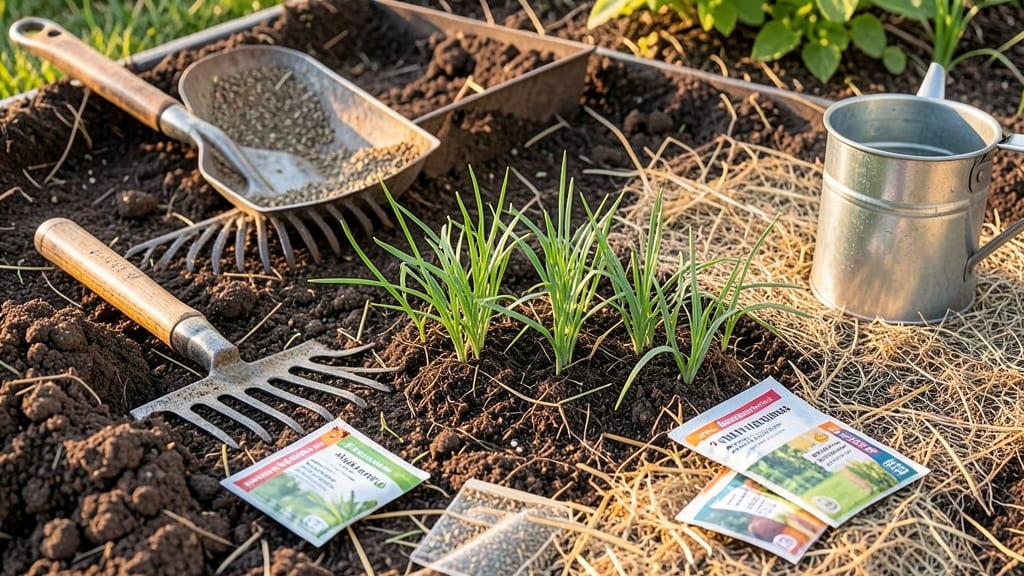
Fall grass seed thrives when soil stays warm and days stay mild—the perfect time to grow lush lawns in cool-season zones. I’ve overseeded my lawn in October for three years now, and the results are always greener than spring planting.
The key? Timing it right before the first hard frost but after summer’s heat fades.
You’ll need a few simple supplies: a rake for seed-to-soil contact, a light layer of straw to protect new sprouts, and a watering can or hose with a gentle spray. Most cool-season grasses—like fescue, ryegrass, and bluegrass—germinate best when soil temps hover between 50-65°F, which happens naturally in fall.
Just avoid planting too late, or winter dormancy can stunt growth.
Within 7-21 days, you’ll see those first tiny blades pushing through the soil, and by early winter, your lawn will be thick enough to handle light foot traffic. The real magic? Fall lawns establish deeper roots before winter, so they bounce back stronger in spring than spring-planted seed.
For Southern zones, aim for September-October; Northern gardeners have until mid-October before frost sets in. Just water deeply twice daily for the first two weeks—no skipping!—and watch your lawn transform from patchy to picture-perfect by next summer.
📚 In This Guide
- What you need
- Instructions
- Tips and common mistakes
- Wrapping up and next steps
What you need
- ● Grass seed: Choose a cool-season variety (e.g., Kentucky bluegrass, fescue, or ryegrass) suited to your USDA Hardiness Zone. Quantity: ~10–15 lbs per 1,000 sq ft (check seed bag for exact rates).
- ● Lawn fertilizer: A slow-release, high-nitrogen blend (e.g., 24-0-6 or 30-0-4). Quantity: ~1 lb per 100 sq ft.
- ○ Soil tester kit: To check pH (aim for 6.0–7.0 for cool-season grass). Optional but highly recommended!
- ● Compost or organic matter: ¼–½ inch layer to improve soil texture (e.g., peat moss or aged compost).
- ● Broadcast or drop spreader: For even seed distribution. Calibrate it first!
- ● Rake: A bow rake (for leveling soil) + a stiff-bristle rake (to cover seeds lightly).
- ○ Lawn roller (optional):strong> A lightweight 50–75 lb roller to firm soil and ensure seed-to-soil contact.
- ● Hose with a sprinkler head: Adjustable for light, frequent watering (e.g., ¼ inch/day).
- ● Garden gloves & knee pads: Because comfort matters! 😉
- ● Weather window: Plant 4–6 weeks before your zone’s first hard frost (e.g., late August–early October in Zones 4–7).
- ● Soil temperature: Aim for 60–75°F (use a soil thermometer if unsure).
- ● Sunlight access: Ensure the area gets at least 4–6 hours of sunlight daily.
- ● Water source: Reliable access to water for 10–14 days post-planting.
Instructions for fall grass seed germination by Zone
Fall planting works beautifully for cool-season grasses—here’s how to time it right for your climate.
Determine Your Planting Window by Zone
Cool-season grasses thrive when soil temperatures hover between 50-65°F—ideal for fall germination. In Zones 3-5, aim for 6-8 weeks before first frost (typically late August to early October). For Zones 6-7, extend the window to 4-6 weeks before frost (September to mid-October). In warmer Zones 8-10, plant August through early September to avoid winter dormancy.
Check your local frost dates and count backward. If you plant too early, weeds will outcompete tender seedlings. If you wait too long, cold soil slows germination. I always verify with my local cooperative extension service—their data is far more precise than online charts.
Prepare the Soil for Optimal Germination
Test soil pH—cool-season grasses prefer 6.0-7.0. If your soil is compacted or clay-heavy, till or aerate to 4-6 inches deep to improve root penetration. Remove existing vegetation (including weeds) by hand or with a non-selective herbicide 2-3 weeks before planting to avoid chemical residue.
Spread 2-3 inches of compost over the area and lightly rake in. This adds organic matter without burying seeds too deep. Water the soil thoroughly 48 hours before seeding to ensure even moisture—dry soil repels seed-to-soil contact, which is critical for germination.
Seed at the Correct Depth and Rate
Use a broadcast spreader for even coverage, applying seeds at the rate specified on the package (typically 8-12 lbs per 1,000 sq ft for cool-season varieties). Lightly rake seeds into the soil to a depth of ¼ inch—any deeper delays germination. For slopes, seed perpendicular to the incline to prevent runoff.
I always overlap passes by 50% to avoid thin spots. After seeding, cover with a thin layer of straw mulch (¼ inch) to retain moisture and protect seeds from birds. Water immediately with a fine mist until the soil surface is damp but not saturated.
Maintain Consistent Moisture Until Establishment
Keep the soil surface evenly moist (not soggy) for 3-4 weeks—this is the most critical period. Water lightly twice daily (morning and late afternoon) if rainfall is insufficient. Overwatering causes seed rot, while underwatering leads to poor germination. You’ll know moisture is right when the top ½ inch of soil feels damp like a wrung-out sponge.
Once seedlings reach 2-3 inches tall, gradually reduce watering to once daily. Avoid heavy foot traffic until the grass reaches 3-4 inches—compacted soil stunts root development. In Zones 3-5, apply a light nitrogen fertilizer (10-0-10) when grass is 3-4 inches tall to encourage strong fall growth.
Adjust Care for Winter Dormancy
In Zones 3-5, reduce watering to once weekly once temperatures drop below 40°F at night. Grass enters dormancy but stays alive—overwatering in winter leads to rot. In Zones 6-10, continue watering every 7-10 days unless rain provides adequate moisture. Mow high (3-4 inches) before dormancy to protect crowns from freezing.
I always mark my calendar for early spring (March in Zones 3-5, February in Zones 6-10) to resume regular watering and fertilizing. Spring is when fall-planted grass really takes off—you’ll see lush, weed-free coverage by late May if you’ve followed these steps.
Tips & tricks for perfect fall grass seed germination
Timing and preparation make all the difference when planting cool-season grasses in fall—here's how to avoid common pitfalls and maximize success.
Zone-Specific Timing: The 6-8 week window for Zones 3-5 is non-negotiable—this ensures seedlings establish before winter. I recommend checking your local cooperative extension service for precise frost dates, as online calculators can be off by 1-2 weeks. For Zones 6-10, that August-through-September window is your sweet spot for avoiding winter dormancy while still getting good germination.
Soil Preparation Secret: That 48-hour pre-seeding watering (Step 2) is critical—it creates the perfect seedbed where seeds can make immediate contact with moisture. I've seen germination rates double when this step isn't rushed. For compacted soils, consider renting a core aerator instead of just tilling—it creates those tiny channels seeds need to establish roots.
Moisture Management: The 3-4 week critical period for consistent moisture is where most failures happen. I've found that using a simple rain gauge helps track exactly how much you're adding—aim for about ½ inch of water per week during this phase. For large areas, consider installing temporary sprinklers on timers to maintain that even moisture without overwatering.
Winter Care Adjustment: That 40°F nighttime threshold in Zones 3-5 is your cue to reduce watering—grass enters dormancy but stays alive. I've seen many lawns fail because people kept watering through winter, leading to rot. In Zones 6-10, the 7-10 day watering schedule gives you more flexibility, but don't let the grass dry out completely during drought periods.
Pro Tips for Will Grass Seed Grow In The Fall
- Timing and preparation make all the difference when planting cool-season grasses in fall—here's how to avoid common pitfalls and maximize success.
- Zone-Specific Timing: The 6-8 week window for Zones 3-5 is non-negotiable—this ensures seedlings establish before winter.
- Soil Preparation Secret: That 48-hour pre-seeding watering (Step 2) is critical—it creates the perfect seedbed where seeds can make immediate contact with moisture.
Frequently asked questions
Got questions about fall grass seeding?
You’re not alone! Here are some of the most common concerns—and their answers—to help you plan with confidence.
What’s the best fall temperature range for grass seed to germinate?
Cool-season grasses thrive when soil temps hover between 60°F and 75°F—ideal for most regions in late summer to early fall. Warm-season grasses, however, struggle below 50°F. Check your USDA zone for precise timing, as cooler climates (Zones 3–5) can seed as early as August, while warmer zones (6–10) may wait until October.
How long does it take for grass seed to grow in the fall?
Germination varies by grass type, but expect 7–21 days under optimal conditions. Cool-season grasses like fescue or ryegrass often sprout faster (7–14 days) than bluegrass (14–21 days). Patience is key—avoid walking on new shoots until they’re 3–4 inches tall (usually 4–6 weeks post-seeding).
Can I overseed existing grass in the fall, or do I need to reseed bare spots?
Both work! Overseeding thins existing grass but fills gaps, while spot-seeding targets bare patches. For overseeding, mow low (1–2 inches), rake, and apply seed evenly. Spot-seeding? Remove debris, loosen soil, and water gently. Pro tip: Use a corneal fertilizer with starter N-P-K (e.g., 20-20-20) for faster growth.
How much water does new grass seed need in fall?
Keep soil consistently moist (not soggy!) for the first 2–3 weeks. Water lightly 2x daily (morning/evening) for 10–15 minutes, aiming for ¼ inch of water per session. Once sprouts appear, reduce to 1 inch per week. A sprinkler with a rain gauge helps track moisture.
What if birds or pests eat my grass seed before it grows?
Use seed protectors (like straw or erosion control blankets) or slaked lime to deter birds. For insects (grubs, chinch bugs), apply neem oil or a grub preventer before seeding. Avoid over-fertilizing—too much nitrogen attracts pests. Bonus: Seed in light rain or water immediately after sowing to help seeds stick to soil.
Will frost kill new grass seed before it establishes?
Not if it’s well-rooted! Seedlings can handle light frost once they’re 2–3 inches tall, but avoid seeding when hard freezes (below 28°F) are forecast. In Zone 5+, aim to finish seeding by mid-October. Mulch lightly with straw (¼ inch) to insulate seeds if early frost threatens.
Wrapping up and next steps
The good news is yes, grass seed can thrive in the fall—especially for cool-season grasses! 🌱 With the right timing, prep, and care, you’ll see lush growth before winter sets in.
Whether you’re in Zone 3 or Zone 9, fall planting gives seeds a head start by leveraging cooler temps and fewer weeds.
Now that you’re armed with the perfect timeline, tools, and tips, it’s time to roll up your sleeves! Start by testing your soil (if you haven’t already), then pick your seeds and hit the ground running. Your dream lawn is just a few weeks away—you’ve got this! 🚀