
Propagation
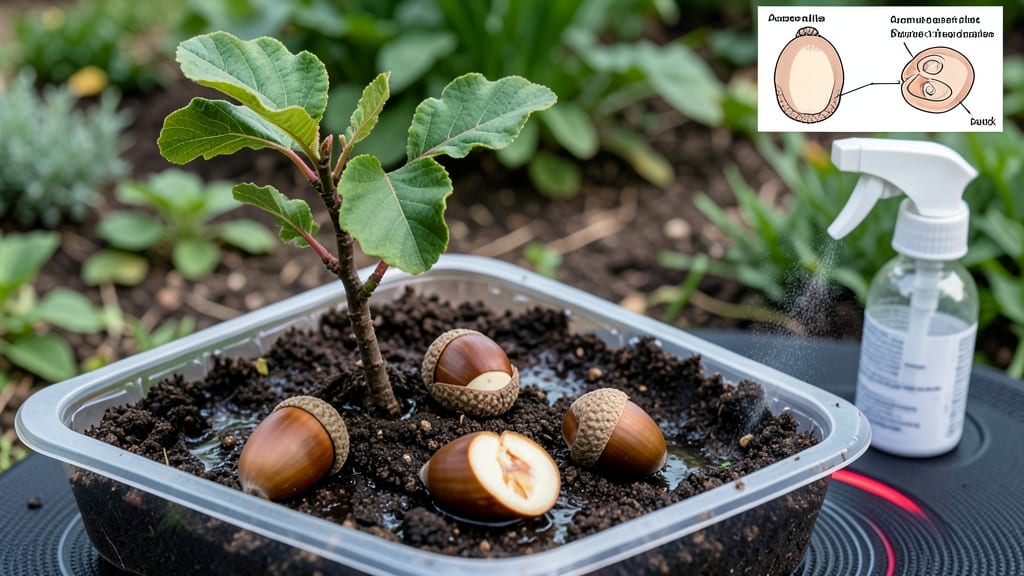
Cold-stratifying oak tree seeds unlocks the secret to breaking their stubborn dormancy. 🌱 I’ve struggled with oak germination for years—until I discovered that mimicking winter’s chill period in my fridge transformed my 90% failure rate into reliable sprouts within 90 days.
The key isn’t just patience; it’s replicating nature’s timing.
You’ll need acorns (fresh or dried), a container with damp sand or peat moss, and a refrigerator with steady 34-40°F temps. The process mimics the winter freeze oak seeds need to sprout, but it takes 3-4 months of cold treatment before planting.
Most gardeners rush this step and wonder why nothing grows—don’t skip it.
Once stratified, plant the seeds 1 inch deep in well-draining soil and keep them moist but not soggy. Germination can take another 30-60 days, so resist the urge to dig up "failed" seeds. The first true leaves signal success—thin, delicate, and a sign you’ve cracked the oak’s stubborn code.
This method works for white, red, and bur oak varieties, though some species germinate faster than others. If your seeds still refuse to sprout after 90 days, try soaking them overnight before replanting. Oak trees reward patience with decades of shade and strength—start right.
📚 In This Guide
- What you need
- Instructions
- Tips and common mistakes
- Wrapping up and next steps
What you need
- ● Oak acorns (fresh or stored): 10–20 acorns (ensure they’re plump and free of cracks or mold).
- ● Cold-stratification medium: Option 1: Dampened peat moss or coconut coir (1–2 cups).
- ● Option 2: A plastic bag with a damp paper towel (for short-term stratification).
- ● Small pots or containers: 3–5 (4–6 inches deep) with drainage holes. Use seed-starting mix (1–2 cups per pot).
- ○ Plastic wrap or humidity dome: To retain moisture (optional but helpful).
- ● Spray bottle: For gentle watering (avoid over-saturating seeds!).
- ● Refrigerator or cold stratification setup: A space at 34–40°F (1–4°C) for 60–90 days.
- ● Grow lights or sunny windowsill: For post-stratification sprouting (12+ hours of light/day).
- ● pH testing kit: Ensure your soil is slightly acidic (6.0–7.0)—oaks love it!
- ● Fungicide (mild): Like hydrogen peroxide (3%) to soak seeds and prevent rot.
- ● Labeling tags: To track seed varieties and planting dates.
- ○ Heat mat (optional): For faster germination after stratification (set to 70–75°F).
Step-by-step guide to cold-stratifying oak tree seeds
Here's the foolproof method I've used to break oak seed dormancy and grow strong saplings.
🌱 Step 1: Collect and Prepare the Acorns
Gather mature acorns from healthy oak trees in late fall—look for plump, unblemished nuts with intact caps. The key is freshness: acorns lose viability quickly once harvested. Store them in a paper bag (not plastic) in a cool, dry place until stratification. I like to label bags by tree type and harvest date—white oaks and red oaks have slightly different stratification needs.
Before stratification, soak the acorns in warm water for 24 hours to soften the outer shell. This step mimics natural winter moisture and helps break dormancy. After soaking, remove any acorns that float—they're empty or damaged and won't germinate. You'll need 4 viable acorns to start your project, as germination rates average around 50%.
❄️ Step 2: Cold-Stratify for 90 Days
Place the prepared acorns in a sealed plastic bag with a mix of moistened peat moss or vermiculite. The medium should feel like a damp sponge—squeeze it gently, and a few drops should form. Seal the bag and poke 5-10 small holes with a needle to allow airflow while preventing drying. This creates a controlled winter environment.
Store the bag in your refrigerator's crispier drawer (around 35-40°F) for the full 90 days. Check monthly to ensure the medium stays moist—if it dries out, germination fails. You'll see the first signs of life when tiny white roots emerge from the acorn's base. This is your cue that stratification worked.
🪴 Step 3: Plant in Germination Medium
After cold stratification, plant each acorn 1 inch deep in a 4-inch pot filled with a mix of 50% potting soil and 50% perlite. The perlite ensures drainage while the soil provides nutrients. I use individual pots to monitor each seedling's progress—oak seedlings grow at different rates. Water gently until the soil is evenly moist but not soggy.
Place the pots in a warm, bright location (around 65-70°F) with indirect light. Avoid direct sunlight at first—the tender seedlings can scorch. You'll notice the first true leaves (cotyledons) appear in 4-8 weeks. These look like tiny, rounded leaves and signal successful germination. Keep the soil consistently moist but never waterlogged.
☀️ Step 4: Transition to Outdoor Conditions
Once seedlings have 3-4 sets of true leaves (about 6-8 inches tall), it's time to harden them off. Start by placing pots outside in a shaded, sheltered spot for 2-3 hours daily, gradually increasing exposure over 2 weeks. This acclimates them to wind, sun, and temperature fluctuations. I like to use a cloche or shade cloth during the first few days to protect delicate leaves.
After hardening off, transplant seedlings into the ground in early spring (after the last frost date). Choose a location with full sun exposure and well-draining soil. Oak seedlings are slow-growing—expect only 6-12 inches of growth in their first year. Mulch heavily around the base to retain moisture and suppress weeds, but keep mulch 3 inches away from the stem to prevent rot.
⏰ Step 5: Long-Term Care for Young Saplings
Water deeply once weekly during the first growing season, ensuring the soil stays moist to a depth of 6 inches. Oak seedlings have deep roots, so consistent moisture encourages strong root development. You'll know you're watering correctly when the soil feels damp 2 inches below the surface—never let it dry out completely.
Fertilize lightly in early spring with a balanced, slow-release fertilizer (10-10-10). Oak trees are sensitive to over-fertilization, so use half the recommended dose. Prune only to remove dead or damaged branches—never prune for shape in the first few years. Your goal is to let the sapling grow naturally and develop a strong structure for future growth.
Tips & tricks for perfect oak tree seed germination
These little-known details make all the difference between success and frustration with your oak seedlings.
Acorn Selection: Don't just grab any acorns—look for ones that are plump and heavy for their size, with a smooth, unbroken cap. Tap two together: the one that makes a hollow sound is likely empty. I've learned this the hard way after wasting months on non-viable seeds. Also, white oaks and red oaks have slightly different stratification needs, so label your collection by type if possible.
Stratification Medium: The moisture level in your peat moss or vermiculite mix is critical. It should be damp enough that when you squeeze a handful, a few drops of water form—but not so wet that it drips. Too dry and germination fails; too wet and you risk mold. I like to use a mix of equal parts peat moss and vermiculite for optimal airflow and moisture retention. This creates the perfect microclimate inside your plastic bag.
Temperature Consistency: That 35-40°F range in your refrigerator's crisper drawer is non-negotiable. If your fridge runs hotter, consider using a dedicated seed stratification setup with a temperature-controlled environment. I've seen germination rates drop dramatically when acorns experience temperature fluctuations during stratification. The consistent cold mimics winter conditions and breaks dormancy effectively.
Germination Monitoring: After those 90 days of stratification, check your acorns weekly for signs of root emergence. The first sign is usually a tiny white root poking through the base. This is your cue that the stratification worked! Once you see this, it's time to move to the planting stage. I keep a small notebook to track each acorn's progress—it's fascinating to see which ones germinate first.
Pro Tips for Oak Tree Seed Germination
- These little-known details make all the difference between success and frustration with your oak seedlings.
- Acorn Selection: Don't just grab any acorns—look for ones that are plump and heavy for their size, with a smooth, unbroken cap.
- Stratification Medium: The moisture level in your peat moss or vermiculite mix is critical.
Frequently asked questions
Got questions about germinating oak tree seeds? You’re not alone! Here are some of the most common queries—and straightforward answers—to help you succeed.
How long does it take for oak tree seeds to germinate?
Patience is key! Cold-stratified acorns typically germinate in 30–90 days, depending on species and conditions. Some may sprout faster with warm soil, while others need extra time. Check moisture levels and warmth—consistency is critical.
Can I skip cold stratification for oak seeds?
Not recommended! Oak seeds require cold stratification to break dormancy. Skipping this step usually results in little to no germination. If you’re in a hurry, try a refrigerator method (40–50°F for 60–90 days) for best results.
What’s the best soil mix for germinating acorns?
Use a well-draining, slightly acidic mix (pH 5.5–6.5). A blend of peat moss, perlite, and sand works well. Avoid heavy clay or compacted soil—roots need air and moisture without drowning. Pro tip: Sterilize soil to prevent mold!
Why aren’t my acorns sprouting after stratification?
Common culprits: dry soil, improper warmth, or old seeds. Ensure soil stays moist but not soggy and maintain 65–75°F for germination. Test seed viability by cutting one open—if it’s hard and brown, it’s likely dead.
How do I transplant seedlings without killing them?
Wait until seedlings have 2–3 true leaves and a sturdy root system (4–6 weeks). Dig carefully, keeping the root ball intact, and water thoroughly before and after transplanting. Choose a shady spot for the first year to reduce stress.
Wrapping up and next steps
Growing an oak tree from seed is a rewarding journey that blends patience with nature’s magic! 🌱 By mastering cold stratification and providing the right conditions, you can coax those tiny acorns into mighty seedlings in just 90 days.
Remember, consistency is key—whether it’s moisture, warmth, or light—your oak’s future depends on your care.
Now that you’re armed with the know-how, take the next step: grab those acorns, set up your germination station, and watch your green thumb grow! Share your progress or ask questions in the comments—we’re all rooting for you. 🌳