
Propagation
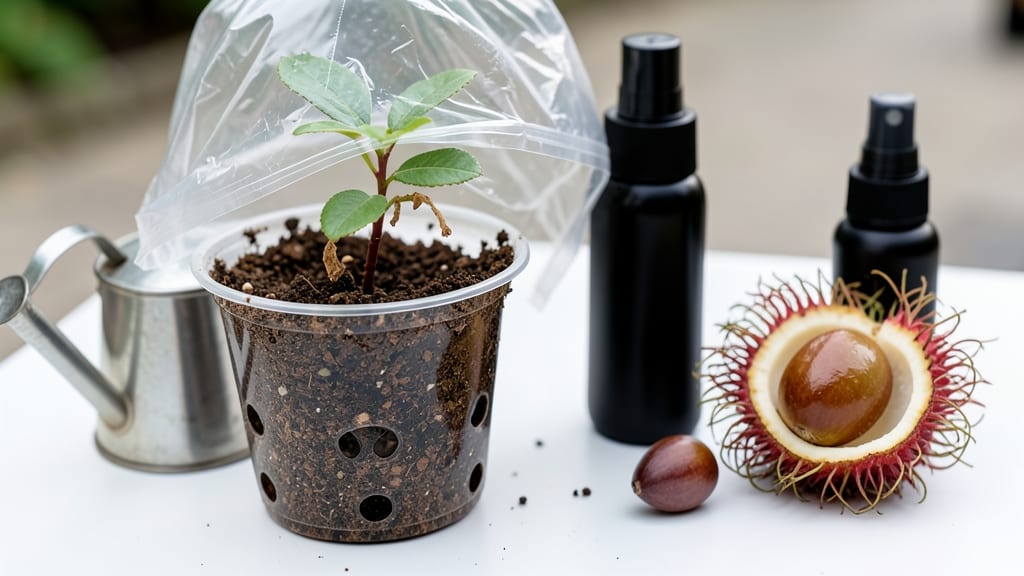
Your rambutan seed germination can happen in just 14 days—no cold treatment needed. 🌱 I’ve germinated dozens of these hairy tropical fruits, and the secret lies in mimicking their natural jungle environment: warm, moist, and patient.
Most people give up after two weeks, but with the right setup, you’ll see those first green shoots breaking through before you know it.
The key is three simple steps: soak the seeds overnight to soften the tough outer shell, plant them in a well-draining mix of peat and perlite, and keep them in a warm (75-85°F), humid spot.
No fancy equipment—just a clear plastic bag to trap moisture and a sunny windowsill or grow light. The hardest part? Waiting. But trust me, those first sprouts are worth it.
Once you see the first leaves (usually within 10-14 days), you’ll know you’re on the right track. The seedlings grow fast—2-3 inches in a month—if you keep the soil consistently moist but not soggy.
That’s when the real fun begins: transplanting into pots and dreaming of your own rambutan tree someday.
This method works for anyone, even if you’ve never propagated a tropical plant before. The biggest mistake? Overwatering or letting the soil dry out. Stick to the routine, and you’ll have thriving seedlings ready for their forever home in pots or the ground. Let’s get those seeds sprouting!
📚 In This Guide
- What you need
- Instructions
- Tips and common mistakes
- Wrapping up and next steps
What you need
- ● Fresh rambutan seeds: 3–5 viable seeds (harvested from ripe, healthy fruit)
- ● Small pots or containers: 3–5 (4–6 inches deep, with drainage holes)
- ● Well-draining potting mix: 1 bag (cactus/succulent blend or 50% peat + 50% perlite)
- ● Spray bottle: 1 (for gentle watering)
- ● Plastic wrap or humidity dome: 1 (to retain moisture)
- ● Rubbing alcohol (70%+) or hydrogen peroxide (3%): 1 bottle (for seed sterilization)
- ● Paper towels or damp cloth: 1–2 sheets (for pre-germination soaking)
- ● Grow lights or sunny windowsill: (6+ hours of indirect light daily)
- ● Fertilizer (balanced 10-10-10 or seaweed extract): 1 small bottle (for post-germination care)
- ○ Heat mat (optional): (to maintain 75–85°F for faster germination)
- ● Label markers: (to track seed varieties)
Step-by-step instructions for germinating rambutan seeds
Here's my foolproof method to get rambutan seeds sprouting in just two weeks—no cold treatment needed.
🌱 Step 1: Extract and Prepare the Seeds
Start with fresh rambutan seeds—older seeds germinate poorly. Cut open the fruit carefully to avoid damaging the seed inside. Remove the seed and rinse it under cool water to remove any pulp clinging to the surface. This step is crucial because leftover fruit can rot the seed before it even sprouts.
Place the clean seed between two paper towels and fold them over it. Dampen the towels with water until they're moist but not dripping. This mimics the humid environment seeds need to begin breaking dormancy. I like to use a plastic bag to hold the towels in place—it keeps everything contained while allowing air circulation.
💧 Step 2: Soak and Monitor for Sprouting
Put the wrapped seed in a warm spot—ideally between 75-85°F. A seedling heat mat works wonders here, but even a sunny windowsill or the top of your fridge will do. Check the towels daily and mist them with water if they feel dry to the touch. You'll see the seed begin to crack open in 5-7 days—that's your first sign of success.
Once the seed splits, transfer it to a small container filled with moistened perlite or vermiculite. Bury the seed just ½ inch deep—any deeper and it struggles to reach the surface. Cover the container with plastic wrap to maintain humidity, but leave a small gap for airflow. This prevents mold while keeping the environment just right for germination.
☀️ Step 3: Provide Light and Care for the Seedling
After 7-10 days, you'll spot the first true leaves emerging—this is when the real fun begins. Remove the plastic wrap immediately to prevent damping-off, a fungal disease that can kill young seedlings overnight. Place the container under bright, indirect light for the first week. Direct sun at this stage can scorch delicate leaves.
Water the seedling gently when the top ¼ inch of soil feels dry. Use a spray bottle to avoid disturbing the roots. You'll know you're doing it right when the soil stays lightly moist but never soggy. Once the seedling reaches 2-3 inches tall, it's ready to transplant into a small pot with well-draining potting mix.
🪴 Step 4: Transplant and Encourage Growth
Choose a 4-inch pot for your young rambutan seedling. Fill it with a mix of 50% potting soil and 50% perlite to ensure good drainage. Dig a hole slightly larger than the seedling's root ball and place it in, firming the soil gently around the base. This step is where many gardeners make mistakes—don't bury the stem too deep, or the seedling may rot.
Keep the pot in bright, indirect light for another 2-3 weeks before introducing it to full sun. Rambutan seedlings grow slowly at first, so patience is key. Water deeply once a week, allowing the top 1 inch of soil to dry out between waterings. You'll see new leaves appear within a few weeks—that's your signal the seedling is thriving.
Tips & tricks for germinating rambutan seeds
Let me share the little tricks that'll help you avoid the most common pitfalls—and get those rambutan seeds sprouting reliably every time.
Seed Freshness Matters: I can't stress this enough—only use seeds from rambutans that are still firm and fresh. Older seeds lose viability quickly, and you'll waste weeks waiting for nothing. Look for fruit that's slightly soft but not mushy, and extract the seed within 24 hours of purchase. If you're working with dried rambutans, soak the fruit overnight first to rehydrate the seed.
Temperature Consistency is Key: Maintaining that 75-85°F range is critical, but here's what nobody tells you—consistency matters more than exact degrees. If your kitchen fluctuates, move the seed to a warmer spot (like the top of your fridge) during cooler nights. A simple seedling heat mat solves this problem perfectly, but even a sunny windowsill works if you monitor it closely. The moment the seed feels cool to the touch, it slows down or stops germinating.
Mold Prevention Strategy: That plastic wrap in Step 2 is brilliant, but it's also where most people go wrong. The key is leaving that tiny gap for airflow—about the size of your pinky finger. I like to prop the wrap up with a toothpick to create the gap while keeping most of the container humid. This prevents the dreaded mold that can kill your seedling before it even sprouts. Check for condensation on the inside of the wrap daily—if you see heavy droplets, it's too humid.
Light Transition Timing: When you're ready to move the seedling to light in Step 3, here's the secret: start with just a few hours of bright, indirect light per day. Too much sun too soon can scorch those delicate first leaves. I begin with 2 hours in the morning, then gradually increase by 30 minutes each day until reaching full light exposure. This hardens the seedling off and prevents shock. Once you see true leaves (not just the initial sprout leaves), you can safely introduce full light conditions.
Pro Tips for Rambutan Seed Germination
- Let me share the little tricks that'll help you avoid the most common pitfalls—and get those rambutan seeds sprouting...
- Seed Freshness Matters: I can't stress this enough—only use seeds from rambutans that are still firm and fresh. Older...
- Temperature Consistency is Key: Maintaining that 75-85°F range is critical, but here's what nobody tells you—consiste...
Frequently asked questions
Got questions about germinating rambutan seeds? You’re not alone! Here are some of the most common queries—and their straightforward answers—to help you succeed.
How long does it take for rambutan seeds to germinate?
Rambutan seeds typically sprout within 14–21 days when kept in warm, moist conditions (around 75–85°F). Patience is key—some seeds may take longer, especially if stored improperly. Avoid rushing the process; overwatering or cold drafts can delay germination.
Can I speed up the germination process?
Yes! Soak seeds in warm water for 24–48 hours before planting to soften the hard outer shell. Use a seedling heat mat (70–85°F) or place the pot near a sunny window. Consistent moisture and warmth are your best allies—just avoid flooding the soil.
What if my rambutan seed won’t sprout?
Don’t give up! Try these fixes:
- Check viability: Float the seed in water—if it sinks, it’s likely viable. If it floats, it’s probably dead.
- Adjust moisture: Keep soil damp (not soggy) but never let it dry out.
- Try scarification: Gently nick the seed’s hard shell with sandpaper to help water penetrate.
- Repot: If mold appears, repot in fresh, sterile soil.
Can I grow rambutan from a store-bought fruit’s seed?
Store-bought rambutan seeds will germinate just like fresh ones, though variety may differ slightly. Rinse the seed thoroughly to remove pulp residue, then follow the same germination steps. Just note: Seedlings may not produce fruit identical to the parent plant.
Should I start rambutan seeds indoors or outdoors?
Start indoors in a warm, humid environment (like a greenhouse or sunny windowsill) to protect young seedlings from cold or pests. Once sprouts reach 4–6 inches and temperatures stay above 60°F, transplant outdoors to a well-draining, slightly acidic soil (pH 4.5–6.5).
What’s the ideal temperature for rambutan seed germination?
The sweet spot is 75–85°F (24–29°C). Use a seedling heat mat or place the pot near a warm spot (like above a fridge). Avoid drafts or sudden temperature drops, which can stall germination. If your home runs cold, a grow light paired with warmth works wonders.
Wrapping up and next steps
Germinating rambutan seeds at home is simpler than you think—no fancy stratification needed! With the right materials, patience, and a little care, you can watch tiny roots sprout in just 14 days.
Whether you’re a seasoned gardener or a curious beginner, this process opens the door to growing your own tropical fruit tree. 🌱
Ready to take the next step? Once your seeds sprout, transplant them into well-draining soil and give them plenty of sunlight. Keep nurturing them, and soon, you’ll be enjoying fresh rambutans straight from your garden! 🌿