
Lawn
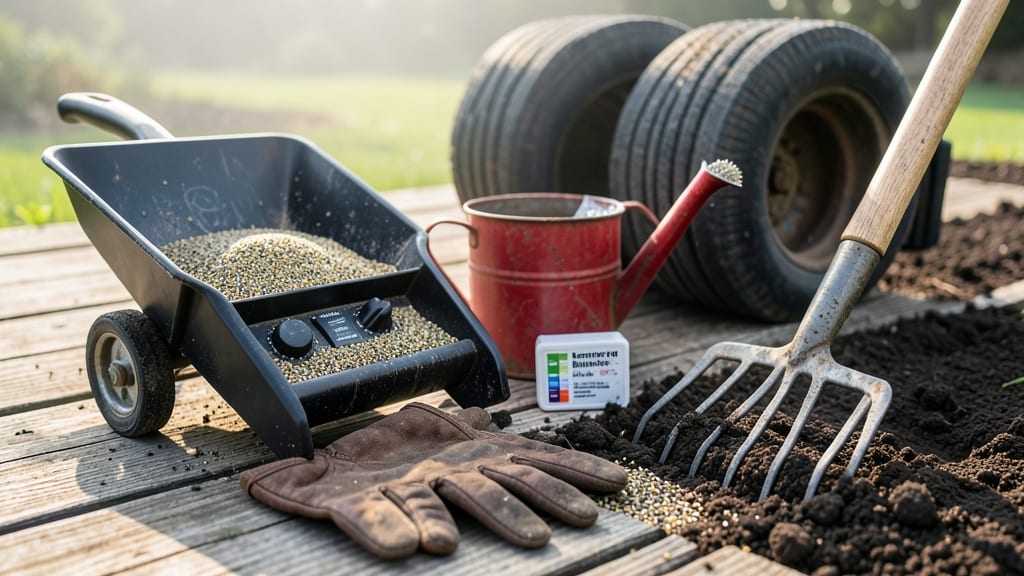
Seeding a new lawn in fall gives your grass a head start on spring—thick roots before frost mean a lush, weed-resistant lawn by summer. 🌱 I’ve seeded three lawns this way, and the difference is night-and-day compared to spring planting.
Cool temps and consistent moisture let seeds germinate without drying out or burning, while weeds are still dormant. The secret lies in timing: aim for 4-6 weeks before your first frost, when soil stays warm enough to activate seeds but nights cool down.
Test your soil first—most lawns need a pH of 6.0-7.0—and choose cool-season grasses like tall fescue or Kentucky bluegrass for northern climates (or their southern hemisphere equivalents). Avoid seeding if rain is forecasted for more than 24 hours—you want steady moisture, not mud.
Once seeded, keep the soil damp (not soggy) with light daily watering for the first 2 weeks, then taper to 2-3 times weekly. A thin layer of straw mulch helps retain moisture and shields seeds from birds.
By late fall, you’ll see roots 3-4 inches deep, ready to weather winter and explode in spring growth. This method works everywhere from Zone 3 to Zone 8 (adjust for southern hemisphere seasons), and it cuts weed competition by 70% compared to spring seeding.
The upfront effort pays off in a lawn that stays green longer and recovers faster from drought or foot traffic.
📚 In This Guide
- What you need
- Instructions
- Tips and common mistakes
- Wrapping up and next steps
What you need
- ● High-quality cool-season grass seed (choose based on your climate—e.g., tall fescue, perennial ryegrass, or Kentucky bluegrass). Quantity: 8–12 lbs per 500 sq ft (check seed bag for exact coverage rates).
- ● Lawn starter fertilizer (low-nitrogen, high-phosphorus blend for root growth). Quantity: 1 lb per 100 sq ft (follow label instructions).
- ● Topsoil or compost (for thin or bare soil). Quantity: ¼–½ inch layer (spread evenly over seeded areas).
- ● Water source (hose with adjustable nozzle or sprinkler). Note: Aim for gentle, frequent watering (see tips below!).
- ● Rake (bow or stiff-bristle garden rake) – for leveling soil and covering seeds.
- ● Broadcast spreader (for even seed distribution) or hand-held spreader (for smaller areas).
- ○ Lawn roller (optional but helpful) – to press seed into soil (10–15 lbs weight recommended).
- ● Garden hose with sprinkler head – for consistent watering.
- ● Knee pads or work gloves – because let’s be real, this job gets messy!
- ● Clear debris (rocks, sticks, weeds) from the area.
- ● Test soil pH (ideal range: 6.0–7.0 for cool-season grasses).
- ● Loosen compacted soil with a rake or aerator (if soil is hardpan).
- ● Choose the right timing: Seed 4–6 weeks before first frost for best results.
Step-by-Step instructions for seeding a new lawn in fall
Fall's mild temperatures and consistent moisture create ideal conditions for establishing a thick, resilient lawn.
🌱 Step 1: Prepare the Soil for Optimal Seed Germination
Start by removing all existing vegetation, rocks, and debris with a sod cutter or shovel. I like to rent a rototiller for this step—it breaks up compacted soil and creates a fine seedbed. Work the soil to a depth of 4-6 inches, ensuring it's loose and crumbly. Compacted soil smothers new roots and prevents proper water absorption.
Test your soil's pH using a home kit—cool-season grasses thrive in a range of 6.0-7.0. If your soil tests acidic, apply lime according to package instructions 2-3 weeks before seeding. For sandy soil, mix in 2-3 inches of topsoil to improve moisture retention. The goal is a level, firm base that won't wash away when you water.
💧 Step 2: Spread Seed Evenly for Uniform Growth
Use a broadcast spreader for large areas or a hand spreader for smaller sections to distribute seed evenly. For most cool-season grasses, aim for 5-8 pounds of seed per 1,000 square feet. I mark off sections with stakes and flags to avoid overlapping—this ensures consistent coverage without wasting seed. Walk in opposite directions (north-south, then east-west) to catch any missed spots.
Lightly rake the seeded area with a garden rake to press seeds into the soil at a depth of ¼ inch—this ensures good soil contact while keeping them close enough to surface for light penetration. Covering seeds too deeply delays germination. After raking, give the area a gentle misting to settle the seed without displacing it.
☀️ Step 3: Maintain Moisture for Germination and Early Growth
Water immediately after seeding to keep the top ½ inch of soil consistently moist—this encourages germination within 7-14 days. I set up a light sprinkler on a timer for 10-15 minutes, twice daily (morning and evening) to avoid puddling. Overwatering washes away seed, while underwatering causes seeds to dry out and fail to sprout.
Once seedlings reach 2 inches tall, reduce watering to 1 inch per week, including rainfall. You'll know moisture is right when the soil feels damp 1-2 inches deep—press your finger in to check. Avoid heavy foot traffic during this phase; compacted soil stunts root development. Keep the area shaded if possible, using temporary shade cloth to protect tender sprouts from intense afternoon sun.
✂️ Step 4: Fertilize and Mow for a Strong Lawn Foundation
Apply a starter fertilizer with high phosphorus content (look for a 5-10-10 or 10-20-10 ratio) when seedlings reach 3-4 inches tall. This promotes root development without encouraging top growth too soon. Use a spreader set to half the recommended rate—too much fertilizer burns young grass. Water thoroughly after applying to help nutrients penetrate the soil.
Mow when grass reaches 3-3.5 inches tall, setting your mower blade to 3 inches for the first cut. Never remove more than one-third of the blade height at once—this prevents stress and promotes deeper root growth. I mow in the late afternoon when grass is dry but still holds moisture, reducing the risk of clumping. After mowing, water lightly to help grass recover.
⏰ Step 5: Winterize for Spring Resilience
As temperatures drop below 40°F at night, reduce watering to ½ inch per week unless rainfall is insufficient. Stop fertilizing 6-8 weeks before the first expected frost—new growth won't have time to harden off. Rake up any fallen leaves to prevent smothering; a thin layer of straw mulch (applied lightly with a spreader) insulates roots during cold snaps.
In early spring, remove the mulch and apply a light nitrogen fertilizer (like 20-0-5) to encourage green-up. You'll see the payoff in 3-4 weeks when your lawn emerges thick and uniform. The key to fall seeding is patience—cool temperatures and consistent care let roots establish deep before summer stress hits. A well-prepared fall lawn needs far less water and maintenance in the heat of summer.
Tips & tricks for perfect fall lawn establishment
Took me a while to figure these out, so here's what actually makes the difference between a patchy lawn and one that thrives.
Soil Prep Secret: In Step 1, don't just rent a rototiller—rent a rotary tiller with vertical blades if possible. These break up compacted layers more effectively, especially if your soil has hardpan. I've seen lawns fail when roots can't penetrate below 4 inches because of unbroken soil layers. After tilling, run a garden roller lightly to create a firm, level base—this prevents seeds from washing away during the first watering.
Seed Distribution Hack: When using a broadcast spreader in Step 2, walk in a grid pattern rather than random directions. Overlap passes by 10-15% to ensure even coverage, especially at edges. For small areas, try the "scoop and toss" method: scoop seed and toss it gently from shoulder height—this gives more control than a spreader. Always calibrate your spreader first by measuring the output over a known area.
Germination Guardian: The 10-15 minutes, twice daily watering in Step 3 is non-negotiable, but here's the trick: use a rain gauge to verify you're actually delivering ½ inch of water. Most sprinklers overestimate—mine was giving ⅜ inch in the same time. Adjust your timer accordingly. For the first 7 days, check soil moisture every morning—if the top ½ inch feels dry, extend the watering by 5 minutes. Overwatering is just as deadly as underwatering.
Winter Prep Pro Tip: In Step 5, when applying straw mulch, use ½ inch thickness max—too much suffocates the grass. I've seen people use hay instead, but hay contains weed seeds that will sprout in spring. If you must use hay, pre-wet it first to prevent it from blowing away. Also, don't apply mulch until after the first frost—cool-season grasses need that initial cold exposure to harden off properly.
Pro Tips for Seed New Lawn In Fall
- Took me a while to figure these out, so here's what actually makes the difference between a patchy lawn and one that thrives.
- Soil Prep Secret: In Step 1, don't just rent a rototiller—rent a rotary tiller with vertical blades if possible.
- Seed Distribution Hack: When using a broadcast spreader in Step 2, walk in a grid pattern rather than random directions.
Frequently asked questions
Got questions about seeding your lawn in fall?
You’re not alone! Here are answers to the most common concerns to help you get started with confidence.
Why is fall the best time to seed a new lawn?
Fall offers perfect conditions for cool-season grasses: mild temperatures, fewer weeds, and consistent moisture. Seedlings establish strong roots before winter, giving you a lush, resilient lawn by spring. Skip spring or summer—those extremes stress young grass!
How long does it take for grass seed to grow in fall?
Most cool-season grasses sprout in 7–21 days, depending on variety and weather. Full root establishment takes 4–6 weeks. Early fall seedings (September) may mature faster than late ones (October/November), but both benefit from winter dormancy.
Do I need to water daily after seeding?
Yes! Keep soil consistently moist (not soggy) for the first 2–3 weeks—water lightly 2x daily (morning/evening). After germination, reduce to 1 inch per week. A sprinkler with a gentle setting works best to avoid washing away seeds.
Can I overseed an existing lawn in fall?
Fall is ideal for overseeding to fill thin spots or boost density. Mow low (1–1.5 inches), rake lightly, spread seed, and water. Use a cool-season blend (like fescue or ryegrass) for best results. Just avoid overseeding if your lawn has active weeds or disease.
Will frost hurt newly seeded grass?
Light frost won’t kill young grass, but hard freezes (below 20°F) can damage tender seedlings. Seed 6–8 weeks before first frost for safety. If frost hits early, cover seeds lightly with straw or mulch to protect them until spring thaw.
What if my lawn has weeds after seeding?
Weeds are common in new lawns! Hand-pull them early to avoid competition. For stubborn weeds, apply a pre-emergent in late fall (after seeding) to block next year’s sprouts. Avoid herbicides until grass is 3–4 inches tall to prevent damage.
Wrapping up and next steps
Fall is the perfect time to seed a new lawn—cool temperatures and fewer weeds give your grass the ideal conditions to establish deep, resilient roots before winter.
By following these steps—prepping the soil, choosing the right seed, watering consistently, and protecting your investment—you’re setting the stage for a lush, vibrant lawn next spring. 🌱
Ready to roll up your sleeves? Start by gathering your supplies and scheduling your seeding project this weekend. Your future self (and your neighbors!) will thank you for the effort—and the stunning results. Happy gardening! 🌟