
Propagation
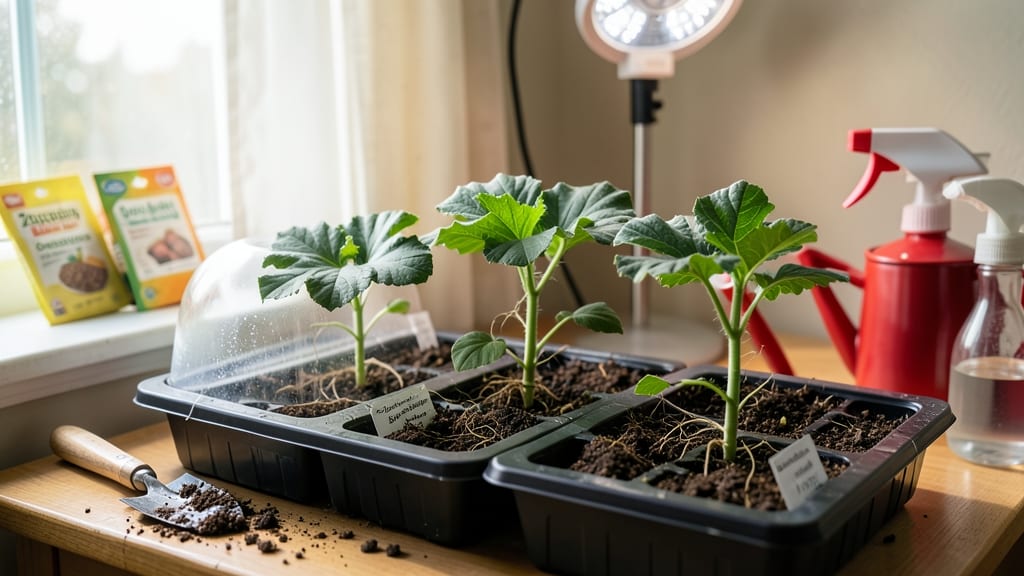
Growing zucchini from seed indoors is faster than you think—7-day germination if you nail the setup. 🌱 I’ve started dozens of batches, and the secret isn’t fancy equipment but keeping soil warm, seeds moist, and light just right from day one. Skip the guesswork with these exact steps.
You’ll need 3 basic supplies: seed-starting mix (not garden soil), small pots or a seed tray, and a heat mat or sunny windowsill. Zucchini seeds germinate best at 80-90°F, so if your home stays cooler, a heat mat is your best friend.
Plant seeds 1 inch deep, two per pot, and keep them moist but not soggy—overwatering is the #1 killer.
By day 7, you’ll see bold green cotyledons breaking through the soil, ready to stretch toward light. True leaves appear next, signaling it’s time to harden off seedlings before transplanting. The payoff? Homegrown zucchini that outperform store-bought plants by weeks, with fewer pests and better flavor.
Works for any indoor space—even apartments—if you control light and warmth. Here’s how to avoid the most common pitfalls and get every seedling off to a strong start.
📚 In This Guide
- What you need
- Instructions
- Tips and common mistakes
- Wrapping up and next steps
What you need
- ● Zucchini seeds: 3–5 high-quality, non-GMO seeds (choose heirloom or hybrid varieties like 'Black Beauty' or 'Eight Ball' for reliability).
- ● Seed-starting trays or containers: 4–6 small pots (3–4 inches deep) or a seed-starting tray with individual cells (2–3 inches deep). Must have drainage holes!
- ● Seed-starting mix: 2–3 quarts of lightweight, sterile potting mix (avoid garden soil—it’s too dense!). Look for a mix labeled "seed-starting" or "organic potting soil."
- ● Grow lights or fluorescent bulbs: 1–2 full-spectrum LED grow lights (or 2–4 T5 fluorescent bulbs) with adjustable height. 12–16 hours of light per day is key!
- ○ Heat mat (optional but helpful): A small seedling heat mat (70–90°F range) to speed up germination. Place under trays for 24–48 hours after planting.
- ● Misting bottle or spray nozzle: For gentle watering—avoid soaking the soil!
- ● Plastic wrap or humidity dome: A small plastic bag or clear lid to create a mini greenhouse effect during germination.
- ○ Fertilizer (optional but recommended): A balanced, water-soluble fertilizer (5-10-5 or 10-10-10) for when seedlings sprout.
- ● Humidity tray: A shallow tray filled with pebbles and water to boost moisture levels around seedlings.
- ● pH test kit: To ensure your soil is slightly acidic (6.0–6.8 pH)—zucchini love this range!
- ● Fungicide (like neem oil or hydrogen peroxide): A preventive measure against damping-off disease.
- ● Plant labels: To keep track of varieties and planting dates (trust us, it helps!).
- ● Self-watering system: A small indoor drip irrigation kit to maintain consistent moisture.
Step-by-Step instructions for growing zucchini from seed indoors
Here’s how to get those first true leaves in just 7 days—no leggy seedlings or damp-off disasters.
🌱 Step 1: Prep Containers and Soil for Fast Germination
Use 4-inch deep containers (one per seedling) filled with a lightweight seed-starting mix—never garden soil. Zucchini seeds germinate fastest in warm, loose soil that won’t compact. I like to mix in a handful of perlite to improve drainage, since zucchini roots hate sitting wet. Fill each container to 1 inch below the rim and press down gently to remove air pockets.
Water the mix until it’s evenly moist, like a wrung-out sponge. You’ll know it’s right when water beads up on the surface but doesn’t pool. A heavy hand here leads to waterlogged soil and rot—zucchini seeds need air almost as much as they need moisture. Let it sit for 30 minutes to settle before planting.
🌱 Step 2: Plant Seeds at the Right Depth for Speed
Zucchini seeds are large and store energy in their outer coat—plant them 1 inch deep to avoid overworking the seedling as it pushes through. Use your finger to make a hole just deep enough to bury the seed completely, then drop in 1-2 seeds per container (you’ll thin later). Cover lightly with soil, but don’t tamp it down—you’ll smother the seed.
Here’s the trick for 7-day germination: place the containers in a warm spot (75-85°F). A seedling heat mat works wonders, but even a sunny windowsill above a radiator speeds things up. Keep the soil consistently moist—never soggy—until you see sprouts. Overwatering now causes seeds to rot before they even wake up.
☀️ Step 3: Provide Light Immediately to Prevent Leggy Seedlings
The moment those first leaves appear, move containers to bright, indirect light. Zucchini seedlings stretch toward any light source like magnets, and once they get leggy, they never recover. I use a grow light on a timer (14-16 hours/day) positioned 2-3 inches above the seedlings. If using natural light, a south-facing window works, but rotate the containers daily so they grow straight.
Watch for first true leaves (the second set after the initial cotyledons)—this is your signal to thin. Snip the weaker seedling at soil level with clean scissors, leaving the stronger one. Don’t pull; you’ll disturb the roots of the plant you want to keep. After thinning, water gently at the base to avoid disturbing the remaining seedling.
💧 Step 4: Maintain Moisture and Fertility for Strong Starts
Zucchini seedlings drink more than you’d expect. Keep the soil evenly moist but never waterlogged—stick your finger in to check the top 1 inch daily. Water when it feels dry, but don’t let it crust over. I use a spray bottle for the first 2 weeks to avoid disturbing the soil surface, which can expose roots to air and stunt growth.
Feed with a balanced liquid fertilizer (10-10-10) at half strength when the first true leaves appear. Zucchini are heavy feeders, and this jumpstarts their growth. Too much fertilizer now burns tender roots, so dilute it well. After feeding, rinse the soil lightly to prevent salt buildup—you’ll see white crust on the surface if you’ve overdone it.
⏰ Step 5: Harden Off Before Transplanting Outdoors
Two weeks before your last frost date, begin hardening off seedlings by placing them outside in a shaded, sheltered spot for 1-2 hours the first day. Gradually increase their time outdoors by 1 hour daily, exposing them to morning sun first. Zucchini are frost-sensitive, so never rush this step—plants shocked by cold wilt and never recover.
By day 10, they should tolerate a full day outside. Look for deep green leaves and sturdy stems—these are your cues they’re ready. Transplant on an overcast afternoon, watering deeply at the base to reduce transplant shock. The goal is to get them into the garden before 4-6 weeks of indoor life, when they’ll start outgrowing their containers.
Tips & tricks for fast zucchini seedling success
Here's what nobody tells you about avoiding the most common pitfalls when growing zucchini from seed indoors.
Soil Temperature Secret: While the instructions specify a warm spot (75-85°F), I've found that placing your containers on a seedling heat mat set to 80°F consistently delivers those first sprouts within 4-5 days. If you don't have a heat mat, try resting your containers on top of your refrigerator—it maintains a steady warm temperature without the risk of overheating. The key is maintaining that warmth constantly until germination occurs.
Light Strategy for Leggy-Free Growth: In Step 3, when you move seedlings to bright light, here's my game-changer: position your grow light or containers so the seedlings are just touching the light source. This creates a natural "bending" response that actually strengthens their stems. Rotate containers daily by 90 degrees to prevent them from leaning toward one light source. I've seen seedlings that would have been leggy develop sturdy, compact growth this way.
Thinning Technique: When you spot those first true leaves in Step 3, here's what I learned the hard way: don't thin too early. Wait until you can clearly see two distinct seedlings with their own sets of true leaves before removing the weaker one. At this stage, the stronger seedling has already established its root system, making it more resilient to the thinning process. Use clean, sharp scissors and cut at soil level to avoid disturbing the roots of your kept seedling.
Fertilizer Timing: The instructions mention feeding with diluted fertilizer when first true leaves appear, but here's the critical follow-up: after fertilizing, let the soil dry out slightly before watering again. This prevents salt buildup which can burn tender roots. I've seen seedlings that looked healthy after feeding suddenly wilt when the soil remained too wet. A good rule is to wait until the top inch of soil feels slightly dry before watering again after fertilizing.
Pro Tips for Growing Zucchini From Seed Indoors
- Here's what nobody tells you about avoiding the most common pitfalls when growing zucchini from seed indoors.
- Soil Temperature Secret: While the instructions specify a warm spot (75-85°F), I've found that placing your containers on a seedling heat mat set to 80°F consistently delivers those first sprouts within 4-5 days.
- Light Strategy for Leggy-Free Growth: In Step 3, when you move seedlings to bright light, here's my game-changer: position your grow light or containers so the seedlings are just touching the light source.
Frequently asked questions
Got questions?
Growing zucchini from seed indoors can feel tricky at first, but don’t worry—we’ve got answers to the most common ones! Whether you’re a first-timer or just need a quick refresher, this section covers the basics to help you avoid pitfalls and grow like a pro.
How long does it take for zucchini seeds to germinate indoors?
With the right conditions (warmth, moisture, and indirect light), zucchini seeds typically sprout in 5–7 days. Keep soil consistently moist and maintain temperatures between 70–90°F (21–32°C) for fastest results. Patience is key—some seeds may take up to 10 days, especially if the soil is too cold.
Do I need special equipment to start zucchini seeds indoors?
Not at all! While grow lights and seedling trays help, you can start with basic supplies: a shallow container (like a tray or even a repurposed plastic bin), potting mix, and a heat mat or sunny windowsill. Avoid overcomplicating it—zucchini seeds are forgiving if you keep them warm and hydrated.
When should I transplant zucchini seedlings outdoors?
Wait until after the last frost and when nighttime temps stay above 50°F (10°C). Seedlings should be 2–4 inches tall with 2–3 true leaves. Harden them off for 5–7 days by gradually exposing them to outdoor conditions to avoid shock. Plant them in well-draining soil with plenty of space (2–3 feet apart).
Why aren’t my zucchini seeds sprouting? Troubleshooting tips.
If your seeds aren’t germinating, check these common issues:
- Cold soil: Zucchini seeds need warmth—use a heat mat or place the tray on top of your fridge.
- Too dry or too wet: Keep soil moist but not soggy—overwatering can suffocate seeds.
- Old or low-quality seeds: Test viability by soaking seeds in warm water for 24 hours—if they sink, they’re likely good.
- Poor soil contact: Press seeds lightly into the soil (¼ inch deep) to ensure they make contact.
Can I grow zucchini indoors year-round?
While zucchini thrives outdoors, you can grow them indoors year-round with the right setup. Use a south-facing window or grow lights (12–16 hours/day), and ensure proper airflow to prevent pests. However, expect smaller yields compared to outdoor plants. For best results, supplement with artificial light and fertilize regularly.
Wrapping up and next steps
Growing zucchini from seed indoors is a rewarding journey that starts with patience, the right tools, and a little know-how! With these steps, you’ll enjoy fast germination in just 7 days—no more waiting weeks for sprouts.
Whether you’re a beginner or a seasoned gardener, your green thumb is about to shine brighter than ever.
Ready to take the next step? Once your seedlings are thriving, transplant them outdoors when temperatures warm up (around 60°F or higher). Keep an eye on those vines—they’ll reward you with bountiful harvests in no time! 🌱