
Planting
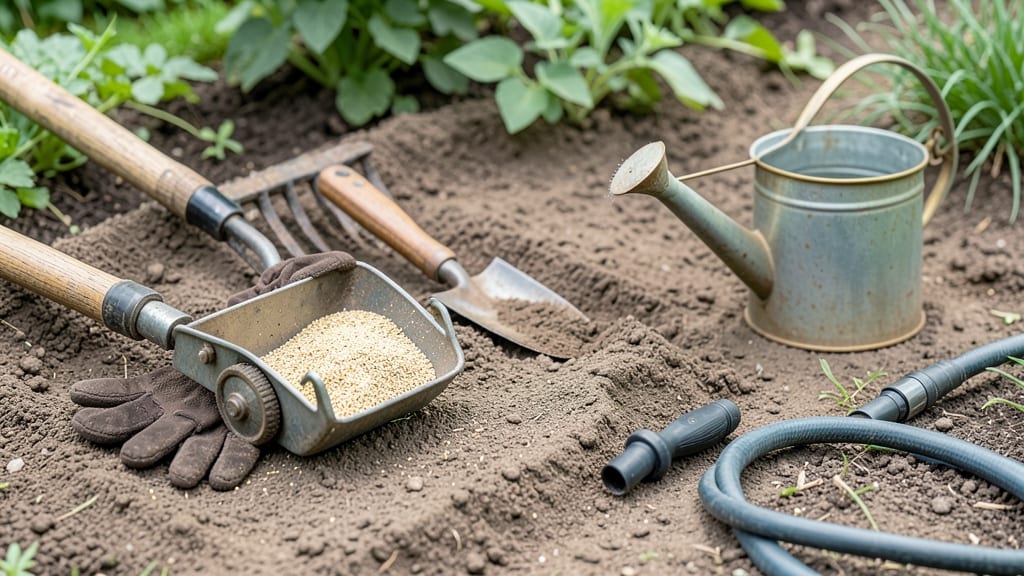
Planting grass seed in spring means waiting for soil to warm to 50-55°F—that’s the magic number for germination. 🌱 I’ve learned the hard way that planting too early leads to frost-killed seedlings or slow starts that leave bare patches all season.
The key is balancing eagerness with patience; your local last frost date is just the beginning of the story.
Soil temperature matters more than calendar dates. Use a soil thermometer (they’re cheap!) to check daily—most grass seeds need consistently warm soil for 5-7 days before planting. In cooler climates like mine, that might mean waiting until late May, while warmer zones can start as early as March.
The goal is to give seeds the best possible start, not rush them into cold ground.
What you’ll get is a lawn that greens up thick and even, without the patchy regrowth that happens when seeds germinate at different times. Proper timing also means fewer weeds—cool-season weeds thrive when grass is slow to establish.
With the right prep, your new grass will outcompete them before they take hold.
This works for both new lawns and overseeding existing ones. Whether you’re seeding a 1,000-square-foot yard or repairing a small patch, the same principles apply. Let’s get those seeds in the ground at the perfect moment!
📚 In This Guide
- What you need
- Instructions
- Tips and common mistakes
- Wrapping up and next steps
What you need
- ● High-quality grass seed: Choose a blend suited to your climate (e.g., Kentucky bluegrass for cool regions or Bermuda grass for warm zones). Quantity: ~5 lbs per 1,000 sq ft (check seed bag for exact coverage).
- ● Lawn rake: A bow rake (for leveling) or garden rake (for seed-to-soil contact). Size: 18–24" head width.
- ○ Broadcast spreader: Handheld or tow-behind type to distribute seed evenly. Optional: Calibrate for your seed type (most spreaders require ~⅓ lb seed per 1,000 sq ft per setting).
- ● Topsoil or compost: 1–2 inches of organic matter to improve soil texture and fertility. Type: Screened compost or loamy topsoil.
- ● Water source: Hose with soaker hose or sprinkler (gentle mist setting). Pro tip: Early morning watering (💡 before 10 AM) reduces evaporation.
- ● Fertilizer: Starter fertilizer (high in phosphorus, e.g., 5-10-10 ratio) to boost root growth. Apply: Lightly rake into top ¼" of soil before seeding.
- ● Soil test kit: Check pH (ideal: 6.0–7.0) and nutrient levels. Adjust with lime (for acidic soil) or sulfur (for alkaline soil).
- ● Lawn roller: Lightweight (100–150 lb) to press seed into soil. Use: After seeding but before watering.
- ● Erosion control blanket: For slopes or bare spots to retain moisture and seed.
- ● Seed tape: Pre-spaced grass seed on biodegradable tape for precision planting.
- ● Weed barrier fabric: If overseeding an existing lawn to block weeds.
Step-by-step guide to planting grass seed in spring
Timing matters more than you think—plant too early and cold soil stalls growth, too late and summer heat stresses young roots.
🌱 Step 1: Test Soil Temperature for Optimal Planting
Use a soil thermometer to check daytime temperatures—wait until the soil reaches a consistent 60-70°F. Most grass types struggle below 55°F, and planting too soon leads to slow germination or seed rot. I test in the morning after sunrise, as that's when soil warms most reliably.
Northern climates should aim for mid-to-late May, while Southern regions can plant as early as March. Watch for a pattern of three consecutive days above 60°F—that’s your green light. Cold nights can still slow growth, but the soil warmth ensures roots establish quickly.
🌿 Step 2: Prepare the Soil for Seed Contact and Germination
Rake the soil surface to create a fine, crumbly texture—this ensures seeds make direct contact with moisture and warmth. Remove any debris or weeds, as competition will smother your new grass. I like to use a stiff-bristled rake to break up compacted areas without disturbing deeper soil layers.
Lightly loosen the top ½ inch of soil to improve seed-to-soil contact. If your lawn has heavy foot traffic, consider aerating first—this opens channels for roots to penetrate. The goal is a surface that looks like fine sand, not hardpan. Test by pressing your thumb down: it should dent slightly but not crumble.
💧 Step 3: Spread Seed Evenly for Uniform Germination
Divide your seed into four equal portions—this makes spreading easier and ensures even coverage. Walk in a crisscross pattern, overlapping slightly with each pass. For a 4,000 sq ft lawn, you’ll need about 8-12 lbs of seed, spread at the rate recommended on the package.
Don’t skip this step—uneven seed distribution leads to patchy growth. I use a hand-held spreader for small areas and a drop spreader for larger lawns. Lightly rake the area again after spreading to press seeds into the soil without burying them. Most grass seeds need ¼ inch of soil contact for best results.
☀️ Step 4: Water Immediately and Maintain Moisture
Water the area gently but thoroughly right after planting—soak the top 2-3 inches of soil until water runs off the surface. Use a fine mist setting on your sprinkler to avoid displacing seeds. I set a timer for 10-15 minutes and check for saturation by digging a small hole—if the soil feels damp but not soggy, you’re good.
Keep the soil consistently moist (not waterlogged) for the first 2-3 weeks. Water lightly twice daily—early morning and late afternoon—to prevent evaporation. You’ll know you’re doing it right when the top ½ inch of soil stays damp but doesn’t puddle. Overwatering can suffocate seeds, while underwatering causes them to dry out before germinating.
⏰ Step 5: Monitor and Adjust for Ideal Growth Conditions
Watch for first signs of germination in 7-21 days, depending on grass type and soil warmth. Tall fescue and Kentucky bluegrass usually sprout in 10-14 days, while ryegrass appears faster—sometimes in 5-7 days. If germination takes longer than 21 days, check soil moisture and temperature again.
Once seedlings reach 2-3 inches tall, reduce watering to once daily and gradually increase mowing height to 3-4 inches. Avoid walking on new grass until it’s fully established (about 6-8 weeks). This prevents root damage and ensures a thick, resilient lawn. Real talk: the first mow is exciting—it’s the moment you see your hard work pay off.
Tips & tricks for perfect spring grass seed planting
Between us, the difference between a patchy lawn and a lush carpet of green often comes down to these small but critical details.
Soil Temperature Timing: The 60-70°F soil temperature window isn't just a guideline—it's your green light for germination. I've seen seeds planted at 55°F or below sit dormant for weeks, only to rot when spring rains finally arrive. For extra accuracy, check temperatures at 10 AM when soil has warmed from morning chill. If you're in doubt, wait—those few extra days prevent costly mistakes.
Preparation Precision: That ½ inch of loosened soil isn't just about aesthetics—it creates the perfect micro-environment for seeds. I learned this the hard way when compacted soil left my first planting looking like a dusting of confetti rather than a lawn. Use a garden fork to create small holes if your soil resists raking, especially in clay-heavy areas. The goal is to mimic nature's seedbed conditions without disturbing deeper soil layers.
Seed Distribution Strategy: Dividing your seed into four portions might seem excessive, but it's the secret to professional-looking results. I've seen homeowners pour seed from the bag in one go, creating thick patches and bare spots. Walk slowly in your crisscross pattern, keeping your spreader at a consistent height (about 6-12 inches above the soil). For the 4,000 sq ft standard, those 8-12 lbs will cover perfectly when applied methodically—don't be tempted to double up in some areas to save time.
Watering Watchfulness: Those 10-15 minutes of initial watering can make or break your planting. Set your timer but don't walk away—watch for water to pool in low spots and adjust your sprinkler pattern. After the first watering, maintain that ½ inch of consistent moisture like your lawn's life depends on it (because it does). I keep a small trowel handy to check moisture levels daily—if the top layer feels dry, it's time to water again. The key is to keep seeds hydrated without creating anaerobic conditions that suffocate them.
Pro Tips for When Plant Grass Seed In Spring
- Between us, the difference between a patchy lawn and a lush carpet of green often comes down to these small but critical details.
- Soil Temperature Timing: The 60-70°F soil temperature window isn't just a guideline—it's your green light for germination.
- Preparation Precision: That ½ inch of loosened soil isn't just about aesthetics—it creates the perfect micro-environment for seeds.
Frequently asked questions
about planting grass seed in spring—because even the greenest thumbs have doubts! Here are answers to the most common queries to help you grow that lush lawn with confidence.When is the exact best time to plant grass seed in spring?
The ideal window is when soil temperatures hit 50–65°F (10–18°C)—usually 4–6 weeks after your last frost date. For cool-season grasses (like Kentucky bluegrass), aim for early spring (March–April). Warm-season grasses (like Bermuda) thrive when soil warms up in late spring (May–June). Check your local frost dates for precision!
What if I plant too early and frost hits again?
Don’t panic! Grass seed won’t germinate below 40°F (4°C), so early planting won’t waste your effort. Just cover seeds lightly with straw or mulch to protect them until conditions improve. If frost kills young sprouts, they’ll regrow when temps rise—patience is key!
How often should I water newly planted grass seed?
Keep soil consistently moist (not soggy!) for the first 2–3 weeks. Water lightly 2–3 times daily (early morning is best) to avoid washing seeds away. Once seedlings are 1–2 inches tall, taper to 1 inch of water per week. A sprinkler with gentle mist works best.
Can I overseed my existing lawn in spring, or should I reseed bare spots?
Both work! Overseeding (spreading seed over the whole lawn) thickens thin areas but requires prepping soil first (mow low, rake, and remove debris). For bare spots, focus there—just loosen soil, add compost, and plant seed. Cool-season grasses benefit most from spring overseeding; warm-season grasses are better overseeded in late summer.
What do I do if weeds pop up before the grass grows?
Weeds are normal early on! Hand-pull them (don’t use herbicides yet—they’ll kill your grass too). Once your grass reaches 3–4 inches tall, it’ll outcompete weeds naturally. For stubborn weeds, spot-treat with a vinegar-based herbicide (safe for new grass) after germination. Pre-emergent herbicides should wait until after seeding!
How long until I see results after planting?
Patience pays off! Most grasses sprout in 7–21 days (depending on type and weather). Cool-season grasses may take 3–4 weeks to establish a full lawn, while warm-season grasses can take 6–8 weeks. Avoid heavy foot traffic for at least 4–6 weeks—let those roots grow strong!
Wrapping up and next steps
Spring is the perfect time to transform your lawn into a vibrant, lush carpet—but timing is everything! 🌱 By planting grass seed when soil temperatures hit 50–65°F, you’ll give your grass the ideal conditions to sprout strong and thrive.
Remember to prep your soil, choose the right seed, and stay patient as nature works its magic.
Ready to take the next step? Grab your tools, mark your calendar, and get planting! Soon, you’ll be enjoying a green, healthy lawn that’s the envy of the neighborhood. Happy growing! 🌟